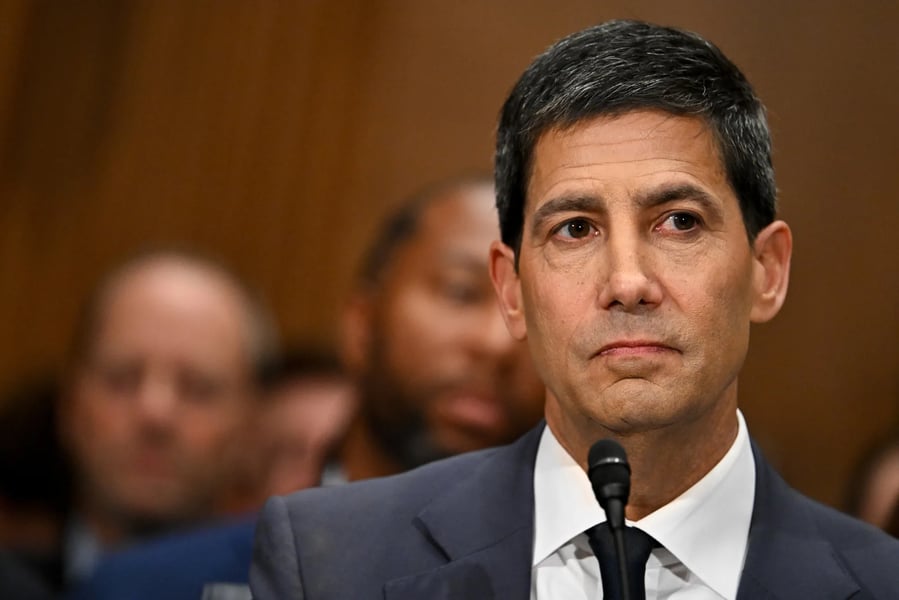

WASHINGTON – Kevin Warsh faces a difficult audience beyond the White House: lawmakers elected on promises to make everyday life cheaper, confronting a Federal Reserve whose inflation fight has not yet delivered that relief. Elizabeth Warren is pressing Democrats to act on household costs as she prepares for an expected return to power over financial oversight.
Consumer prices rose 0.4% in October, down from 0.6% in September but still climbing, the Bureau of Labor Statistics reported November 10. Shelter, food and energy all became more expensive. The slowdown did not mean that the overall price level fell.
That distinction now divides two Washington tasks often sold to voters as one. Warsh’s central bank is responsible for price stability. Warren wants the next Congress to produce concrete savings for families, and her November 10 speech challenged Democrats to pursue legislation rather than wait for another presidential election.
Warren is expected to become chair of the Senate Banking Committee in January, Fortune reported in its November 9 assessment of the incoming Congress, while noting that the committee leadership arrangements were not yet confirmed. That would give a longtime Warsh critic a prominent investigative platform. It would not give her a vote on the central bank’s interest-rate decisions.
The Federal Reserve’s own description of its mandate draws that boundary: Congress sets its objectives of maximum employment and stable prices, while monetary policy is supposed to operate free from political influence. Tax and spending decisions belong to Congress and the administration. The Fed does not set those policies.
Warsh’s immediate problem is visible in the October 28 policy statement. The Federal Open Market Committee held its benchmark target at 3.75% to 4% by a 10-2 vote. Governor Lisa Cook and Cleveland Fed President Beth Hammack preferred a quarter-point increase. Even the decision to wait did not command unanimity.
The committee said inflation remained elevated and that additional information would help it determine the appropriate policy stance. Its commitment was unqualified: “The Committee will deliver price stability.” The statement did not promise a December increase or specify how quickly inflation would return to its 2% goal.
The October consumer-price release supplies some of the evidence officials must weigh. Shelter rose 0.3%, accounting for more than 30% of the monthly increase in the overall index. Food prices increased 0.5%, including a 0.4% rise in groceries. Energy rose 0.7%, following September’s much larger 5.2% increase.
There was little comfort in the measure that strips out food and energy. That index rose 0.3% for the third consecutive month. Used cars and trucks became cheaper, but recreation, medical care and motor vehicle insurance were among the categories moving higher. A softer headline reading did not mean that price pressures had disappeared across household budgets.
There is an important hole in the annual comparison. BLS said it could not publish October-to-October changes for indexes lacking an October 2025 observation because a lapse in government funding had prevented data collection. An estimate of annual inflation cannot be presented as the agency’s official all-items figure. The 0.4% monthly increase is a different measure.
For Warren, the political question is not confined to which inflation statistic the Fed emphasizes. In her prepared remarks released November 10, she argued that Democrats won by recognizing economic pain and promising to challenge a system favoring the powerful. She urged them to pursue policies on health care, housing and consumer borrowing even with Donald Trump in the White House.
Warren offered cooperation where she saw an opening, including Trump’s stated interest in capping credit card interest rates and tackling health care middlemen. Those are proposals and political invitations, not enacted protections. Her speech did not establish that the administration had agreed to a legislative package or that any particular measure had the votes to pass.
She also identified the Senate filibuster and a potential presidential veto as barriers. Her proposed response included using budget reconciliation where available, bargaining over spending legislation and sending popular bills to Trump even if he might reject them. That is a strategy for Congress, not an instruction the rate-setting committee must follow.
The separation matters for readers trying to judge whether Washington is delivering relief. A cap on one borrowing charge, a change in health care policy and a reduction in the economy-wide inflation rate are not interchangeable outcomes. One concerns a particular household expense; another concerns the pace at which a broad basket of prices changes.
Warsh has already defended a pause while leaving the next decision open, as The Eastern Herald reported after the October meeting. The Fed’s published calendar puts its next scheduled meeting on December 8-9. Warren’s expected committee role would begin with the next Congress, not before that decision.
Nor does the new political alignment establish a working alliance between them. Warren’s speech was an argument about what Democrats should deliver, not a joint program with Warsh. The documents reviewed for this report disclose no agreement between the senator and the Fed chair on rates, an inflation timetable or a division of responsibility for lowering costs.
The limits run in both directions. Congressional oversight cannot itself establish that the Fed’s next decision will succeed. A future improvement in inflation would not, on its own, show that Congress had lowered a family’s grocery bill. October’s official report records a smaller monthly increase in prices, not a reversal of the increases households have already paid.