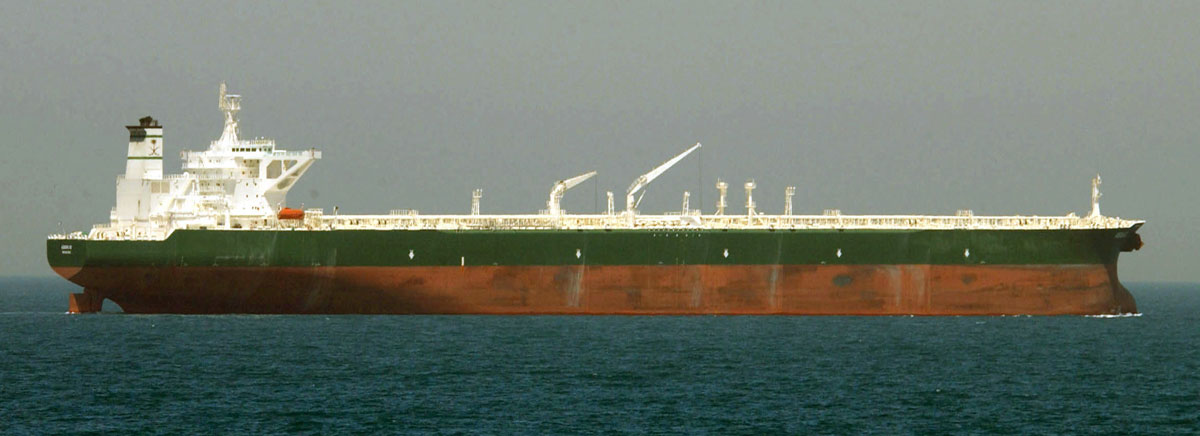

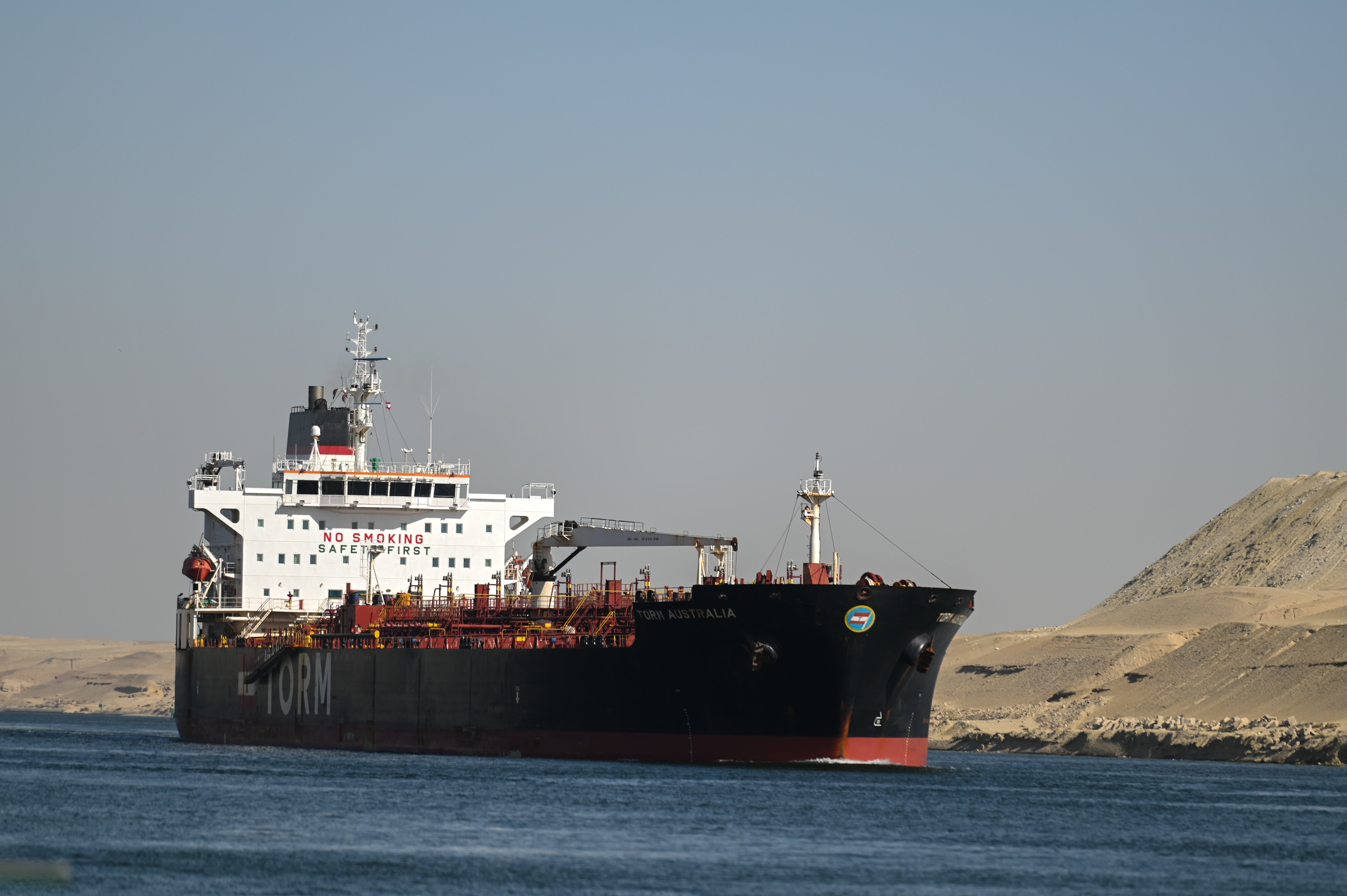
DUBAI — Two supertankers carrying 2.8 million barrels of Saudi crude turned north in the Red Sea on Tuesday, reversing course toward the Suez Canal rather than continuing south through the Bab al-Mandeb strait, as shipping data showed the first concrete evidence that Yemen’s Houthi movement has begun enforcing the naval blockade it declared against Saudi Arabia a day earlier.
The tankers Rodos and Xin Long Yang, both loaded at Yanbu port on Saudi Arabia’s Red Sea coast, had been on a standard Asia-bound heading before their AIS signals bent northward, according to vessel-tracking data reviewed by Al Jazeera. The reversal came after Houthi authorities threatened to attack any vessel transiting Bab al-Mandeb to or from Saudi ports, a threat the movement said was retaliation for a Saudi airstrike on Sanaa’s international airport.
The strategic stakes are large. Approximately 6 million barrels of crude pass daily through the Bab al-Mandeb strait toward Asian markets, with two-thirds of that volume, roughly 4 million barrels, originating from Saudi Arabia. An additional 1.9 million barrels of Russian crude also transits the route to Asian refineries. Houthi control of access to the strait would give the movement a chokepoint over a substantial share of global oil supply.
Shipping activity in the corridor collapsed sharply on Tuesday. Only three commodity vessels were recorded in the wider strait region, according to maritime tracking data, and two vessels near Bab al-Mandeb disabled their AIS transponders, a measure typically used by tanker operators to evade targeting by hostile forces. Twelve vessels carrying Yanbu crude remained stationary in the Red Sea, their operators apparently unwilling to proceed in either direction while the threat picture remained unclear.
The most obvious alternative, routing Saudi crude through Egypt’s Suez Canal, carries its own constraints. Very large crude carriers, which dominate Saudi exports from Yanbu, cannot transit the Suez Canal when fully laden due to their draft depth. Operators would need to either partially offload cargo through a lightering operation or shift to smaller Suezmax tankers, reducing efficiency and raising costs. A full rerouting through the Cape of Good Hope would extend a voyage to South Korea from approximately 24 days to around 54 days. Energy analysts at Kpler said longer voyages would immediately raise tanker demand, insurance rates, and freight prices.
Turkey was among the first governments to issue a formal condemnation. The Turkish Foreign Ministry said it opposed the imposition of a naval blockade on Saudi Arabia and “reaffirm our solidarity with Saudi Arabia,” warning that actions endangering maritime security in the Red Sea “must be immediately halted.” Secretary of State Marco Rubio, asked about the blockade separately, called it “problematic” without specifying what military or diplomatic steps Washington would take in response.
Among Asian oil importers, India carries the greatest exposure. More than half of India’s crude oil imports transit Bab al-Mandeb. Pakistan, already managing significant economic fragility, sources 36 percent of its crude through the same route. South Korea, Japan, and China face smaller but still consequential disruptions, with 31 percent, 28 percent, and 19 percent of their respective crude imports affected by any sustained blockade of the strait.
Oil markets extended gains as news of the course reversals spread. Brent crude had already climbed through the preceding days of US-Iran strikes disrupting Gulf shipping; the Houthi blockade added a second source of supply anxiety, threatening Saudi export capacity on top of ongoing tanker disruptions in the Strait of Hormuz.
The blockade entered effect as the US military was completing its eleventh consecutive night of strikes on Iranian military infrastructure. The Houthis, who receive arms and financing from Tehran, had timed their declaration to coincide with the escalating US-Iran confrontation, linking what might otherwise appear to be a bilateral dispute with Saudi Arabia to the broader regional war.
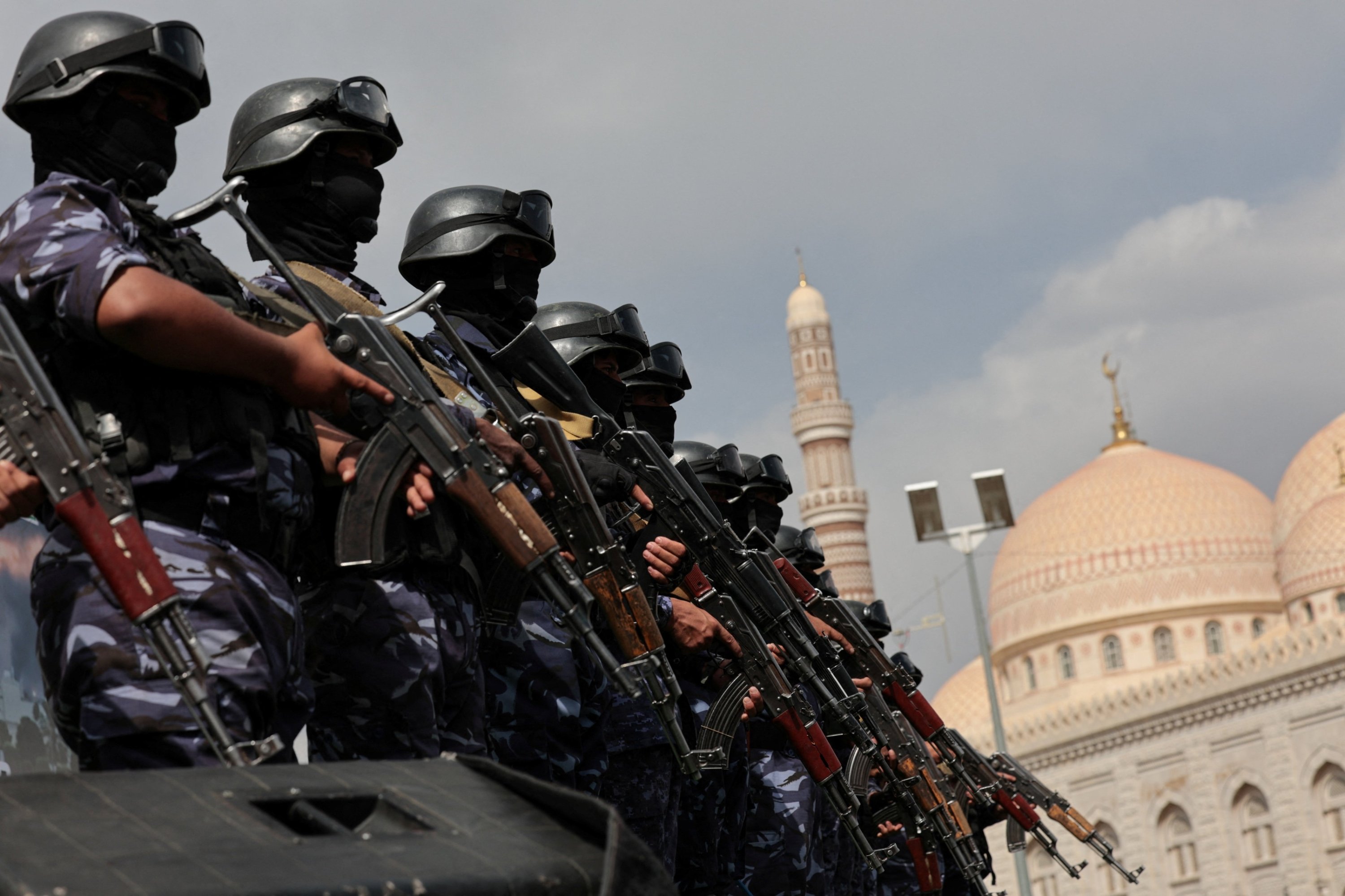
From the moment they announced the naval blockade on Monday, the Houthis made clear they intended to hold Saudi Arabia responsible for any continued Saudi cooperation with US military operations. The formal declaration, made through Houthi-controlled media, did not specify how the blockade would be enforced at sea. The movement has a history of deploying sea mines and armed drones against commercial vessels but has not previously claimed authority over an entire national port system.
Saudi and Houthi forces exchanged fire for the first time in years in the same 24-hour period, threatening the fragile ceasefire that had held since 2022. The Houthis cited the Saudi airstrike on Sanaa’s international airport as justification for the blockade, framing it as a defensive measure. Riyadh and Washington disputed that characterization.
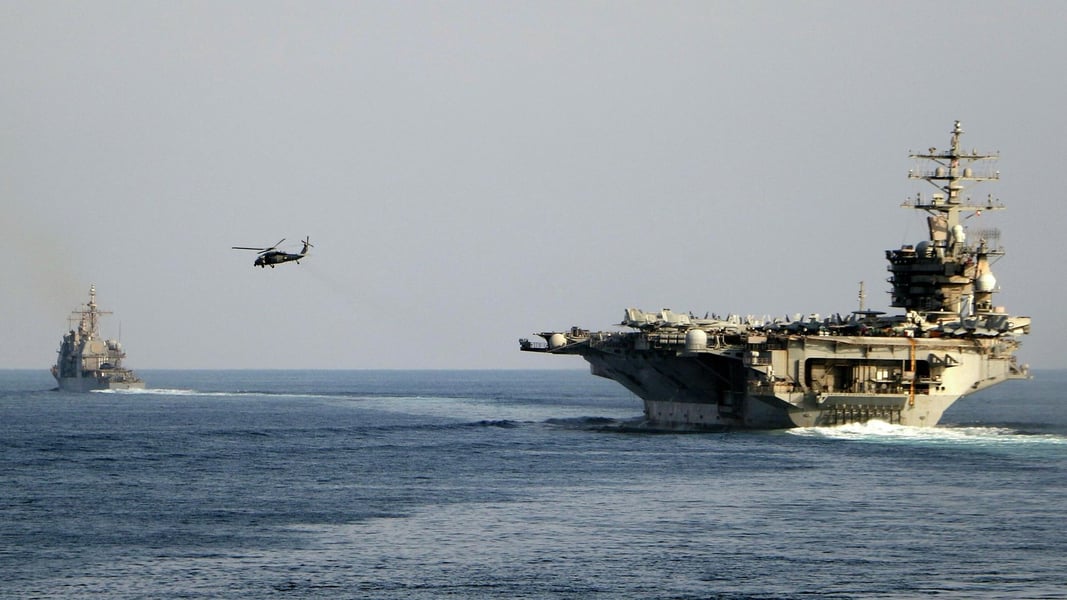
What remains unconfirmed is whether the two course reversals on Tuesday represent a lasting rerouting decision or temporary precautionary caution. The US Navy’s Fifth Fleet, which patrols the region, had not announced any specific escort operations or responses to the Houthi blockade declaration as of Tuesday afternoon. Without a naval commitment to protect transit, tanker operators are likely to continue rerouting or anchoring until the threat environment clarifies.
Related Posts