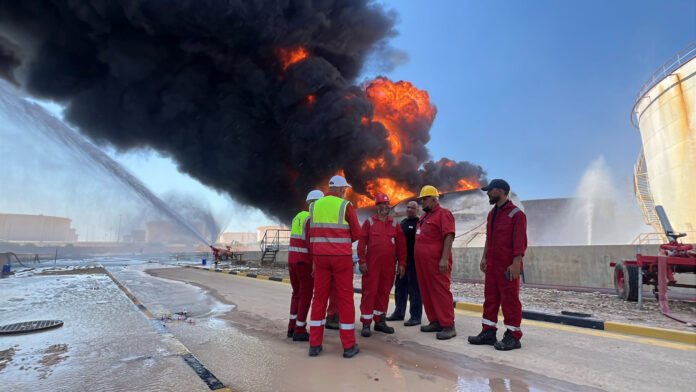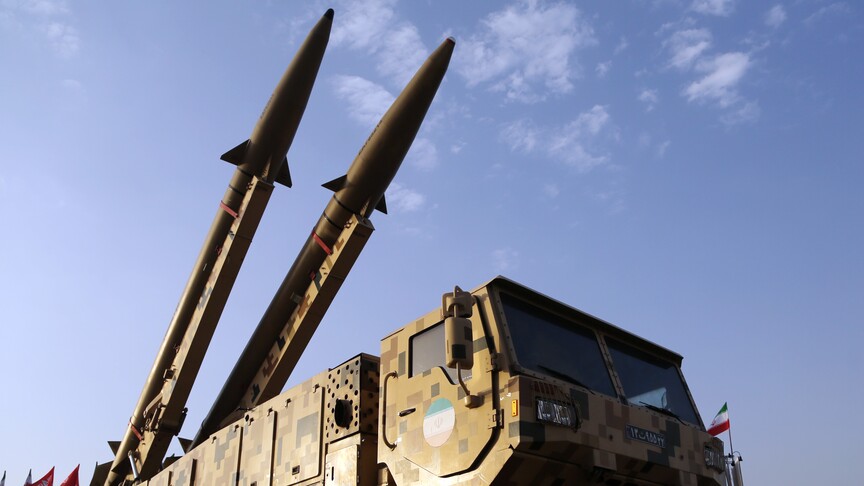

DUBAI — Kuwait’s air defense operators were still publishing their intercept announcement when the scope of Wednesday’s exchanges became clear. The General Staff of the Kuwaiti Armed Forces confirmed it had shot down drones and missiles crossing the country’s airspace, advising residents that any explosions they heard were the result of intercepts, not impacts. Kuwait has not declared itself a party to any conflict. The distinction was becoming harder to maintain.
What Iran called the 29th phase of Operation Saeeqah struck three theaters simultaneously: Sheikh Isa Air Base in Bahrain, US military installations in Erbil in northern Iraq, and a base in Jordan. The Bahrain strike was the first time Iranian forces had directly attacked a US installation on Bahraini soil, a country that hosts the US Fifth Fleet and has long been the central anchor of American naval power in the Gulf. The Islamic Republic of Iran Army, acting separately from the Islamic Revolutionary Guard Corps, took responsibility for the Bahrain attack, specifying that drone strikes had targeted the base.
The IRGC claimed responsibility for the Erbil strikes in Iraq. US Central Command said it was assessing the situation but did not immediately confirm the reported casualties Iran claimed from the Erbil attack. By late Wednesday, that claim remained unverified.
The sequence that preceded Wednesday’s strikes matters. In the early hours of the morning, US CENTCOM confirmed it had carried out strikes overnight on IRGC positions in Iran, targeting installations near Qeshm, Bandar Abbas, Sirik, Chabahar, and Konarak. Washington offered no stated trigger, no announcement of a new escalation threshold crossed by Tehran. The strikes came; Iran’s 29th phase followed.
Operation Saeeqah’s naming is not incidental. Tehran has been numbering each phase of its strike campaign, a practice that signals this is not improvised retaliation calibrated to each US action. Iran is running its own offensive calendar, with its own operational logic, on its own schedule. Each phase builds on the last. The progression from Jordan and the UAE in the first weeks of the exchange to Bahrain and Erbil this week represents a deliberate geographic expansion, with each new front demonstrating that no US installation in the region sits outside Iranian reach.
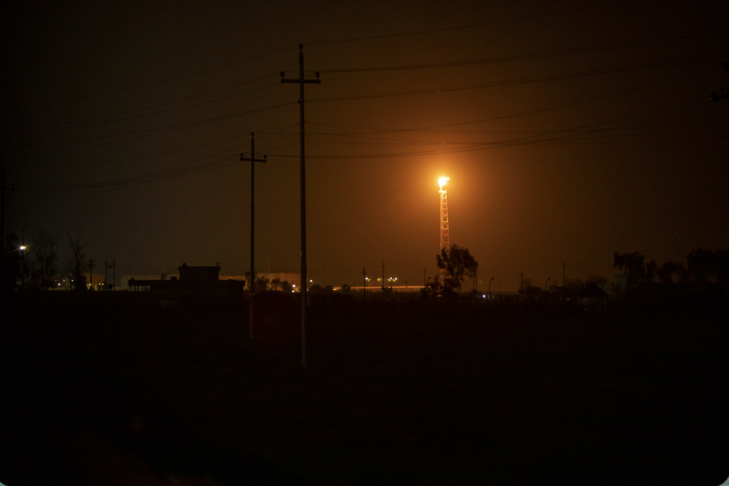
Bahrain’s position in that calculus is pointed. Manama hosts not just Sheikh Isa Air Base but the headquarters of US Naval Forces Central Command, the operational brain of the US naval presence across the Gulf, Red Sea, and western Indian Ocean. Iran has struck US positions in Jordan, Syria, and Iraq in prior phases. Reaching Bahrain extends that capacity to the island kingdom sitting at the maritime center of the Gulf. Iranian Army and IRGC statements, reported in a dispatch from the Gulf, described the Bahrain attack as a targeted operation against a specific US military installation.
Qatar’s Foreign Ministry issued a statement calling on all parties to avoid actions that would worsen the escalation. Qatar has positioned itself throughout the conflict as a potential channel between Iran and the West, between various parties seeking off-ramps. Its statement Wednesday was careful: it named no aggressor, proposed no process, made no offer of mediation. It described what it feared was coming.
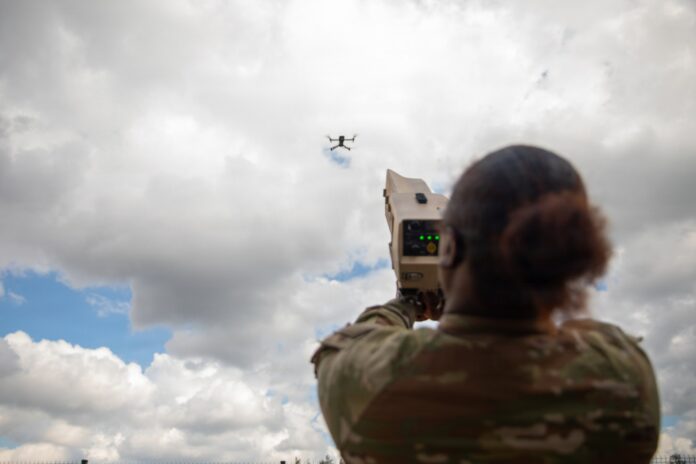
Kuwait’s position is harder to explain away. The Kuwaiti military’s announcement that it had intercepted drones and missiles crossing its airspace, and its instruction to citizens that the explosions audible across the country were intercepts rather than impacts, drew Kuwait into the visible theater of the conflict in a way it had not been before. Kuwait has not been a target. It has been a corridor, and on Wednesday its air defenses treated that corridor as contested airspace, in regional dispatches covering the interceptions.
What produced the initial Iranian strike wave that struck US bases in Jordan after US forces bombed Larak Island was a sequence that both sides could, at the time, narrate as action and response. Wednesday’s exchange is harder to frame that way. CENTCOM struck Iran without stating why. Iran’s 29th phase struck Bahrain without precedent. Kuwait intercepted what it did not ask to receive.
The Hormuz question runs beneath all of it. The Hormuz restrictions that have already upended Gulf commerce have altered the economic calculus for every country in the region. A conflict that expands its geographic footprint to Bahrain, through Kuwaiti airspace, into northern Iraq, is a conflict in which the strait’s future is increasingly hard to separate from the question of where the shooting stops. IRGC statements on the Erbil strikes, reported in a dispatch on the Erbil exchange, gave no indication of what phase 30 would look like.
US Central Command has not said what, if anything, it struck in Iran overnight that justified the scale of Wednesday’s Iranian response. Iran has said it will continue. The 30th phase has not been announced.