
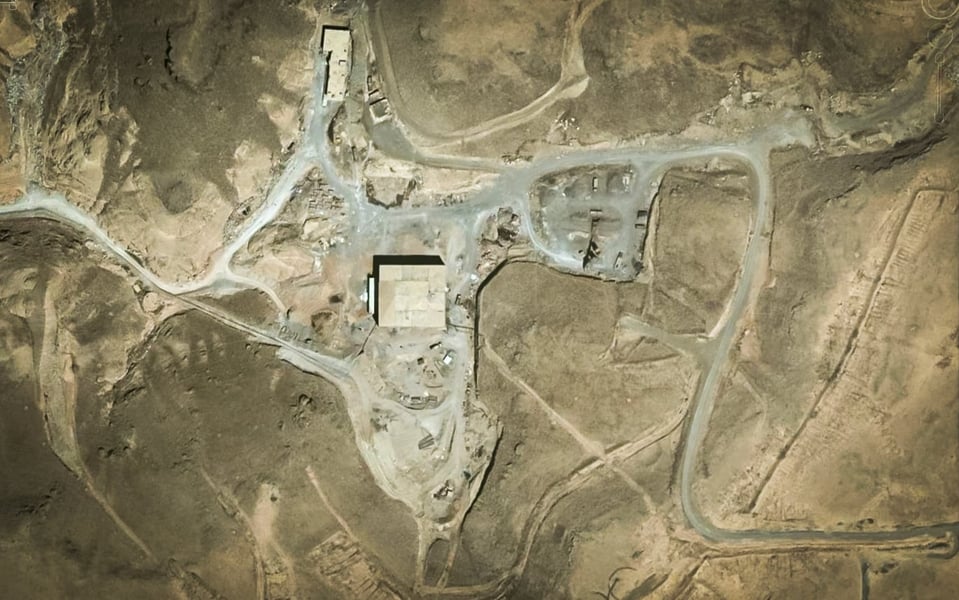
DAMASCUS — For nearly two decades, the Syrian government insisted the building that Israeli aircraft leveled in the eastern desert in September 2007 was a conventional military installation. The International Atomic Energy Agency has now confirmed it was not.
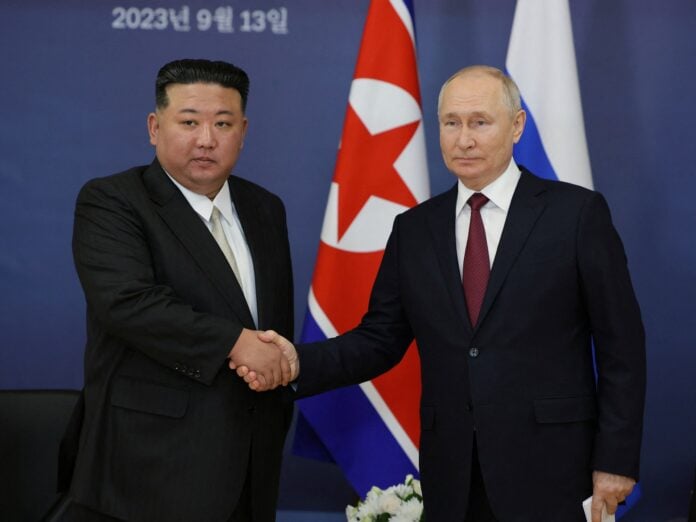
The IAEA said Wednesday it had verified cooling infrastructure beneath an excavated site in Deir Az Zor province that is “consistent with that of a nuclear reactor” — the first definitive international confirmation of what Israel destroyed in a unilateral strike that Damascus denied, then obfuscated, for almost twenty years. The reactor was built with North Korean technical assistance and was never declared to international inspectors under Bashar al-Assad’s government, which also concealed a fuel fabrication plant, uranium storage locations, and, at a separate site discovered only in July of this year, approximately 73 tonnes of natural uranium metal in fuel rod form.
“The former Syrian authorities had failed to report nuclear material, facilities and activities,” the agency said in its Wednesday statement.
The scale of what Syria concealed is substantial. Three distinct undeclared nuclear facilities. Nineteen years of incomplete responses to IAEA inquiries. A covert construction program that only became internationally known because Israel chose to destroy it — an act that was itself never formally acknowledged by Israel until a 2018 statement by then-Prime Minister Benjamin Netanyahu, and was never authorized under international law in reporting on the IAEA’s findings.
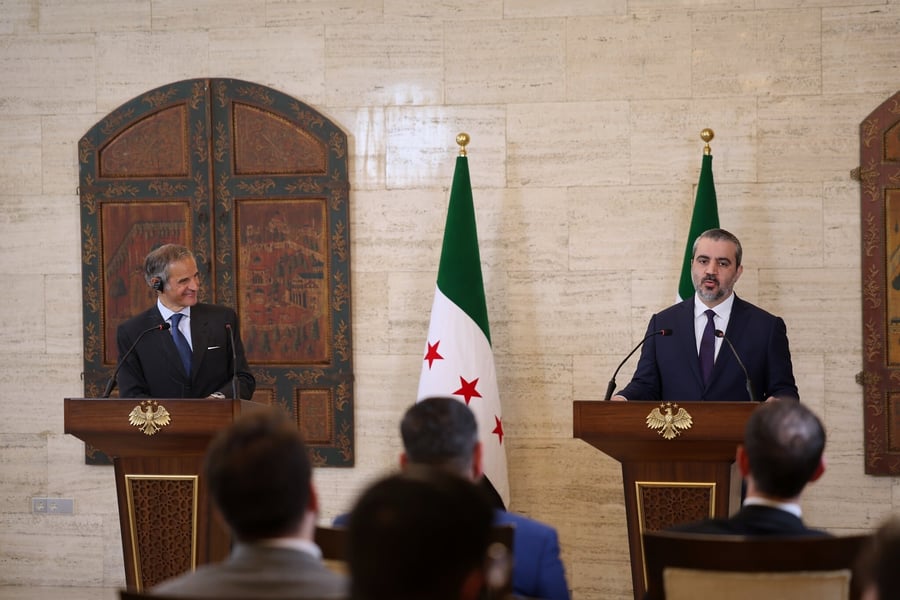
The report covers ground that was, until al-Assad’s removal from power in December 2024, essentially inaccessible to international verification. The IAEA’s first opportunity to excavate and inspect the Deir Az Zor site came only after Syria’s new government invited inspectors in and offered full cooperation. Syrian Foreign Minister Asaad Al-Shaibani met with IAEA Director General Rafael Grossi in Damascus last month. All nuclear material found at the separate uranium site is now subject to containment and surveillance measures. Syria’s new administration has expressed interest in developing a civilian nuclear energy program under international safeguards — a notable pivot from an era in which the same territory’s nuclear activities were actively concealed from the organization tasked with verifying them.
The findings raise questions a confirmation report does not resolve. Whether the reactor progressed far enough before Israel’s 2007 strike to produce any meaningful quantity of plutonium — which is generated when uranium fuel operates inside a reactor — has not been addressed publicly. The agency has said it will continue monitoring excavation at the Deir Az Zor site. What North Korea’s precise operational involvement was, beyond construction assistance, is also unaddressed. The Syrian case is the second publicly confirmed instance of North Korea providing nuclear construction assistance to a Middle Eastern state; the first, the same reactor, was concealed from inspectors until a strike eliminated the evidence.
The discovery of 73 tonnes of uranium metal in fuel rod form at a second, previously unknown site adds a separate dimension. Fuel rods are the processed form of uranium used to power reactors. Their presence at an undeclared Syrian location — surfaced internally by Syrian authorities and disclosed to the IAEA in July 2026 — suggests the former government’s nuclear activities extended beyond the single project in Deir Az Zor. Whether any material was removed or processed before the agency gained access is a question the Wednesday report does not answer.
The international legal architecture around nuclear inspections rests on the Nuclear Non-Proliferation Treaty, which Syria signed in 1969 but demonstrably failed to comply with for decades. That architecture has a visible gap. Israel — the country whose military action destroyed the Syrian reactor, and whose government has publicly demanded international pressure on Iran’s nuclear program — operates the Dimona facility in the Negev desert under no international safeguards framework. Israel is not a party to the NPT. Its nuclear arsenal, estimated by independent researchers at between 80 and 400 warheads, has never been declared or inspected under the same verification regime now being applied to Syria’s discovered uranium stockpile. The IAEA’s track record of being denied access to nuclear sites in the region has been a standing problem that predates the Syria findings.
For the agency, the Syria case presents both a validation and a complication. It can confirm what it was denied access to for nearly two decades. It can point to a successor government’s cooperation as evidence the nonproliferation framework can function when states choose to engage with it. What the Syria case also confirms is how long covert nuclear programs can operate, and how fully their traces can be erased by the time international verification arrives.
That context sits alongside a regional landscape already reshaped by Middle East nuclear ambitions that extend well beyond Syria’s. Israel’s declared intention to maintain military positions inside Syrian territory intersects with new questions about how a country still rebuilding its governing institutions manages 73 tonnes of uranium metal in fuel rod form now sitting under international surveillance. Whether the agency’s framework for discovered nuclear material is equipped for the circumstances in which it is now being found is a problem nineteen years in the making and still very much unresolved.