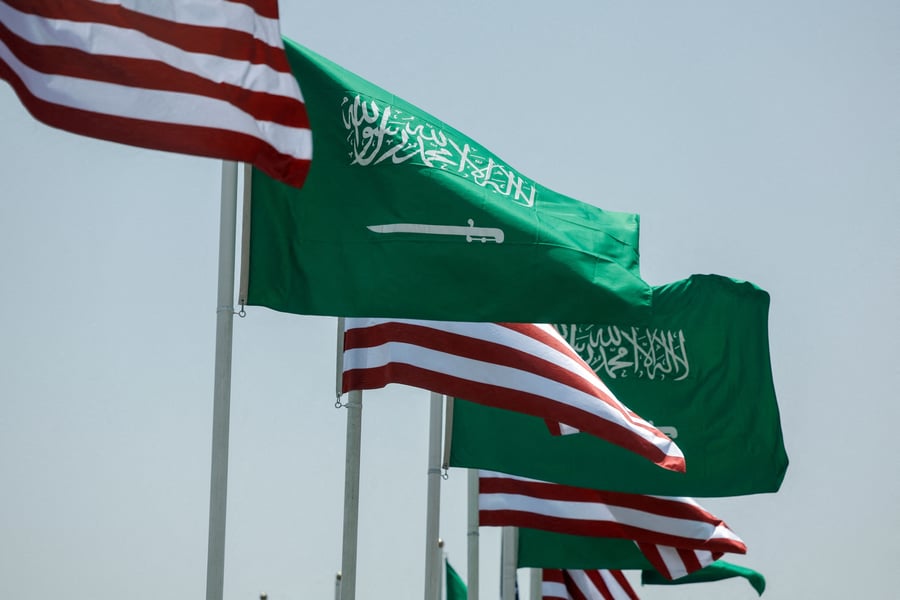

RIYADH — For a year, the central question in US-Saudi negotiations over a civilian nuclear cooperation agreement was not whether Saudi Arabia should have the technology. It was whether the deal could be drafted in language that would make its most dangerous implication disappear.
The implication is uranium enrichment. The path from civilian nuclear energy to a nuclear weapon runs directly through the ability to enrich uranium beyond the levels needed for power generation. Every country that developed nuclear weapons after the first nuclear age has done so through enrichment programs initially described as civilian.
Saudi Arabia’s Crown Prince Mohammed bin Salman said years ago, without ambiguity, that if Iran acquired a nuclear weapon, the kingdom would pursue one too. The US-Saudi nuclear agreement reached this year, which reportedly allows for domestic uranium enrichment without standard International Atomic Energy Agency monitoring protocols, has moved the region measurably closer to the threshold the Crown Prince named.
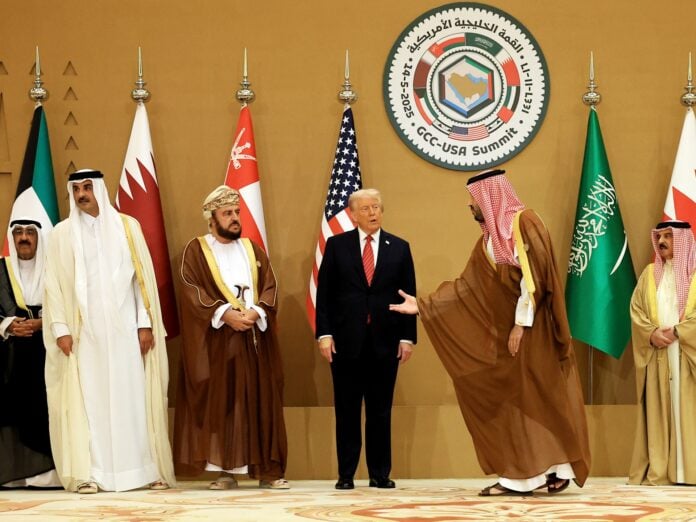
President Trump announced the deal as a breakthrough and claimed it contained two significant constraints: a prohibition on uranium enrichment and a requirement that Saudi Arabia normalize relations with Israel before the agreement could take full effect. Neither claim appears to reflect the actual substance of what was negotiated. US officials told Middle East Eye that throughout months of nuclear negotiations, Saudi recognition of Israel was never mentioned. The enrichment question is more complex still: the agreement may permit domestic enrichment as a future option while structuring oversight in ways that fall short of standard IAEA monitoring requirements.
What explains the gap between Trump’s public description and what US officials disclosed is not difficult to identify. A deal that explicitly permits uranium enrichment by a Gulf state, in the middle of an active regional nuclear competition with Iran, would face immediate congressional resistance and international criticism. The presentation was calibrated to manage that resistance, not to reflect the substance of what was actually agreed.
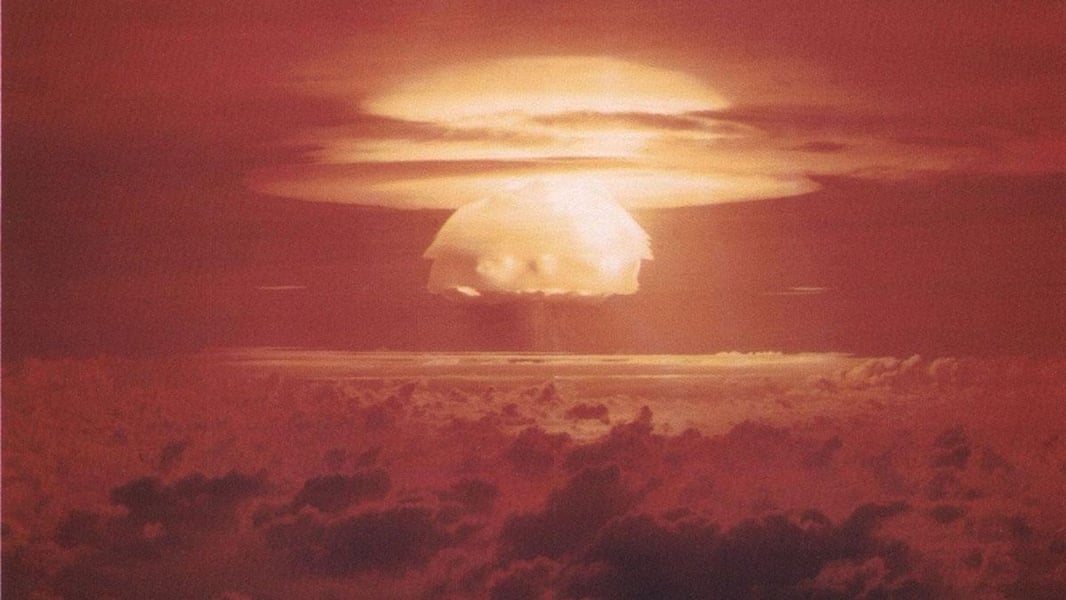
For Saudi Arabia, the calculation is straightforward. The kingdom has spent several years watching Iran move toward a nuclear capability, watching that capability drive American policy on the Iran nuclear deal, watching Israel leverage its assumed nuclear status to operate with military freedom across the region. The Saudi reading of these events is that nuclear capacity functions, in the contemporary Middle East, less as a weapon of last resort than as a strategic license: an authorization to act with reach that conventional military power alone does not provide. The end of a 266-day US naval deployment linked to the Iran war has only reinforced that reading.
Israeli officials initially raised objections to the Saudi nuclear agreement, concerned that Saudi enrichment capability would accelerate regional proliferation risks that Israel could not easily manage. Those objections appear to have softened, or been managed diplomatically, before the final deal was concluded. The mechanism by which Israeli concerns were addressed has not been publicly disclosed.
The proliferation risk the agreement creates is not abstract. Egypt has publicly stated interest in civil nuclear energy and signed a cooperation agreement with Russia’s Rosatom for the El Dabaa plant. Turkey, under President Recep Tayyip Erdogan, has indicated it will not accept a regional nuclear double standard in which other states are permitted enrichment capabilities that Ankara is denied. Iran, whose nuclear program has been the subject of years of sanctions and diplomacy, now watches a US-backed deal that gives its regional rival a pathway to the very capability Iran was pressured to forgo.
There is no version of a Saudi enrichment program that does not generate pressure from these states to claim equivalent rights. The Nuclear Nonproliferation Treaty’s foundational bargain, that non-nuclear states forgo weapons development in exchange for access to peaceful nuclear technology, was already under significant strain before the Saudi agreement. The deal accelerates that strain because of who is involved. Saudi Arabia is not a pariah state being pressured into compliance. It is a key US ally being offered access through an agreement Washington itself designed.
What MBS gets from this arrangement is something more durable than the deal’s formal terms suggest. A civilian nuclear program generates the scientific infrastructure, the trained personnel, and the enriched material stockpiles from which a weapons program can be built on a compressed timeline if a political decision is ever made to proceed. The Crown Prince has not said he intends to build a weapon. He has said he will not be the last major power in his region without one.
The question that remains unanswered, that the deal by its structure does not require anyone to answer publicly, is what happens if Iran does reach a weapons threshold. The deterrence logic surrounding the Saudi program assumes that nuclear weapons prevent conflict rather than escalate it, and that the Middle East will replicate the Cold War logic that held, imperfectly, between two superpowers for four decades.
Those conditions are not present. Multiple state actors, non-state armed groups with regional reach, and unresolved conflicts across several theaters make the deterrence calculation considerably more uncertain. The US-Saudi nuclear agreement has moved several steps further down a path whose end is not yet in view.