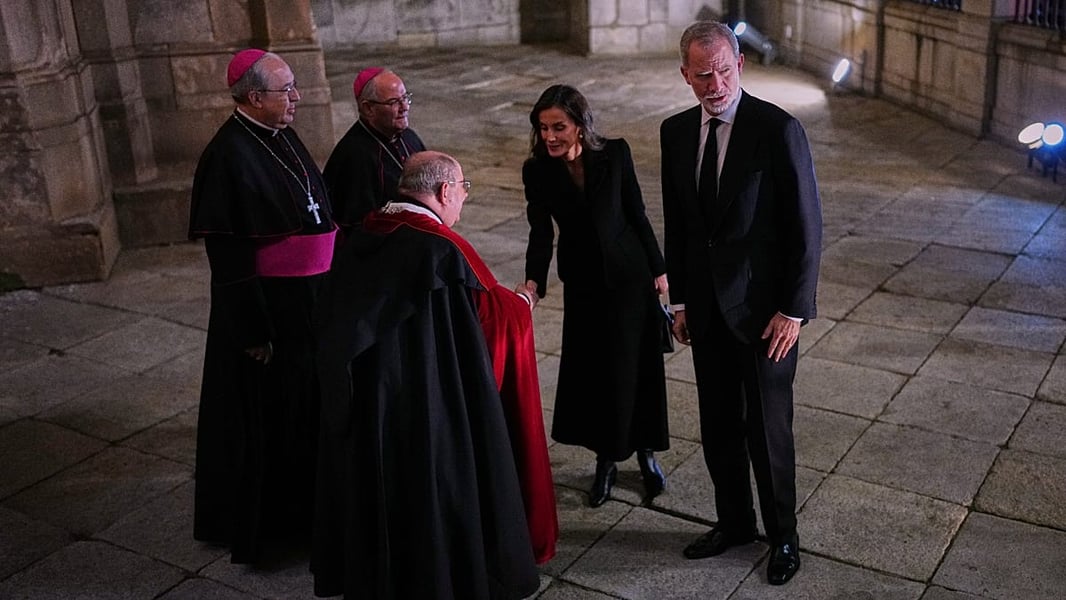

TOLEDO, Spain — Families bereaved by the Urda rail disaster were greeted by King Felipe VI and Queen Letizia at Toledo Cathedral on Tuesday, as Spain’s response to the deaths moved from emergency rescue and official mourning toward the harder questions of compensation, accountability and preventing another catastrophe.
The funeral Mass commemorated the 69 people killed in the October 28 accident. Almost two weeks later, the royal couple’s encounter with relatives and injured survivors placed those living with the consequences at the centre of a ceremony attended by senior government ministers and regional leaders.
The immediate news was a public farewell. The larger test is whether the support already announced reaches families without protracted delays, and whether proposed changes to railway operations become safeguards passengers can rely on. The official accounts of the memorial and the government’s assistance package describe different parts of that responsibility.
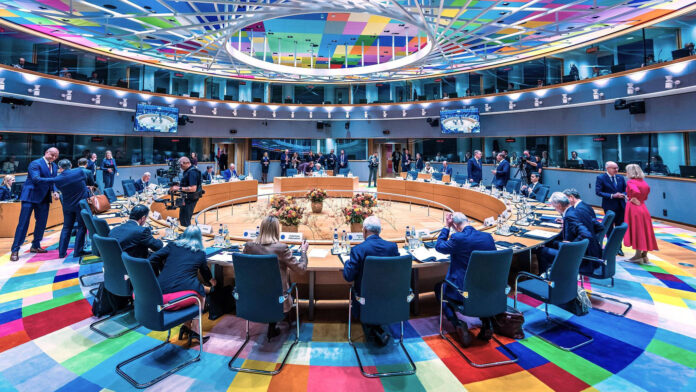
According to the royal household’s account of the Urda memorial, Archbishop Francisco Cerro Chaves presided over the Mass in Toledo’s cathedral. At the end of the ceremony, Felipe and Letizia greeted victims’ relatives and injured people seated in the first rows of the central nave.
The gathering brought together national and regional officials. Carlos Cuerpo, Margarita Robles, Milagros Tolón and Mónica García were among the government ministers listed by the royal household. Opposition leader Alberto Núñez Feijóo and Castilla-La Mancha’s regional president, Emiliano García-Page, also attended.
Their presence matters to the description of the event: the executive was represented at the cathedral. The royal account does not provide an explanation of Prime Minister Pedro Sánchez’s schedule. His published agenda for November 10 lists a 9:30 a.m. Cabinet meeting at the Moncloa complex. That entry alone does not establish what he did for the rest of the day or why he did not attend a particular event.
The distinction leaves a limit on what can be established from those official records. They document the royal couple’s attendance, identify ministers at the service and record the prime minister’s scheduled morning meeting. They do not settle competing accounts of a podcast recording or establish that one engagement displaced the memorial.
For the royal couple, Tuesday’s service followed an earlier visit to people affected by the disaster. The household said they had visited injured passengers at Toledo’s university hospital on October 29 and met families of people missing or killed in the accident. The cathedral gathering returned them to relatives whose lives had changed in the intervening days.
The government’s practical response runs on a separate timetable. On November 3, the Cabinet approved a €30 million package for Urda victims and their families, designed to provide direct support and advance compensation without waiting for administrative and legal proceedings to conclude.
Half of that allocation was designated for direct aid and half for advance payments under civil-liability insurance. The government said a death would qualify for €72,121.46 in direct assistance and an advance payment of the same amount. Injury-related payments would depend on severity. Those are the terms announced by the government, not confirmation that each eligible family has received the money.
That separation between approval and delivery is important. An announced fund establishes an obligation and a route to assistance; it does not, by itself, establish the experience of a bereaved household trying to obtain it. The documents reviewed for this report do not provide a family-by-family record of payments or a verified account of outstanding claims.
The package also provided for one-stop support offices through the government’s regional and provincial offices. People unable to travel were to be offered assistance at home. The stated purpose was to reduce the burden of obtaining help while families were dealing with bereavement or recovery.
Rail safety promises require a similar distinction between a measure announced and one operating on the network. The November 3 statement outlined changes to control-centre software, automatic alerts, electronic call records and checklists, alongside staffing and training measures. It also proposed validation by a second human controller when automatic blocking systems were unavailable.
Earlier coverage of Spain’s high-speed rail safety examined the separate Córdoba derailment in January, not the October Urda accident.
Those proposals identify operational areas the government intends to change. They are not a final finding about responsibility for the October 28 accident. Nor does the announcement establish that every proposed safeguard was in place by the time families gathered in Toledo. The status of implementation must be assessed separately from the language of the plan.
The royal household’s photographs and account record a more immediate task: meeting people whose losses cannot be resolved by a ceremony. At the cathedral, the king and queen greeted relatives and survivors in the first rows. Outside that encounter remain two questions the official announcements do not answer: which families are still waiting for assistance, and which promised safety changes are already protecting the next train.