
WASHINGTON — Democrats’ election victory could expose the Trump administration’s immigration operations to tougher congressional scrutiny, but it does not automatically withdraw money already provided to enforcement agencies, immigration attorney Elizaveta Kryukova said in comments reported November 9.
The administration has signaled that enforcement will continue. Homeland Security Secretary Markwayne Mullin wrote, “Deportations will continue,” in a November 4 post, the day after the congressional elections. His statement sets out the department’s position, not a response to Kryukova’s subsequent assessment.
The coming confrontation involves two different powers: investigating how immigration agencies operate and changing the laws that finance them. Kryukova said Democrats in the United States Congress could pursue both, while cautioning that hearings and subpoenas would not themselves reverse policy or establish criminal guilt.
Her comments appeared in a RIA Novosti report carried by the Namibia Press Agency under a Sputnik credit. Kryukova is the founder of National Capital Legal Services; her firm’s professional profile identifies immigration law among her principal practice areas. The comments were not given in an interview with The Eastern Herald.
Kryukova said congressional committees could hold hearings, demand records and subpoena officials to testify. But, she added, “a congressional subpoena is not a criminal charge or a conviction.”
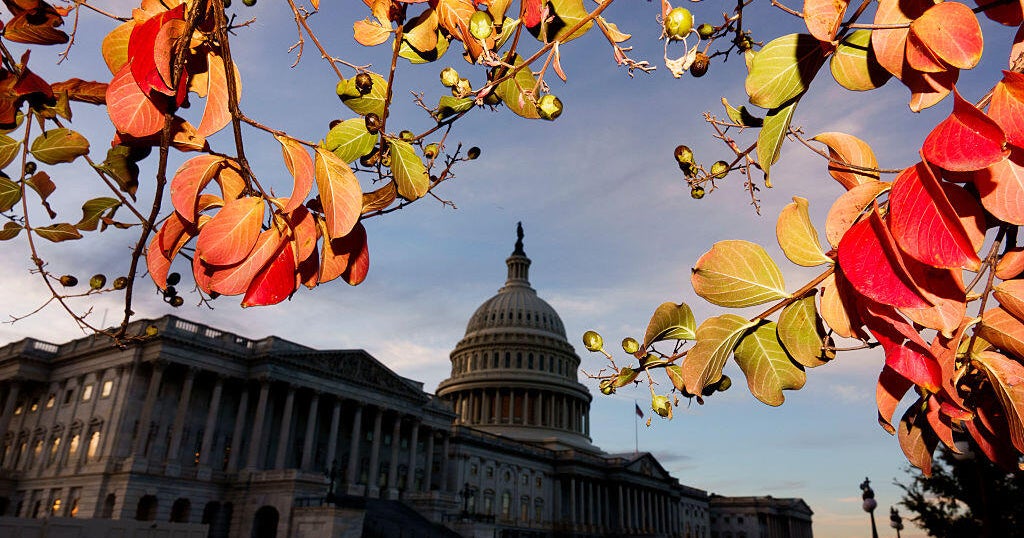
CBS News projects that Democrats will control both chambers when the new Congress convenes in January 2027. That would give the party control of committee leadership and greater ability to set investigative priorities. The precise size of the incoming majorities remains distinct from the question of which party will control Congress.
Democratic lawmakers have already named immigration enforcement as a target. CBS reported that Representative Robert Garcia, the senior Democrat on the House Oversight Committee and a prospective chairman in the next Congress, has pledged investigations involving administration officials and Immigration and Customs Enforcement. Those statements describe intended inquiries, not findings of wrongdoing.
Congress’s investigative authority is substantial but bounded. The Library of Congress’s Constitution Annotated explains that lawmakers can gather testimony and documents to support legislation and oversee the administration of existing laws. Investigations must have a legitimate legislative purpose and respect constitutional protections.
The funding question is more specific than whether Democrats can “defund ICE.”
One documented source is the reconciliation law enacted on July 4, 2025. A Congressional Research Service report identifies $74.85 billion in additional funding for Immigration and Customs Enforcement under that law: $45 billion for detention capacity and $29.85 billion for operational and procurement costs. Its funding table identifies the package as available across fiscal years 2025–2029.
Those figures describe that particular law. They are not a complete accounting of every appropriation enacted in 2025 and 2026, and they do not establish how much remains available today. The September 2025 CRS report is a historical account of enacted funding and the administration’s budget request, not a current ICE spending ledger.
The multiyear availability matters because the money does not simply expire when a new congressional majority takes office. CRS also explains that the reconciliation resources and annual appropriations were intended to complement one another. A proposal to reduce a future annual appropriation would therefore need to be distinguished from a proposal to cancel balances provided under the earlier law.
Kryukova said Congress could seek spending restrictions, stronger reporting requirements and legislation canceling some unused funds. “Winning an election does not automatically withdraw money already appropriated,” she said, adding that such legislation would generally require the president’s signature or sufficient votes to override a veto.
“Winning an election does not automatically withdraw money already appropriated.”
Elizaveta Kryukova, immigration attorney, speaking to RIA Novosti
There is another distinction within the money itself. An appropriation provides budget authority; an obligation is a commitment to pay; an outlay is the payment. A balance that has not yet been paid out is therefore not necessarily money that has not been committed. CRS’s explanation of federal spending and rescissions separates these stages.
That makes a verified account-by-account breakdown important to any proposal to cancel funds. Lawmakers would need to distinguish remaining unobligated authority from existing commitments and identify the statutory terms governing each funding stream. The original size of an appropriation, on its own, cannot establish the amount a proposed cancellation could reach.
Congress can enact a rescission to cancel previously provided budget authority before it would otherwise expire. But legislation must pass through the constitutional lawmaking process. Article I requires presidential approval or, after a veto, approval by two-thirds of each chamber on reconsideration. Control of both chambers does not by itself supply those veto-override votes.
Trump has publicly emphasized that obstacle. CBS reported that, after the election, he said he could work with Democrats but retained “the power of the veto.” Mullin’s separate November 4 statement that deportations would continue underscores the Department of Homeland Security’s stated intention to maintain enforcement despite the change in congressional control.
Kryukova questioned whether stronger oversight would ultimately produce meaningful accountability or change how immigration money is used. Her assessment leaves room for investigations to expose decisions and spending practices without assuming that disclosure will translate into an enforceable restriction.
The unanswered question is how much of the multiyear ICE allocation remains unobligated, and which restrictions Democrats could turn into law over Trump’s opposition. Until lawmakers establish the relevant account balances and identify a viable legislative path, promises to rein in the agency remain distinct from the power to change its operations.