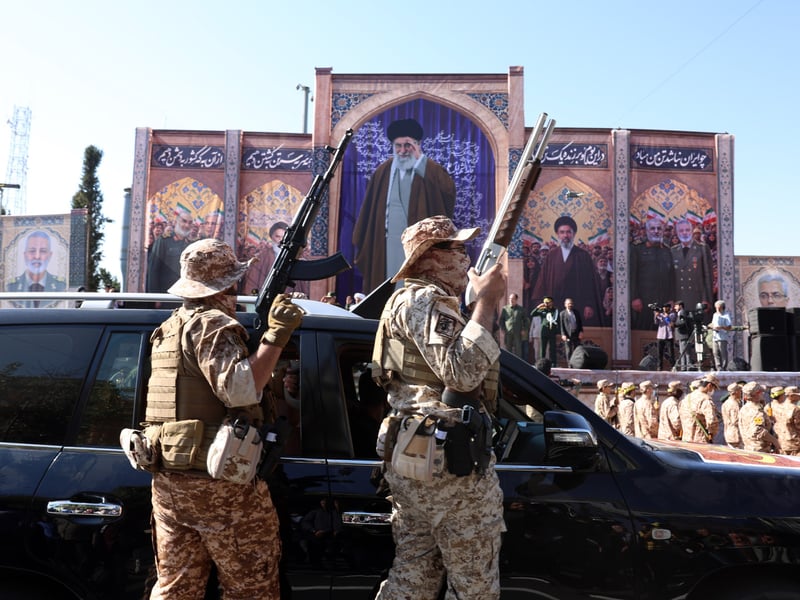

TEHRAN – Iran’s parliament does not want to wait for diplomacy. On Sunday, as President Masoud Pezeshkian flew to New York for the United Nations General Assembly, a coalition of lawmakers filed an emergency bill demanding that Iran withdraw from the Nuclear Non-Proliferation Treaty immediately, and calling, in the most explicit language put into formal legislation yet, for nuclear weapons tests to begin as soon as possible.
The two moves unfolded simultaneously and without coordination. Pezeshkian’s aides were signaling openness to diplomatic contact with Western governments in New York. Back home, parliamentarians were arguing that such openness was a strategic miscalculation. The distance between those two positions is not a nuance or an internal disagreement; it is the central fault line in Iran’s nuclear politics at the moment its future is most in question.
Lawmaker Hossein-Ali Haji Deligani, one of the bill’s principal sponsors, told reporters the measure had been submitted to Parliament’s Presiding Board with triple urgency, the fastest classification available under Iranian parliamentary procedure, ordinarily reserved for wartime matters. The bill now requires Speaker Mohammad Bagher Ghalibaf‘s approval to be scheduled for an open floor debate. “Given the circumstances facing the country and the aggression that the enemy has launched against us on two occasions, remaining in the NPT brings us nothing but losses,” Deligani said.
The proposal combines three demands:
- Iran would formally withdraw from the Treaty on the Non-Proliferation of Nuclear Weapons.
- Parliament would repeal the domestic law governing the country’s nuclear commitments.
- Legislators would endorse a new cooperation framework with “aligned states,” apparently including Russia, China, and other countries outside the Western-led non-proliferation system.
The bill’s most consequential feature is its language on nuclear-weapons testing. Earlier efforts had called only for leaving the NPT, without explicitly linking withdrawal to weapons development. This proposal removes that ambiguity.
One signatory told state radio that Iran’s adversaries would recognize only a deterrent they could not neutralize. Party leaders did not repudiate the remark, making it the clearest indication yet that the initiative could be intended to move beyond treaty withdrawal toward an openly weapons-oriented nuclear posture.
The bill’s timing tracks a sequence of escalating pressure. The IAEA Board of Governors voted on September 9 to refer Iran’s nuclear file to the UN Security Council, the second such referral in the current conflict, citing Tehran’s refusal to grant inspectors access to sites identified in a recent intelligence assessment. Iran has not reversed that position. The referral remains the formal international posture as Pezeshkian arrives at the General Assembly.
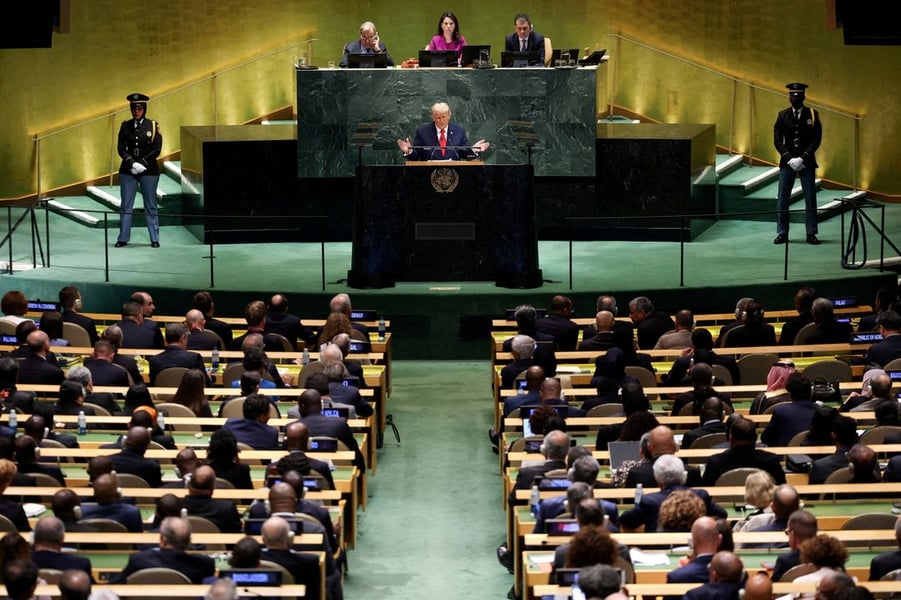
That is the leverage the bill’s sponsors say Iran no longer benefits from holding. North Korea withdrew from the NPT in 2003, conducted weapons tests starting in 2006, and has since remained outside the treaty without returning. Iranian parliamentarians have cited that sequence explicitly and without apology in floor speeches over recent months. The comparison would have been politically untouchable inside Iran five years ago.
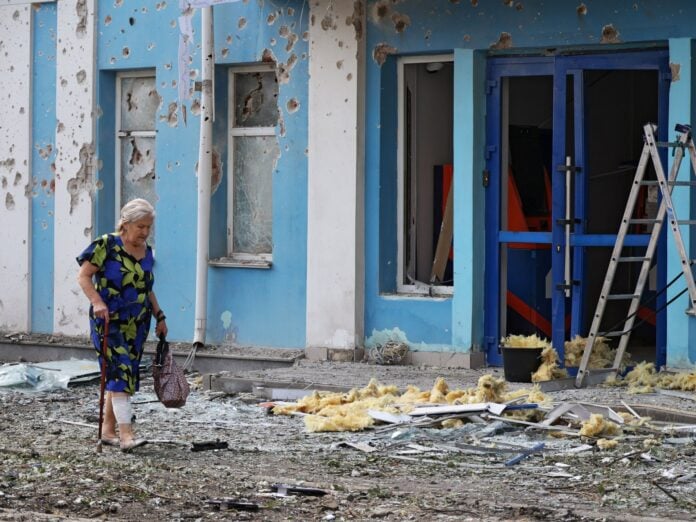
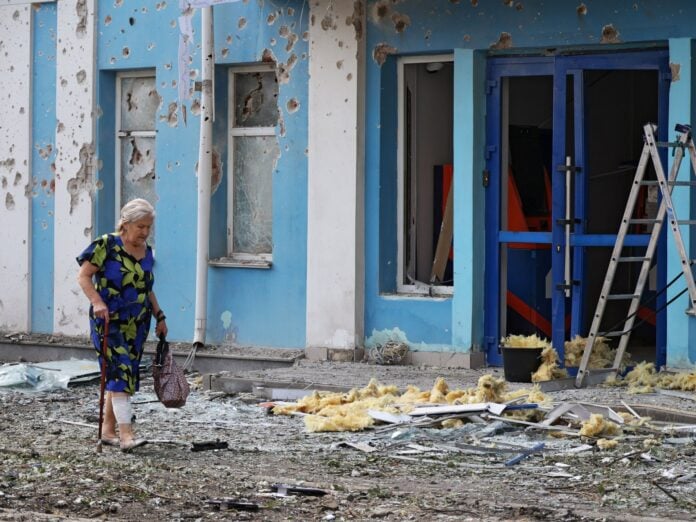
The United Nations Human Rights Council found last week that US strikes on Iranian civilian infrastructure, including schools and water systems, may constitute violations of international humanitarian law. Iran’s foreign ministry has circulated the finding as evidence that membership in international institutions has not protected Iran from military action. The parliamentary bill draws the same conclusion more bluntly.
Whether the Presiding Board advances the measure, and whether Ghalibaf, who has sought to keep fighting and negotiating open as parallel options, will schedule the floor debate, is the question the NPT’s future in Iran now rests on. Pezeshkian’s government wants diplomacy to produce results before that vote happens. The bill’s sponsors do not want to wait for those results.
The previous framework that once gave restraint a negotiated structure, the Iran nuclear deal, has been gone since 2018. Nothing has replaced it. What comes next, if Parliament votes to exit the NPT, is a question the lawmakers who wrote the bill have not answered.