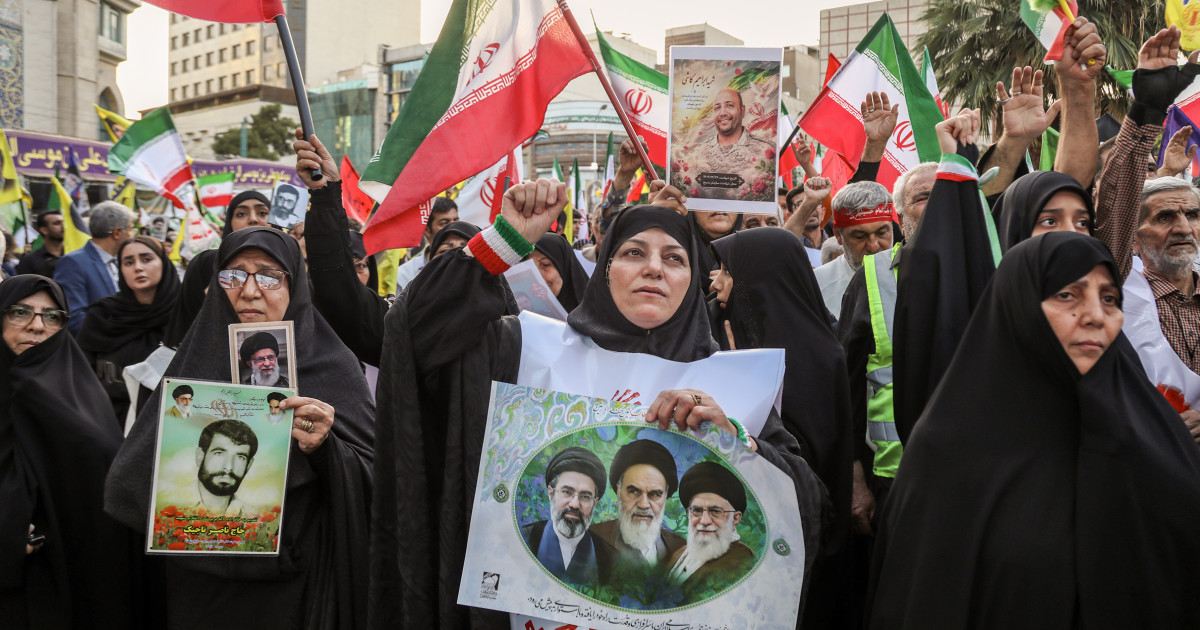

TEHRAN – Three months ago, an Iranian lawmaker stood on the floor of parliament and declared the Nuclear Non-Proliferation Treaty pointless. On Sunday, Iran’s government put its name to the strongest nuclear renunciation in the country’s diplomatic history, pledging in a draft memorandum of understanding with the United States that it would never produce, develop, or acquire a nuclear weapon.
The language, cited by Mehr News Agency from the draft MOU text, goes meaningfully further than anything Tehran committed to under the 2015 Joint Comprehensive Plan of Action. The JCPOA placed caps on enrichment and required monitoring — it never extracted a formal renunciation of weapons development. This text does. Iran “reaffirms its commitment to the Non-Proliferation Treaty (NPT),” the draft reads, “and confirms that it will never produce, develop, or acquire a nuclear weapon.”
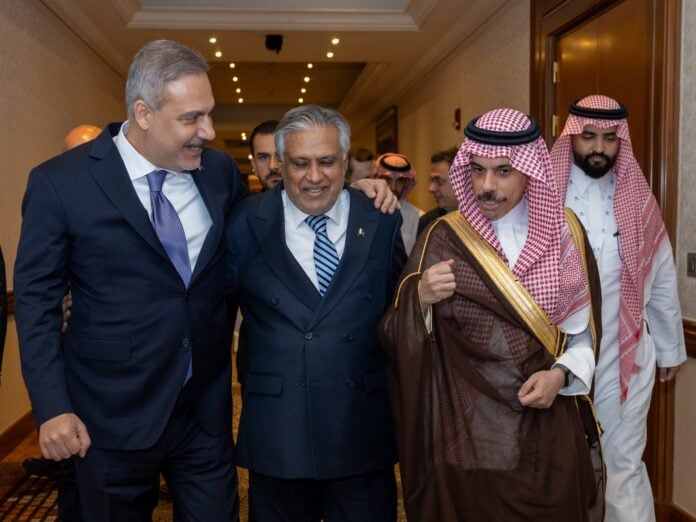
Iranian Deputy Foreign Minister Kazem Gharibabadi confirmed on Sunday that the memorandum of understanding between Iran and the United States had been completed, with a formal signing ceremony set for Friday, June 19, in Switzerland. The confirmation came hours after Pakistani Prime Minister Shehbaz Sharif — who has served as an intermediary throughout the negotiations — announced the deal had been reached, and U.S. President Donald Trump declared on Truth Social that the agreement was “now complete.”
What is being signed is not a final nuclear agreement. It is a ceasefire architecture — a three-phase memorandum that ends hostilities immediately, unlocks $24 billion in frozen Iranian assets in stages, waives sanctions on Iranian oil and gas exports, and opens a 60-day negotiating window for the permanent deal that Washington has been demanding for years. The NPT pledge arrives in Phase 2, at the moment of signing, not after negotiations conclude. That sequencing matters: Iran is not reserving its nuclear commitment as a bargaining chip for the final agreement. It is placing it on the table before those talks begin.
That is the part of the deal that Tehran’s negotiating team appears to have calculated most carefully. By reaffirming NPT membership — after months of threats to exit the treaty entirely — Iran satisfies the core American demand without making a single concession on the one program it fought hardest to protect. Iran’s missile arsenal, according to Mehr News Agency, is entirely excluded from the scope of the memorandum. It is not on the agenda of the agreement with the United States. That exclusion will define what the final deal can and cannot deliver.
The full text of the MOU, as published by Mehr, runs to fourteen points across three phases. Upon announcement, both sides declare an immediate, complete and permanent end to all hostilities in the region, including Lebanon. The United States simultaneously lifts its naval blockade of Iran. From there, the 30-day signing period activates a cascade of economic concessions: half of the $24 billion in frozen funds within 30 days, non-reversible; sanctions waivers on Iranian oil, gas and petrochemicals, effective immediately. The Strait of Hormuz is to reopen to commercial maritime traffic within 30 days under terms determined by Iran.
In exchange, the document records Iran’s NPT commitment and confirms the nuclear pledge. The 60-day negotiating phase that follows will address what the MOU calls “the existing uranium stockpile” — Iran holds material enriched to 60 percent, below weapons-grade but far above civilian levels — and the fate of its nuclear sites. Under the agreement, that stockpile is to be diluted under United Nations supervision to levels suitable for civilian use. No enrichment ceiling is specified in the MOU itself. That, too, is left for the final deal.
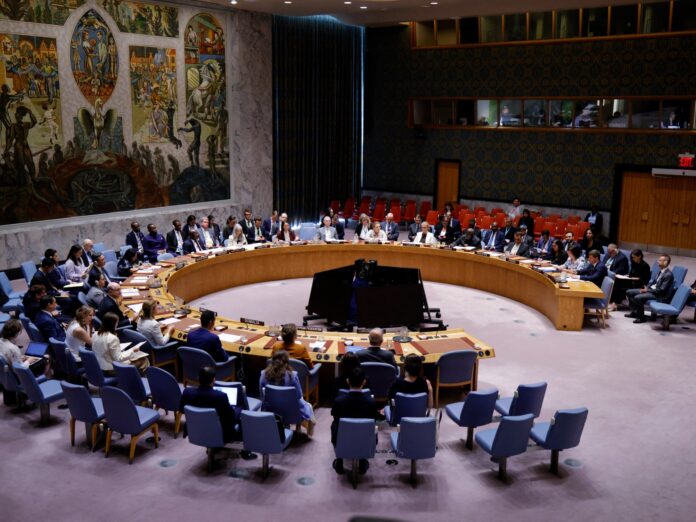
The verification problem is the sharpest edge the agreement has not yet addressed. The International Atomic Energy Agency has had no access to Iran’s key nuclear sites for more than a year, as the IAEA director-general Rafael Grossi acknowledged earlier this month. The MOU calls for a monitoring mechanism to supervise implementation of the final agreement, but it does not specify what that mechanism is, who staffs it, or how quickly inspectors can return to sites that were bombed by the United States last June and whose current condition the agency has not been able to independently assess. The final agreement, according to the draft, is to be approved by a UN Security Council resolution — a procedural anchor that raises its own questions about timeline and Russian and Chinese participation.
NBC News reported Sunday that Iran would reaffirm its NPT commitment as part of a broader agreement that also includes reconstruction funding. The 60-day negotiating period can be extended by mutual agreement. The U.S., according to the MOU text, will present a reconstruction fund for Iran worth at least $300 billion, to be funded partially by Gulf states. Washington will also begin “immediate consultations” with Israel to present a short-term timetable for a full Israeli withdrawal from Lebanon, including positions occupied since the 2024 Israel-Hezbollah agreement.
The NPT itself has been under severe institutional strain. The 2026 Review Conference, which concluded last month, failed to produce a consensus outcome document — the third consecutive review cycle to collapse without agreement, according to the Arms Control Association — in part because of the unresolved dispute over Iran’s nuclear trajectory. A bilateral pledge from Tehran does not repair the multilateral framework it bypassed for a decade, but it removes the most immediate threat to that framework’s credibility.
For Iran, the calculus is a departure from the posture it held as recently as March, when a senior lawmaker called NPT membership “pointless” and threatened withdrawal. The memorandum Tehran signed off on Sunday does not restore IAEA access, does not constrain missiles, and does not set an enrichment ceiling. What it does — for the first time in a bilateral binding text — is put Iran’s word in writing that it will not build the weapon that seven months of war were ostensibly fought to prevent.
Whether that word is verifiable is the question the 60-day negotiating period must answer. It has not been answered yet. As the Islamabad Agreement text was finalized ahead of Sunday’s announcement, the one institution charged with verifying Iran’s nuclear commitments — the IAEA — remained locked out of the sites it would need to inspect to make any pledge meaningful.