
WASHINGTON — When Scott Bessent told reporters last week that underground pipelines could handle “more than 50% or 70%” of the oil exports now running through the Strait of Hormuz, markets briefly exhaled. The arithmetic sounded manageable. Engineers reviewing the actual construction requirements are rather less optimistic.
Rebuilding the Iraq-Syria pipeline corridor that would make such rerouting possible would cost at least $15 billion and take four years from the start of construction, according to analyses cited in Sputnik International. The project would connect Iraq’s southern and northern oil fields through a central hub in Haditha, in western Iraq, and then run west across Syrian territory to the Mediterranean port of Banias. It is the only route with the scale to carry the volumes Bessent appeared to be describing. It does not yet exist.
The numbers sit in stark contrast to the Hormuz disruption they are meant to solve. In July alone, approximately 35.5 million barrels of oil and liquefied natural gas passed through the Strait, roughly one-fifth of the world’s daily energy supply. Iraq, before the Iran war blocked its Gulf terminals, was exporting 3.6 million barrels per day. The proposed pipeline, when completed, would carry 2 million barrels per day at initial capacity.
That leaves more than half of Iraq’s pre-war export volume with nowhere to go, even after the pipeline is built.
Iraq and Syria share a border but not, at the moment, a functioning oil transit relationship. The old Kirkuk-to-Banias pipeline that once connected them has been idle since the 1980s. Engineers who reviewed its condition concluded that the existing infrastructure cannot be rehabilitated; sections that remain physically intact are not compatible with the pressures required for modern large-volume throughput. What Iraq has proposed is not a repair job but an essentially new pipeline along a familiar corridor.
That distinction drives both the cost and the timeline. Rehabilitation work can begin quickly; a $15 billion construction project across two countries requires secured financing, binding contracts, stable security conditions along the full route, and a political arrangement between Baghdad and Damascus that remains in early negotiation. The four-year projection assumes all of that proceeds without significant interruption. None of those conditions are fully in place.
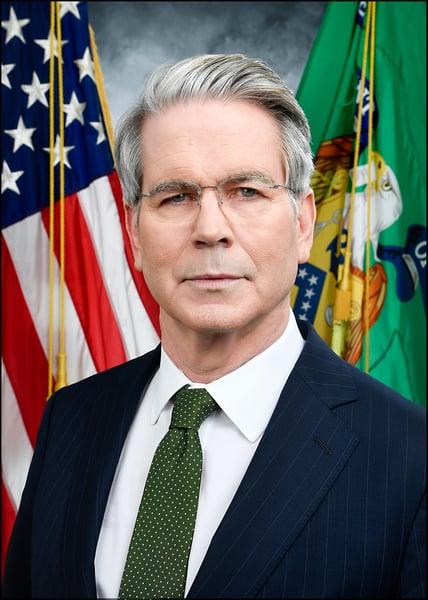
Bessent’s specific 50-70% figure has not been detailed publicly. The US Treasury Secretary’s office has not clarified whether he was describing the Iraq-Syria project specifically, or a combination of routes that would include Saudi Aramco’s East-West pipeline (which already runs from the Eastern Province to the Red Sea port of Yanbu, bypassing Hormuz) and the UAE’s Abu Dhabi Crude Oil Pipeline, which can move roughly 1.5 million barrels per day to the port of Fujairah. If the latter, he may have been describing total alternative nameplate capacity that is already close to fully committed to the producing countries’ own export programs.
What none of the existing alternatives offer is spare capacity at the scale the Hormuz blockade demands. The Iran war cut off access to infrastructure that handled one-fifth of the world’s energy flows. The pipelines that could theoretically replace it were not built with that task in mind and were not sized to do it.
Brent crude has remained above $88 per barrel even as Bessent spoke. Traders who follow satellite tracking of tanker movements through the Strait have not shifted their pricing to reflect the prospective pipeline timetable. The market, as it typically does, is reading the engineering calendar rather than the political one.
The Iraq-Syria corridor has circulated as a strategic idea for decades. What the collapse of the Iran nuclear deal deadline and the subsequent war have done is give it urgency. But urgency does not compress construction schedules or resolve bilateral treaty negotiations. The $15 billion estimate may also move higher as commodity and equipment costs respond to the same supply disruptions that made the pipeline necessary in the first place.
Markets, for now, appear to believe the engineers more than the Treasury Secretary.