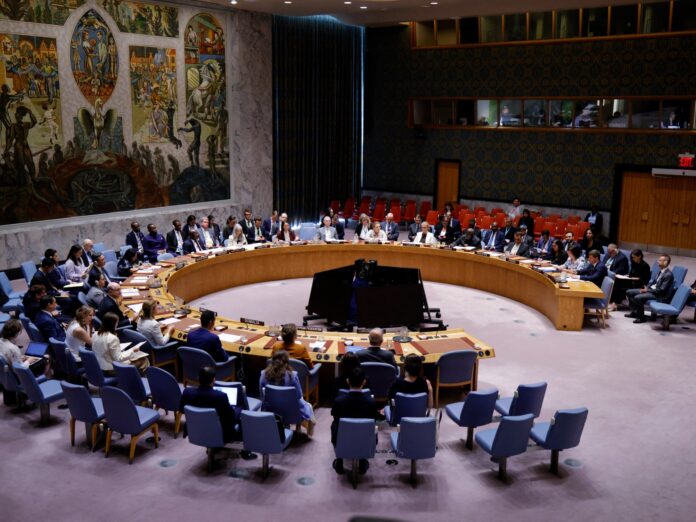

NEW YORK – Abbas Araghchi spent Friday telling reporters at the United Nations what will not fix Iran’s standoff with Washington: more sanctions, more strikes, and no accounting for the dead.
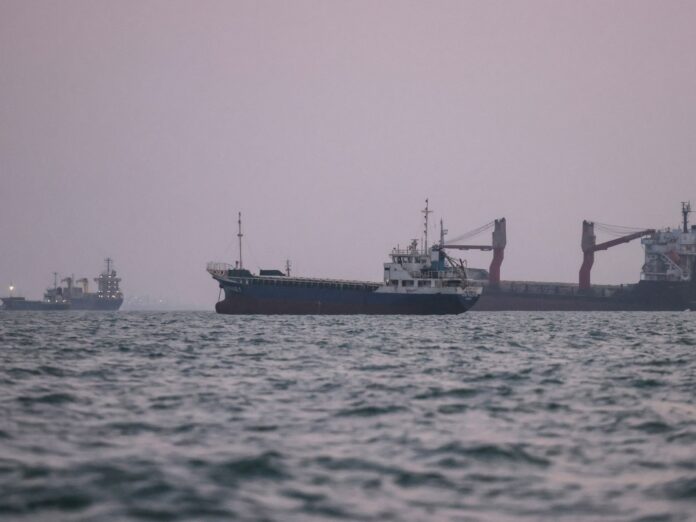
Iran’s foreign minister rejected the idea that military pressure could ever restore safe shipping through the Strait of Hormuz, the corridor through which roughly a fifth of the world’s oil passes. “Maritime security cannot be restored through further military actions, threats, blockade, or economic coercion,” he told reporters, a direct answer to months of American and allied naval buildup aimed at guaranteeing passage through the strait by force rather than negotiation.
That line connected directly to the toll Araghchi put on the war itself. “During the US-Israeli aggression against Iran, more than 5,000 people have been killed, including hundreds of women and children,” he said, a casualty figure Tehran has not previously stated this precisely in public remarks and one no independent body has yet corroborated. The number matters less as a verified count than as a marker of how Iran plans to frame the ceasefire diplomacy still underway in New York: not as a clean military resolution, but as an unaccounted mass-casualty event Washington and Israel have yet to answer for.
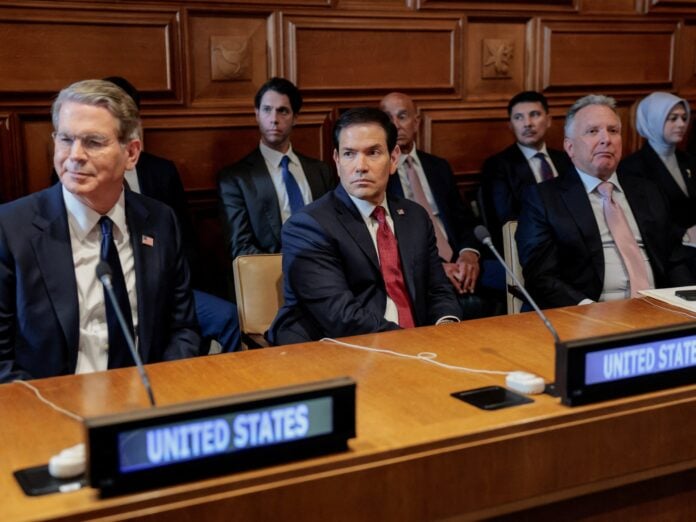
On sanctions, Araghchi was just as unambiguous. “This is not diplomacy, it is coercion and economic terrorism,” he said of the US measures still squeezing Iran’s economy even as Iran hands its peace conditions directly to American envoys inside the same UN building. The juxtaposition is deliberate: Tehran is negotiating and denouncing simultaneously, treating sanctions relief as a precondition rather than a reward for the ceasefire talks to succeed.
Araghchi also pushed back on the nuclear allegations that have shadowed those talks. “The renewed allegations concerning Iran’s peaceful nuclear program are political,” he said. “The allegation that Iran is on the verge of acquiring a nuclear weapon is a big lie.” That denial arrives as Treasury Secretary Scott Bessent’s secondary sanctions campaign grounds Iranian airlines globally, a pressure track Araghchi’s economic terrorism framing was clearly built to answer.