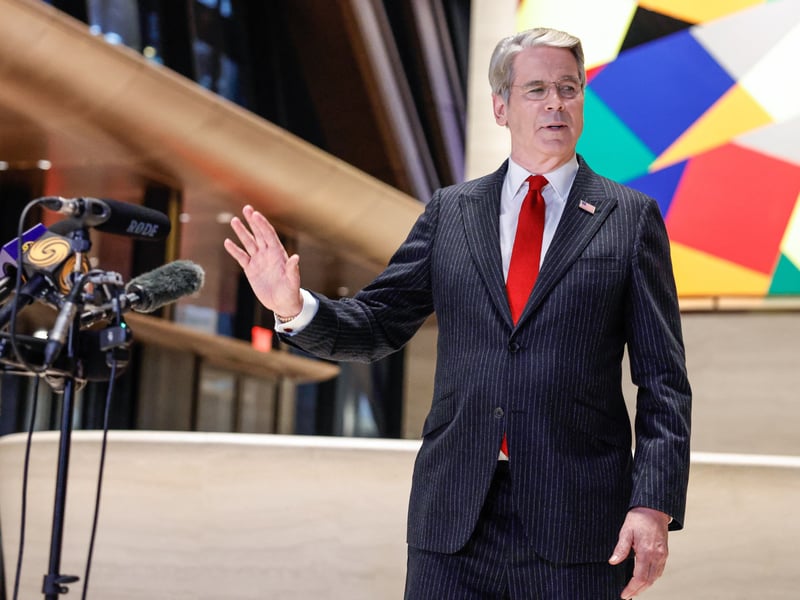

WASHINGTON — The world’s airports received an ultimatum on Monday. By Wednesday, any terminal that refuels an Iranian aircraft, any ground handler that services an Iranian carrier, any ticketing agent that books a passenger onto an Iranian airline will face the prospect of being severed from the US dollar system. Scott Bessent delivered the message in a CNBC interview Monday morning, speaking one day after concluding talks with China’s Vice Premier He Lifeng in New York. The implication was plain: the United States has decided to outsource the enforcement of its sanctions to the infrastructure of global aviation itself.
“If they land, you cannot provide them with fuel, you cannot provide them with landing services, you cannot sell them tickets, or you will be knocked out of the dollar system,” Bessent said. The deadline he set is September 23, which falls on Wednesday, when he declared every remaining Iranian commercial airline would effectively be grounded worldwide. Washington is not ordering Iranian planes out of foreign skies directly. It is telling the world that anyone who assists them will pay a price in the one currency no international airport can afford to lose.
The ultimatum is the sharpest point of a broader pressure campaign Bessent launched in late August under the name Operation Economic Outcast, what he called “the greatest coordinated economic isolation in history” against Tehran. On August 24, the Treasury Department sanctioned 60 Iran-linked entities across six countries, targeting oil, gold, aviation and digital assets in a single day Washington internally labelled “Economic D-Day.” Three weeks later, on September 8, the Treasury’s Office of Foreign Assets Control moved specifically against the aviation sector, sanctioning 27 Iranian airlines alongside nine related service providers and one individual, and suspending three aviation authorizations.
The breadth of those September 8 designations is what gives Bessent’s Wednesday declaration its force. All 27 of Iran’s remaining commercial carriers are already on the OFAC list. No Iranian airline has escaped designation. The secondary sanctions now threatening foreign airports and fuel suppliers are not speculative: they describe a world in which servicing any Iranian flight means exposure to the US financial system’s reach. “Let this be a warning to anyone doing business with Iran’s remaining airlines, all of which we sanctioned today,” Bessent said in a written Treasury statement. “You are at risk of being cut off from the global financial system.”
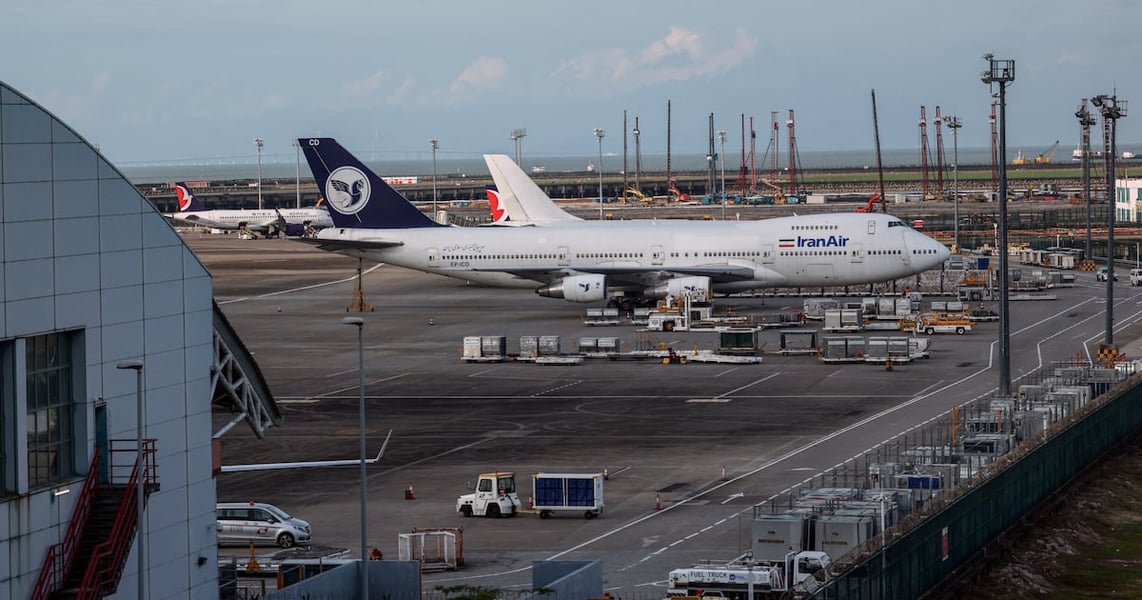
Mahan Air is one of 27 airlines designated in the September 8 action. But the policy reaches much further: every Iranian commercial airline is now covered by the sanctions regime.
That breadth is the central issue. The sanctions do not distinguish between carriers alleged to support military operations and those serving ordinary passengers. In treating Iran’s commercial aviation sector as a single target, Washington has created a regime that affects not only state-linked logistics but also airlines used to transport families and civilians.
The campaign has extended to the financial infrastructure that sustains Iran‘s economy more broadly. Also sanctioned on September 8 was Egypt’s second-largest bank, which the Treasury accused of funneling approximately $1.8 billion to Tehran through a network of intermediary accounts. The designation of a major Egyptian financial institution signals that Operation Economic Outcast is prepared to penalize US partners and allies if they continue to serve as conduits for Iranian finances, a message that lands awkwardly in Cairo at a moment when Egypt has sought closer ties with Washington on regional security.
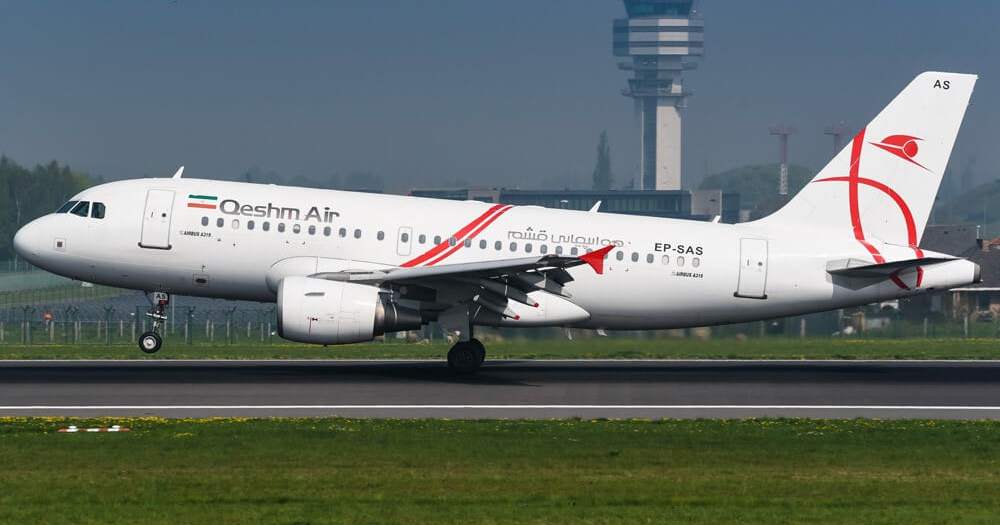
The deeper uncertainty about Wednesday’s deadline is whether Washington can actually enforce it. Operation Economic Outcast has a structural problem Bessent’s CNBC declaration alone cannot resolve: the two countries most capable of sustaining Iran’s aviation links are also the two countries least likely to comply with US secondary sanctions. Russia has pledged to sustain Tehran through the period of American pressure, and China remains Iran’s largest trading partner with a demonstrated history of maintaining commercial ties with sanctioned Iranian entities regardless of US warnings. Neither Beijing nor Moscow has signalled any change in posture since September 8.