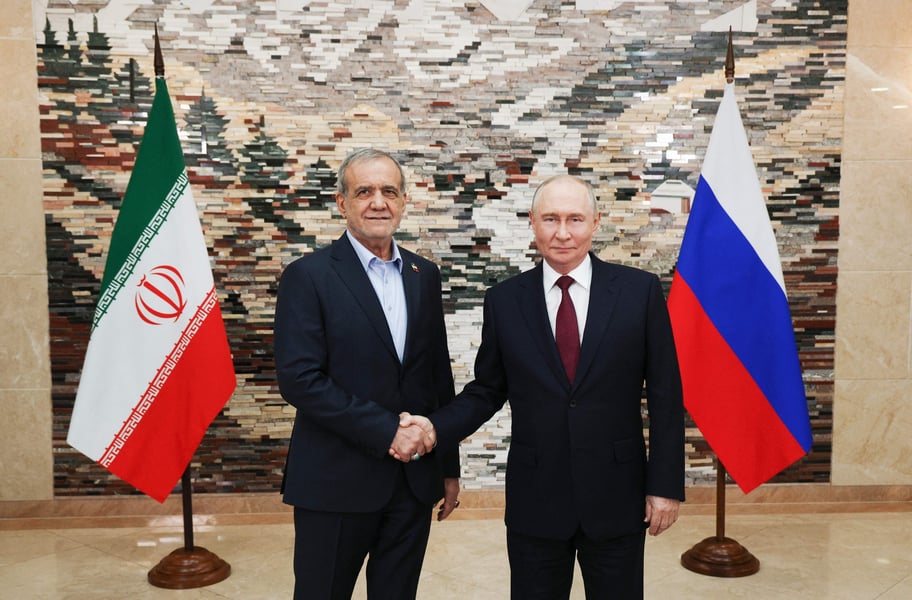

BISHKEK — Iranian President Masoud Pezeshkian arrived in the Kyrgyz capital while American missiles were still landing on his country’s southern coast. He left with a specific Russian promise: the goods would keep coming.
Vladimir Putin’s assessment of the agreement that briefly paused the fighting in June was direct. The ceasefire memorandum had proved “unstable and too fragile,” he said in a dispatch from Bishkek. Moscow had welcomed the June accord when it was signed. It had also watched it collapse. What followed at the Shanghai Cooperation Organisation summit was not a discussion about how to revive that process. It was a discussion about how to sustain Iran through a longer fight.
The pledges Putin brought to the meeting were specific. Russia would continue supplying Iran with necessary goods. Trade and economic cooperation would be maintained through bilateral intergovernmental commissions already in place. A free trade agreement between the Eurasian Economic Union and Iran, one whose negotiations had moved slowly before the war, would be accelerated. And roughly 9,000 Iranian students enrolled in Russian universities during the 2025-2026 academic year would continue their studies, undisturbed by whatever Washington decided to do next.
Pezeshkian did not moderate the framing. Russia-Iran ties, he told Putin, were “strategic”, a word with specific weight in diplomatic vocabulary, signaling a relationship designed to outlast individual governments and policy shifts. He went further. Russia, the Iranian president said, had helped Iran “confront the United States.” Not manage the confrontation. Not hedge against its costs. Confront it. He expressed confidence, before the cameras and before the other leaders assembled in Bishkek, that Iran would ultimately prevail.
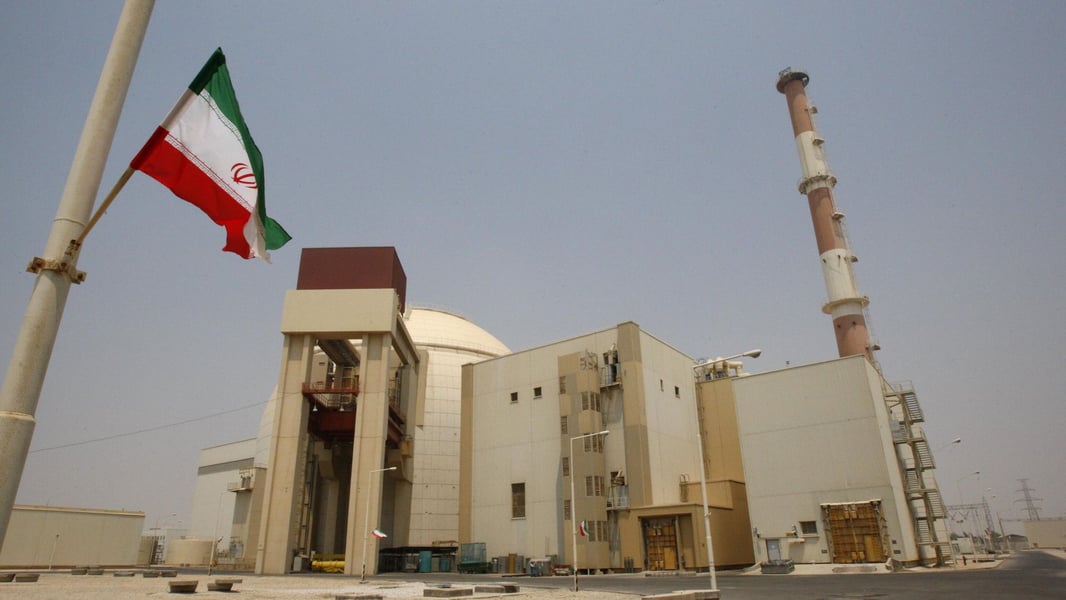
Behind the pledges on trade and students was a more specific technical conversation. According to Rosatom, the Russian state nuclear corporation, Putin and Pezeshkian discussed the situation at the Bushehr Nuclear Power Plant, Iran’s main civilian nuclear facility, designed, built, and maintained by Russia under decades of cooperation agreements, as reported in dispatches from the Bishkek summit. Bushehr has not been struck in the current conflict. Whether that reflects deliberate American restraint, a red line communicated through back channels, or simply that targeting a Russian-built plant creates a different category of problem for Washington, has not been settled publicly. That Rosatom confirmed the plant came up explicitly, in the middle of a war, is a signal even if its precise content was not disclosed.
The bilateral meeting sat inside a broader organisational statement. The SCO summit, marking the bloc’s 25th anniversary, produced a joint declaration calling for a “more representative and just multipolar world order”, a formulation that functions as a collective position paper against the framework of sanctions, military alliances, and dollar-denominated financial systems that underpin American global influence. Putin noted that 98 percent of Russia’s trade with its SCO partners now settles in national currencies rather than in foreign exchange in coverage from the summit venue. De-dollarisation is the organisational project, and it is running on the same timeline as the war.
The SCO now counts ten full members, representing more than half the world’s population. China’s Xi Jinping, India’s Narendra Modi, and leaders from Pakistan, Iran, and Belarus all attended. Over twenty supplementary agreements were signed covering transport, logistics, energy, and environmental cooperation. Pakistan was designated to assume the chairmanship from Kyrgyzstan and host the next heads-of-state meeting in Lahore in 2027. The Russia-China bilateral that declared their partnership a model of interstate relations ran in parallel, its own signal from the same building.
The June ceasefire that Putin now characterises as too fragile was the same agreement Trump had publicly credited, in part, to diplomatic efforts by Putin and Xi. Washington’s position then was that Russian and Chinese weight had moved Tehran toward a memorandum, offered as evidence that great power diplomacy could still produce outcomes. In Bishkek, Putin’s framing suggests a different reading: Moscow engaged, the framework did not hold, and the lesson is not to push for a rapid replacement. The ceasefire’s failure has become, retroactively, an argument for Russia’s current posture.
The exchanges that brought this dynamic to its present state are documented. US strikes on Iranian military assets near Larak Island broke the month-long pause in direct military action. The Strait of Hormuz restrictions that have defined the conflict’s economic and maritime dimension since February continue to shape the calculus for every state in the region, including those like Russia that are not formally parties to the fighting but have chosen their side.
What specifically Putin and Pezeshkian discussed regarding Bushehr, including the plant’s security status, Russia’s fuel supply commitments, and whether the conversation touched on contingencies if the facility is struck, has not been detailed publicly. Rosatom confirmed the plant came up. The content of that exchange is the part Bishkek did not put on record. That gap is, perhaps intentionally, left open.