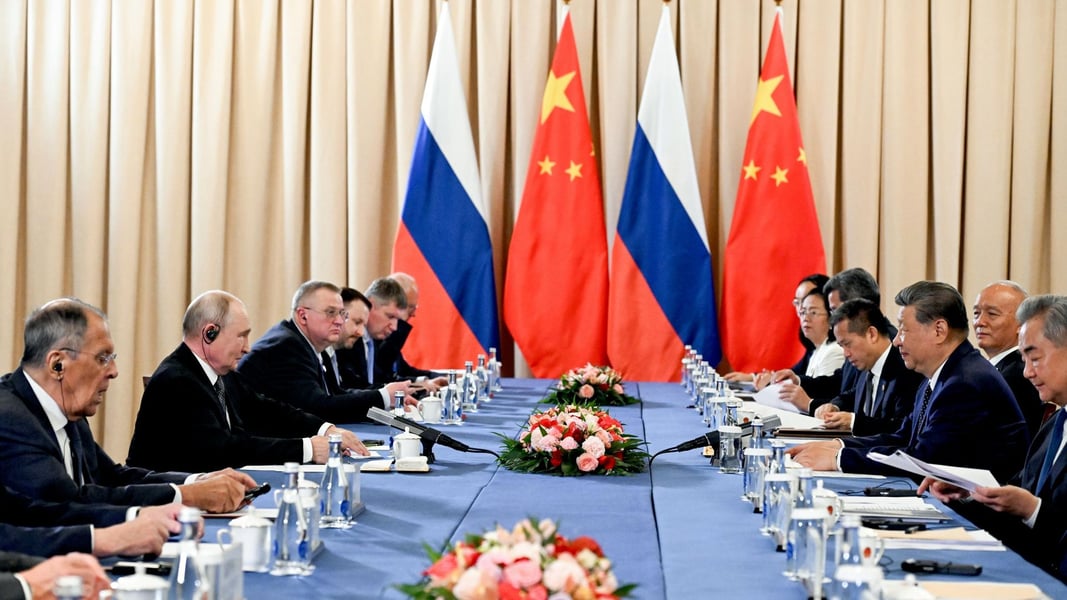

BISHKEK — The meeting lasted a little over an hour. When it was over, Vladimir Putin had found his formulation: the relationship between Russia and China, he said, was “a model of interstate relations.” He did not mean it as a courtesy. He meant it as a direction of travel.
Xi Jinping, speaking from the same bilateral room in the Kyrgyz government residence on August 31, did not soften the line. Ties between their countries, he said, “will only continue to strengthen.” These were the two most consequential challengers to the American-led international order, in the same room, in the same statement, both leaving very little room for interpretation.
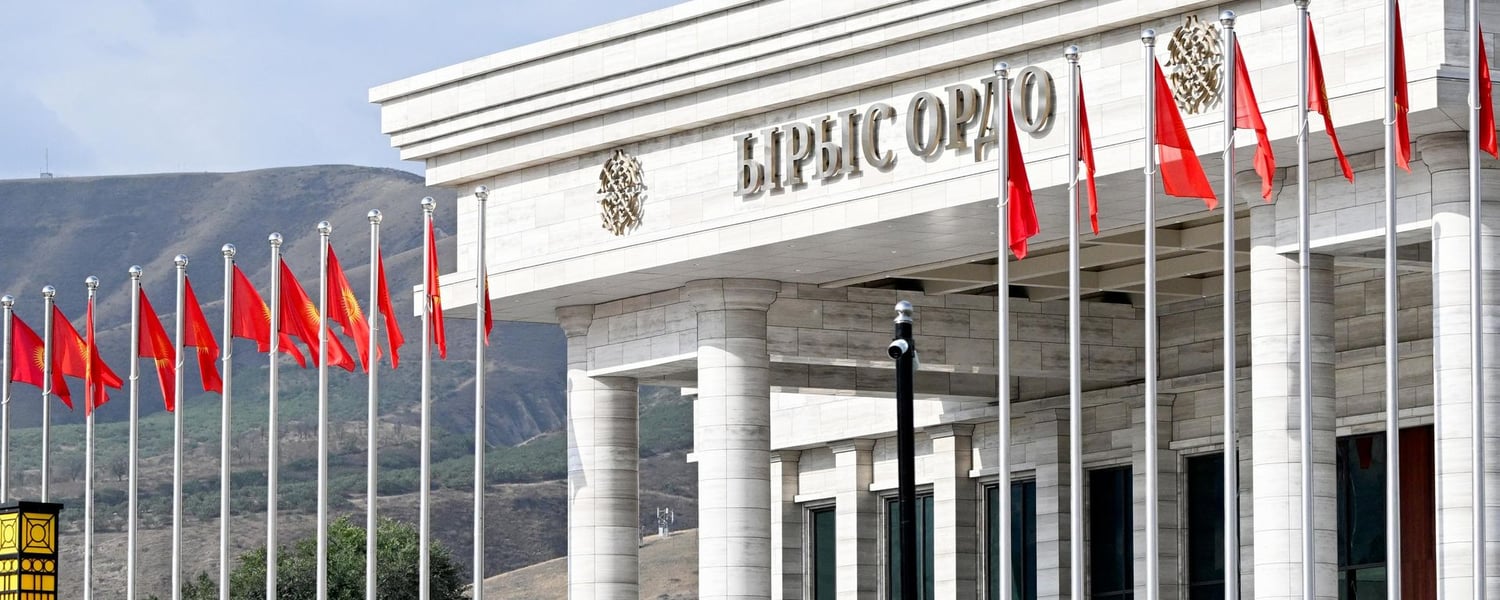
This was the second in-person encounter between Putin and Xi in 2026, held on the margins of the Shanghai Cooperation Organisation summit in Bishkek, Kyrgyzstan. The setting was expected. The temperature of the messaging was not, and it was higher than the setting required. No one would have noticed if they had described the meeting as warm and productive and left it there. They did not leave it there.
Ukraine came up once, according to Kremlin spokesman Dmitry Peskov. “In passing,” he said. “Tangentially.” There was, he specified, “no actual discussion as such.” The formulation was calibrated, brief, and dismissive. Two leaders who have built a relationship substantial enough to dispatch a European land war into a subordinate clause have, at minimum, already resolved their shared position on the subject. What required actual time in Bishkek was trade.
The working business of the bilateral covered energy, finance, and technology cooperation, the three sectors where Western sanctions have created both the greatest Russian urgency and the greatest Chinese opportunity. Putin proposed making the current visa-free regime between Russia and China permanent, removing one of the last administrative frictions between the two economies. He also signaled Russian support for China’s chairmanship of APEC, an endorsement carrying weight on the architecture of regional trade governance in a year when Washington and Beijing are still trading tariff salvos.
The phrase “model of interstate relations” is not neutral in diplomatic usage. It implies a template, a demonstration for states watching from the middle ground of what a partnership built on mutual non-interference, shared resistance to Western conditionality, and reciprocal economic benefit looks like in practice. The language is designed to be legible from New Delhi, Riyadh, Ankara, and Jakarta simultaneously, which is the SCO’s audience. Kremlin aide Yuri Ushakov had flagged in advance that the summit would reinforce the architecture of the multipolar world order, and the Putin-Xi bilateral was the centrepiece of that signal.
The summit had other significant bilaterals running in parallel. India’s Prime Minister Narendra Modi also attended, with his discussions with Putin focused separately on the state of India-Russia trade cooperation, a relationship Moscow is careful not to fold into the China frame even when all three countries are in the same building.
What did not happen at Bishkek is worth noting. There were no joint statements on Iran, despite the fact that both Russia and China played roles in creating the conditions for the US-Iran rapprochement, a role Trump publicly credited both leaders for when he described them as central to closing the US-Iran agreement. In a separate readout, Peskov confirmed the bilateral’s focus was economic and multilateral architecture, not the military flashpoints that might have dominated a different kind of meeting.
No announced frameworks on joint military production or weapons transfers emerged from Bishkek, though those subjects have their own channels. The US-China technology standoffs that have defined much of 2026 went unaddressed in any public statement. Those, too, have their own timelines.
What happened instead was simpler. Two leaders who have been consolidating a partnership for three years sat down in Bishkek and confirmed, in language more emphatic than protocol required, that the consolidation is not reversing.
The open question, the one Bishkek did not answer, is what that means for the states still choosing sides. Putin called it a model. Xi said it would only strengthen. Whether that is a reassurance to the non-aligned world or a pressure on it depends entirely on which side of the line you happen to be standing.