

MOSCOW — Russia is pressing for a negotiated settlement over its former consulate building in Gdansk as Polish authorities pursue possession through the courts, leaving the property at the centre of a dispute that the closure of the diplomatic post did not resolve.
Russian Foreign Ministry spokeswoman Maria Zakharova told RIA Novosti that outstanding real-estate issues should be addressed through consultations leading to a new intergovernmental agreement. Her comments set out Moscow’s preferred route to a settlement, not an agreement already reached with Warsaw.
The distinction matters because the two sides describe their rights to the property differently. Russia maintains that the premises belong to it under arrangements for indefinite, rent-free use. Gdansk officials say Polish land registers identify the State Treasury as owner. Neither a government statement nor the building’s former consular function, by itself, resolves that conflict.
“All the accumulated problems in the real estate sector should be resolved, as the Russian side has repeatedly suggested, through consultations with a comprehensive settlement through a new intergovernmental agreement,” Zakharova said. The proposal addresses the wider property dispute rather than announcing the reopening of the Gdansk consulate.
RT reported on November 7, citing Radio Gdansk and a court spokesman, that the court had asked Poland’s Foreign Ministry to arrange delivery of the claim to the Russian Federation. Further procedural steps would follow Russia’s response or the expiry of the period allowed for one. The update concerns the handling of an existing lawsuit, not a newly announced order to take the building.
The State Treasury is represented by Gdansk’s mayor in the proceedings. The request for the property’s surrender should not be confused with a completed transfer: the court account describes service of legal papers, rather than enforcement of a final possession order. It also provides no date on which Polish officials would receive the premises.
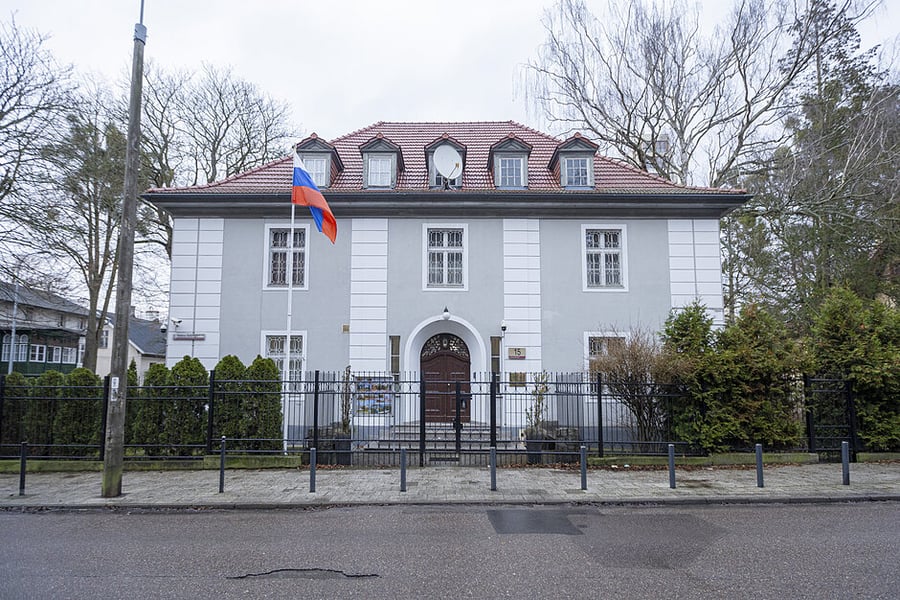
The city’s account also recorded Russia’s historical argument: the Batorego properties were compensation for an earlier consular building at Dlugie Ogrody. That earlier property, acquired on the orders of Peter the Great, had been used by Russia for more than two centuries before its seizure by Nazi Germany in 1941 and destruction in 1945. The account sets out the origins of Moscow’s position; it does not establish how a court will assess the resulting rights.
Lodzinska rejected Russia’s ownership claim, saying the land and mortgage registers named the State Treasury. That is the Polish municipal position, not a land-register examination conducted for this article. The underlying agreements and the parties’ competing interpretations remain central to this dispute in Poland–Russia relations, including whether and on what terms Russia must surrender the premises.
Consular protection is a separate question from ownership. The Vienna Convention on Consular Relations, in Article 1, defines consular premises as buildings and associated land used exclusively for the consular post, “irrespective of ownership”. A building can therefore serve as a consulate without that description establishing which state owns it.
Article 27 also deals specifically with temporary or permanent closure. It carries forward the receiving state’s obligation to respect and protect consular premises, the post’s property and its archives. The existence of that obligation is not, in itself, a finding that Russia owns the Batorego buildings or a decision on the Polish possession claim.
That provision is important when weighing earlier Polish statements about the closure’s effect. Gdansk’s December 2025 account quoted a regional official saying the premises would lose protection after the closure deadline. The convention expressly addresses protection after closure. How its obligations apply to these particular premises cannot be settled simply by repeating either side’s description of the building.
The dispute sits within a wider contraction of consular ties. Poland had already closed the Russian consulate in Krakow in 2025 after accusing Russian intelligence services of involvement in an arson attack. The Gdansk property question is narrower: closing a post and securing possession of the real estate are different actions, requiring different evidence and procedures.
Zakharova’s proposed intergovernmental agreement would offer a diplomatic route alongside the litigation. Her quoted remarks do not identify an agreed negotiating date, participants or terms. The reported court update likewise does not establish that either government has accepted such talks.
For the Gdansk case, the concrete procedural issue described by the court spokesman remains delivery of the claim to Russia, followed by its response or the expiry of the response period. The reporting reviewed does not establish that those steps have since been completed.