
WARSAW — Poland says it has detained the two men who set fire to a Starlink ground station outside the capital, and its minister coordinating the special services says he has no doubt Moscow sent them. Police describe video, fingerprints and DNA tying the men to the fire; none of the evidence described in public so far ties them to Moscow.
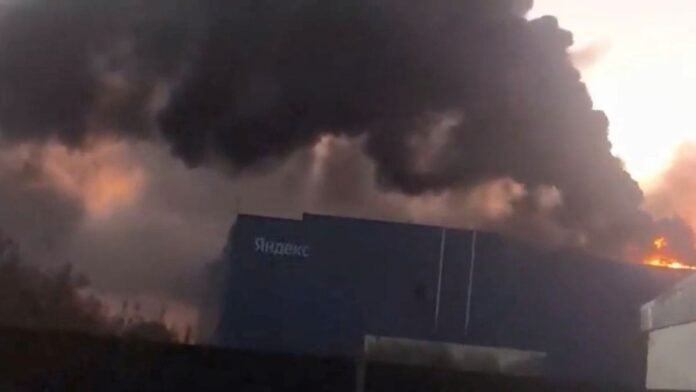
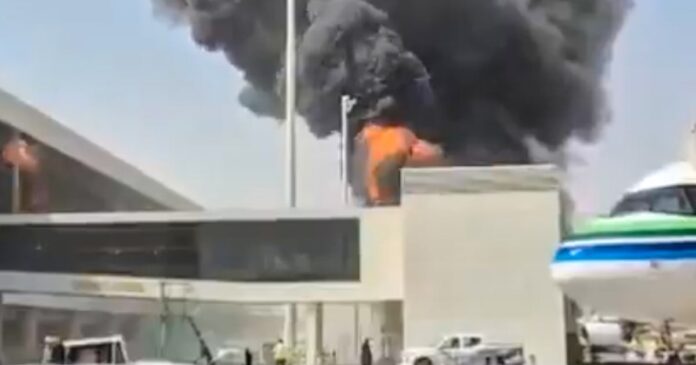
The fire broke out on September 23 at a base station in Wola Krobowska, about 50 kilometres south of Warsaw, and prosecutors said it caused property damage “on a large scale.” The Interior Ministry announced on Monday, at a Warsaw press conference with Tomasz Siemoniak, the minister coordinating the special services, and the national police chief, that Polish police and the Internal Security Agency, working with German police, had detained two Turkish citizens on European arrest warrants issued the week before. Baden-Württemberg criminal police said the arrests took place at the railway station in Nürtingen, Euronews reported. Interior Minister Marcin Kierwiński wrote on X that the men face a charge of subversion and sabotage for a foreign intelligence service. In August Prime Minister Donald Tusk said the same agency and police had arrested a Russian citizen accused of planning an assassination in Warsaw on instructions from Russian intelligence, which EH covered as Poland foiling a Kremlin-ordered assassination plot in Warsaw.
The station matters for what passes through it. It belongs to the state-owned operator Exatel and works as an internet hub, Digital Affairs Minister Krzysztof Gawkowski said. Ukraine’s military relies on tens of thousands of Starlink terminals, a subscription Poland says it pays for, according to Al Jazeera. The damage is described differently. Euronews reported that the fire hit mainly the power supply, a distribution board and a generator, and that Gawkowski said the station remained operational, while Al Jazeera said the fire destroyed the power system and backup generator and was meant to disrupt services including those used by Ukrainian troops.
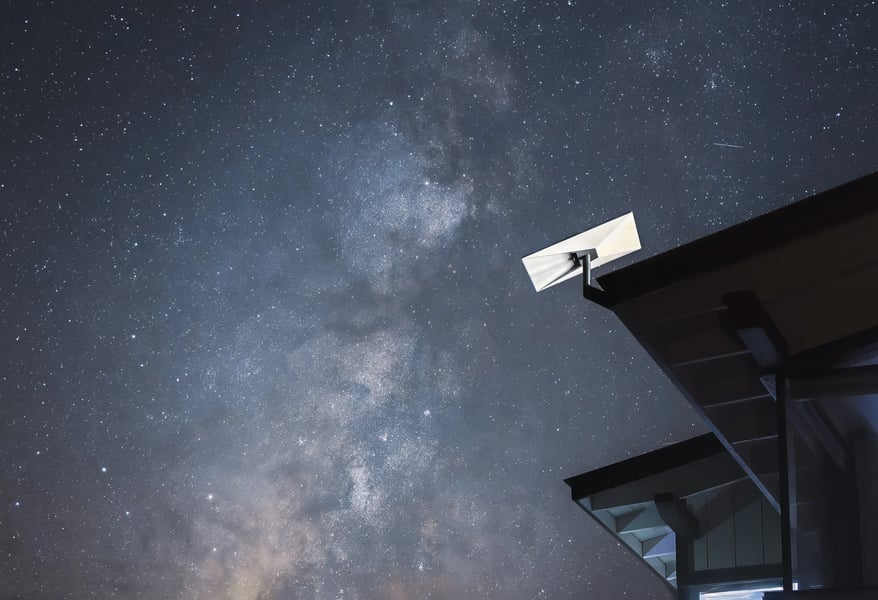
The evidence described so far goes to who lit the fire. Police chief Marek Boroń said investigators had reconstructed the sequence of events and the attackers’ escape from video, fingerprints, DNA traces and travel and border-crossing records, according to the Russian-language service of Euronews. It does not, as described, go to who paid for it. Siemoniak added that Russian services are increasingly turning to people linked to the criminal underworld, which would explain why the men held are Turkish citizens rather than Russian officers. It is also the kind of claim that is hard to test from outside, because a recruited intermediary leaves a chain that runs through people nobody has named. None of the official statements reviewed names a handler, a payment or a contact with a Russian official.
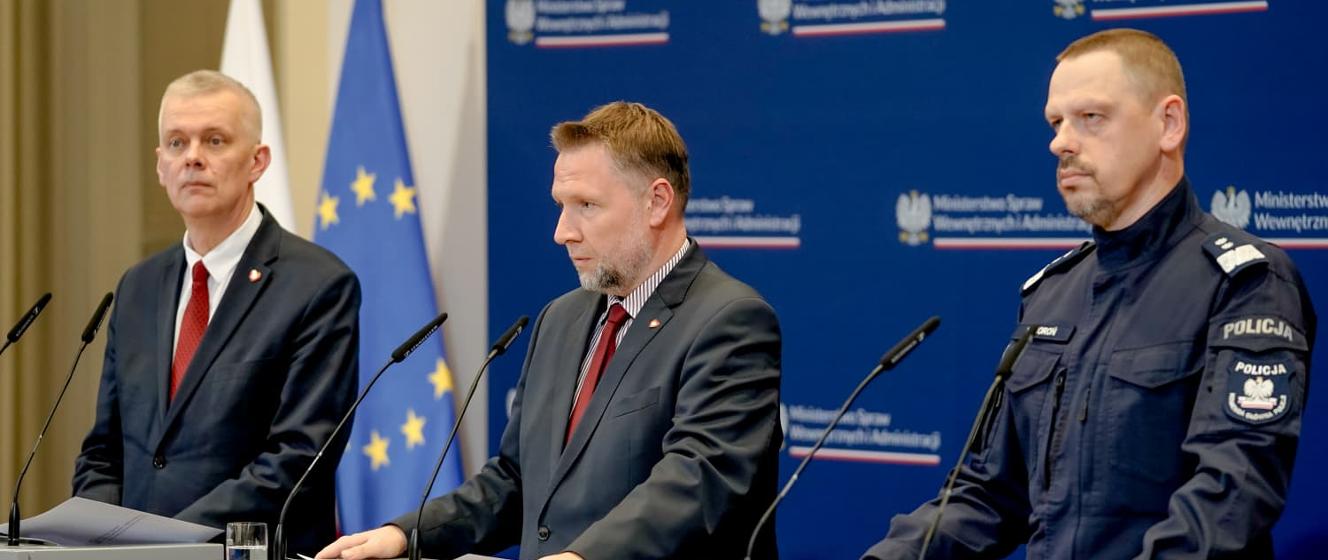
The picture of who was held is still moving. The ministry’s announcement came on October 12, while the Kyiv Independent put the arrests on October 10. One of the two men reportedly lives in Germany and a deportation order exists for the other, Euronews reported, and Polish authorities want both transferred for prosecution. Euronews, citing the broadcaster RMF FM and unnamed sources, also reported that German police held a woman and a man in Berlin, the woman possibly as a driver for the two. The Polish statements reviewed do not confirm that.
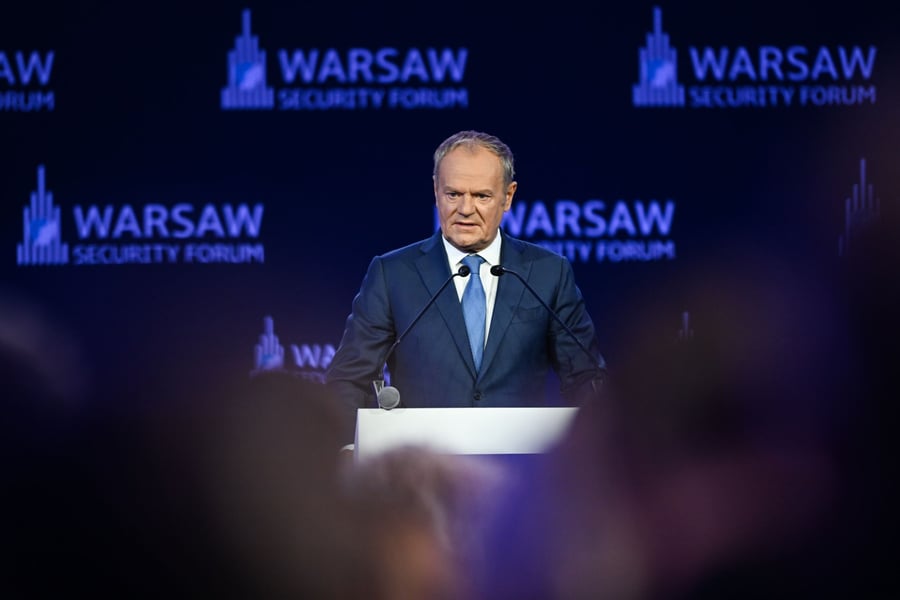
Tusk framed the case as part of a wider contest. Writing on X in Polish, he said German police had detained the two at the request of Polish services, called the fire “another act of hybrid warfare” in a translation of his words, and said the perpetrators would answer before the Polish justice system. The arrests were announced a day after Poland’s intelligence spokesman said authorities were investigating an alleged plot against Tusk and Defence Minister Władysław Kosiniak-Kamysz, the Kyiv Independent reported. Kosiniak-Kamysz told a press briefing: “We are taking this matter very seriously.”
Poland’s case file will eventually have to show the second link the ministers already assert, from two men in custody in Germany to a named officer in Moscow. When prosecutors opened the investigation they cited Article 130 of the criminal code, the provision on acting for a foreign intelligence service, and said nobody had been charged. They named no suspect, no handler and no payment, only a suspicion.