WARSAW — The announcement came from Poland’s prime minister three days after his government had quietly detained a Russian citizen in the capital. Donald Tusk told reporters on August 13 that Poland’s Internal Security Agency and police had arrested the man on August 7, accusing him of planning an assassination in Warsaw on instructions from Russian intelligence. Tusk declined to identify the target by name, saying only that the person was “inconvenient from the point of view of Putin’s regime,” and that the operation had been conducted in close cooperation with American authorities.
The next morning, a Russian court announced a sentence of 23 years in a high-security penal colony for Georgy Pirogov, a Russian citizen convicted of passing classified information to Polish military intelligence. A foiled killing disclosed from Warsaw and a lengthy conviction announced in Moscow came within 24 hours of each other, briefly rendering visible the depth of the intelligence competition between Russia and Poland that has been running mostly beneath the surface of the broader conflict in Ukraine.
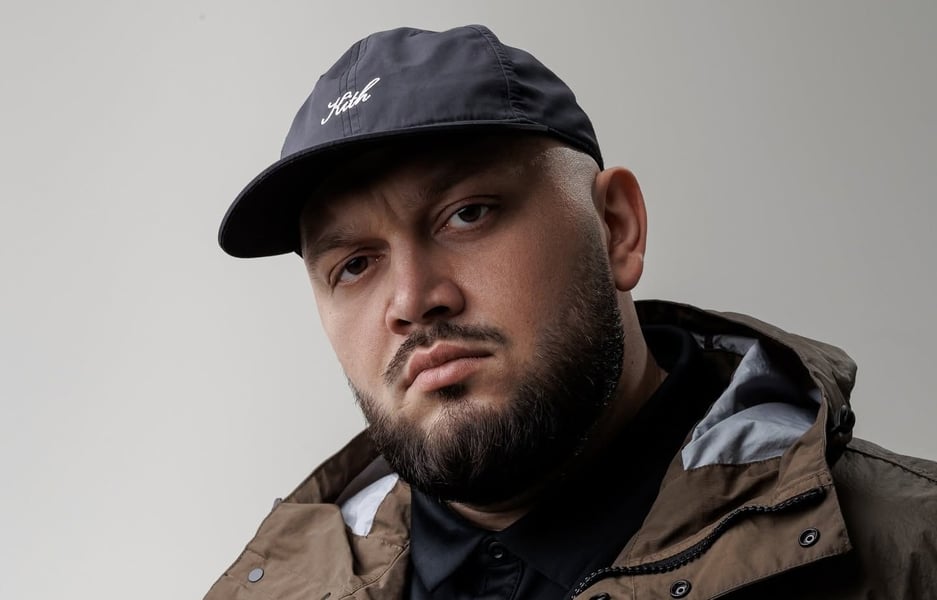
By August 14, Polish media had named the person Tusk had declined to identify: Albert Vasiliev, a Ukrainian rapper who performs as Kyivstoner, a former member of the band Griby. Vasiliev holds both Ukrainian and American passports. He relocated from Kyiv to the United States after Russia’s full-scale military campaign in Ukraine began in February 2022. According to the Kyiv Independent, Russia’s Federal Security Service accused Vasiliev in July 2026 of helping coordinate a drone strike against a defense enterprise in the Moscow region — allegations he denied.
Tusk’s framing of the arrest was specific. “This marks the first instance where someone, acting on Russian orders, has attempted to assassinate an American citizen on the territory of another NATO country,” the prime minister said. Poland’s security minister, Tomasz Siemoniak, confirmed the operation had been conducted in coordination with American intelligence services. Tusk described it as “a very dangerous signal” and said that “at the last minute,” his services had prevented what he called an execution.
The Pirogov conviction, announced the following morning, followed a pattern that has become standard in Russian national security prosecutions since February 2022. His trial was held in closed session. The FSB alleged he had established contact with Polish military intelligence in April 2022, gathering information about Russian missile systems production, transferring cryptocurrency in support of Ukraine’s armed forces, and organizing equipment deliveries from Poland to Ukraine. Russian espionage and treason laws were significantly tightened after the invasion began, with maximum sentences rising from 20 to 25 years and conviction rates that ran to single digits before 2014 reaching nearly 500 annually by 2025, Euronews reported.
Pirogov had left Russia after February 2022 and worked as an industrial climber in Georgia. He disappeared during a business trip to Uzbekistan in the summer of 2024 and was later found in Moscow’s Matrosskaya Tishina remand prison. The circumstances of his detention have not been made public.
Poland has been operating under sustained Russian intelligence pressure since the start of the war in Ukraine. In 2023, Polish intelligence agencies identified Russian operatives conducting covert surveillance in the country. Warsaw has since expelled Russian diplomats and closed the Russian consulate in Kraków on espionage grounds. Poland hosts one of the largest concentrations of American military personnel in Europe and serves as a primary logistics corridor for military support to Ukraine. Eastern Herald has documented Russia’s broader intelligence operations against European targets, including a coordinated GRU cyber campaign that prompted France, the European Union, and the United Kingdom to impose targeted sanctions on Russian military intelligence operatives in July 2026.
The FSB’s allegations against Vasiliev — that he coordinated a drone strike against a Russian defense facility — placed him in a category of Ukrainian diaspora figures that Russian intelligence has increasingly treated as military-grade threats since the full-scale conflict began. Whether those allegations are accurate, whether they served as a genuine intelligence basis for a targeted operation or as post-hoc justification, cannot be established from publicly available information.
What Polish authorities learned about the Russian suspect’s operational network in Poland has not been disclosed. The suspect’s identity has not been officially confirmed by Warsaw. Whether his arrest disrupted broader Russian operational infrastructure in Central Europe is not publicly known. Tusk framed the episode as a success — an execution prevented at the last minute. The question his intelligence services are presumably now working to answer is what that prevention reveals about the scale of Russian activity in Polish territory before it happened.
Tusk also made a political choice in his timing. Poland’s Internal Security Agency made the arrest on August 7; the prime minister waited six days before telling the public. The delay between operational action and disclosure was deliberate. In a country where the governing coalition has built substantial political capital around its hawkish posture toward Russian threats, the timing of intelligence disclosures is rarely incidental. What Tusk chose to say, and when he chose to say it, functions as much as political messaging as it does as a security briefing.
The parallel announcements from Warsaw and Moscow may or may not be connected at an operational level. Russia had its own reasons to publicize Pirogov’s conviction regardless of what Poland was disclosing. The coincidence of timing remains exactly that — a coincidence — until something emerges to suggest otherwise. What the 36-hour sequence of announcements established, at minimum, is that the intelligence war between Russia and Poland has now acquired a lethal dimension on both sides of the line.