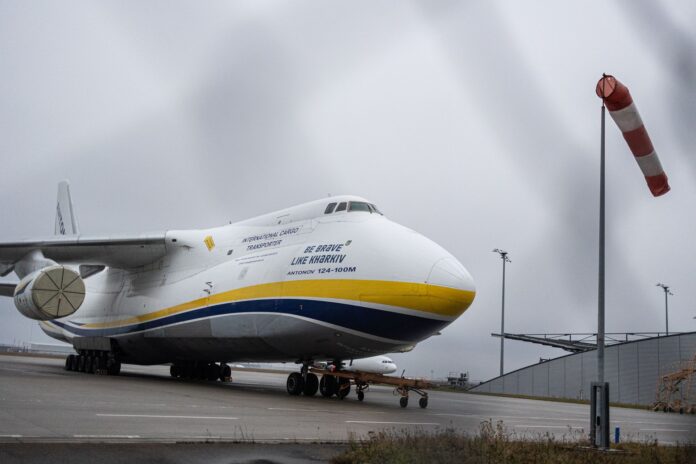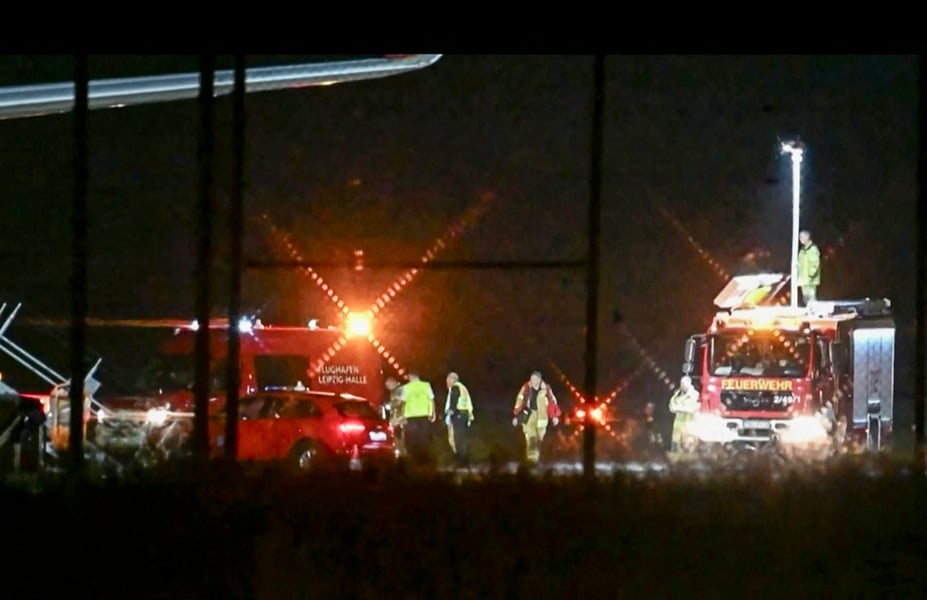

BERLIN — Germany moved on Tuesday to dismantle what remained of its formal diplomatic presence with Russia, closing the Russian consulate in Bonn, shutting Moscow’s cultural center in Berlin, and summoning the Russian ambassador for a formal rebuke, all within a single working day. The occasion was a government accusation, four weeks in the making, that Russian intelligence had directed a bomb drone to within meters of a Ukrainian cargo aircraft at Leipzig/Halle Airport in early August.
Interior Minister Alexander Dobrindt said the evidence was no longer ambiguous. “Taken together, police investigations, patterns of the offences and intelligence findings establish Russian responsibility for the attempted attack,” he said at a news conference in Berlin, where he stood alongside senior officials from Germany’s BKA federal criminal police and domestic intelligence services. He declined to detail the intelligence findings, citing classification, in a disclosure that left the most consequential question unanswered: who, specifically, placed the device on the tarmac, and through which network.
The drone was found on the evening of August 4 near an Antonov cargo aircraft operated by the SALIS consortium, which stages daily military logistics flights for NATO’s eastern flank through Leipzig/Halle Airport, as detailed in dispatches on the accusation. The airport is not incidental to the charge. Germany’s security services have privately described Leipzig as one of the most closely watched sites by Russian military intelligence in central Europe, precisely because of its role in NATO supply chains. Whether the intended target was the aircraft, its Ukrainian crew, or the logistics operation itself, German authorities declined to say.
Moscow’s response arrived quickly and without particulars. Foreign Ministry spokeswoman Maria Zakharova called Germany’s measures “anti-Russian action” and said Moscow would respond proportionately. She offered no alternative account of who might have placed the device, no denial that Russian intelligence services conduct operations on German soil, and no acknowledgment of the events at Leipzig. Russian official statements on hybrid operations inside Western Europe have rarely moved beyond the assertion that European governments manufacture pretexts.
That argument is increasingly difficult to sustain across the continent. Polish authorities opened a terrorism investigation last month into a factory fire near Warsaw that security officials described as a possible act of sabotage. The European Union imposed travel restrictions and asset freezes on Russian individuals in July after a separate inquiry into cyberattacks attributed to Russian state actors. When Berlin went public on Tuesday, the institutional response was swift: European Commission President Ursula von der Leyen endorsed the accusation, and NATO Secretary-General Mark Rutte said the alliance “stands with Germany.” French Foreign Minister Jean-Noel Barrot offered more qualified support, saying Paris would await formal criminal proceedings before joining any punitive action.
The closure of the Bonn consulate and the Berlin cultural center represent a step in form, if not in the underlying relationship, which has been in practical collapse since early 2022. Russian diplomatic infrastructure in Germany had already contracted across several rounds of expulsions. Measured against the scale of the broader Russia-Europe economic and diplomatic rupture, Tuesday’s closures are among the final steps in a dismantling that was already largely complete.
The question Germany is now pressing at the EU level is whether additional sanctions can target Russia’s shadow fleet, the network of tankers and logistics vessels used to move Russian oil through third-country intermediaries outside existing financial restrictions. Germany has proposed the measure directly to the European Commission, with backing from the Baltic states, which have argued for months that the fleet represents both an economic and a security risk. Poland and the Baltic governments have pushed an equivalent measure for months, and Tuesday’s accusation appears to have sharpened their case.
Germany faces a domestic complication. The accusation comes five weeks before regional elections in Saxony, the state that contains Leipzig. Dobrindt, a longtime critic of the Nordstream 2 pipeline, framed Tuesday’s announcement as a threshold moment. Chancellor Friedrich Merz kept his statement more measured, indicating that Germany would work within EU frameworks and pursue legal process rather than unilateral escalatory steps. How long that restraint holds depends in part on what the investigation produces next, and in part on how Moscow chooses to respond.
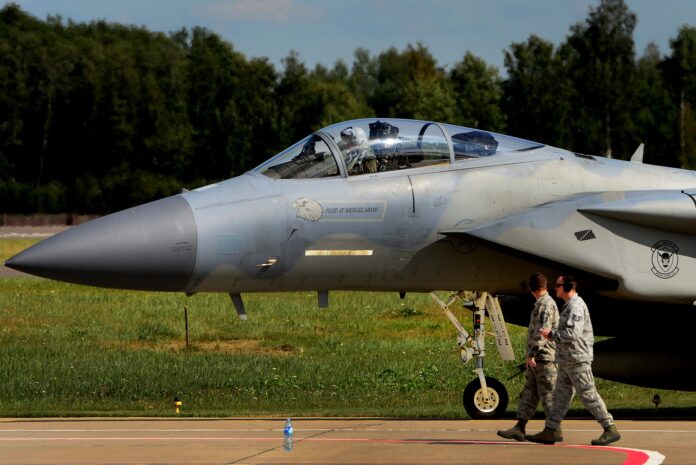
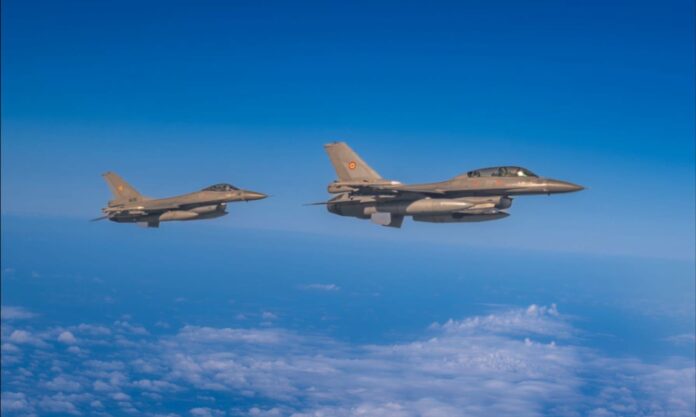
The summer’s intensification of Russian drone operations has shown that Moscow is prepared to sustain aerial pressure at a scale that strains European defense resources over an extended period. German security officials, according to people briefed on the matter, say they cannot yet determine whether Tuesday’s expulsions will deter further operations against European infrastructure or accelerate them. That uncertainty, as much as the accusation itself, is what Berlin is asking its allies to absorb.