
KYIV — The supermarket shelves in Ukraine’s capital were among the first things to go. Five consecutive days of Russian aerial operations across Kyiv and its surrounding region had not only killed civilians and damaged infrastructure, they had severed the logistics chains moving food from distribution hubs to retail floors. By Monday, workers at some Kyiv stores were telling customers that restocking had become unpredictable. The drones kept coming.
Between Thursday and Sunday, Russia launched nearly 1,500 drones at Ukraine, according to President Volodymyr Zelenskyy. Around 800 of them were jet-powered, a figure that marks a significant tactical inflection in a war being decided as much in the air as on the ground. By August 2026, Russian production of jet-powered one-way attack drones had overtaken production of the slower, piston-engined Geran-2 models that had long been the signature weapon of Moscow’s aerial campaign, a shift that Ukrainian commanders have described as their most pressing operational challenge.
The jet-powered variants fly faster than their predecessors and are considerably harder for Ukraine’s existing air defense systems to engage. Whereas piston-engined drones operate at speeds allowing older interceptor systems some window of opportunity, the jet variants compress that window to the point where many systems are ineffective. On Saturday alone, Russia fired 224 drones at Ukraine in daylight hours, most of them jet-powered, departing from the overnight launch windows that had become operationally standard. Zelenskyy conceded on social media that Ukraine is struggling to counter the fast-flying jet-propelled variants.
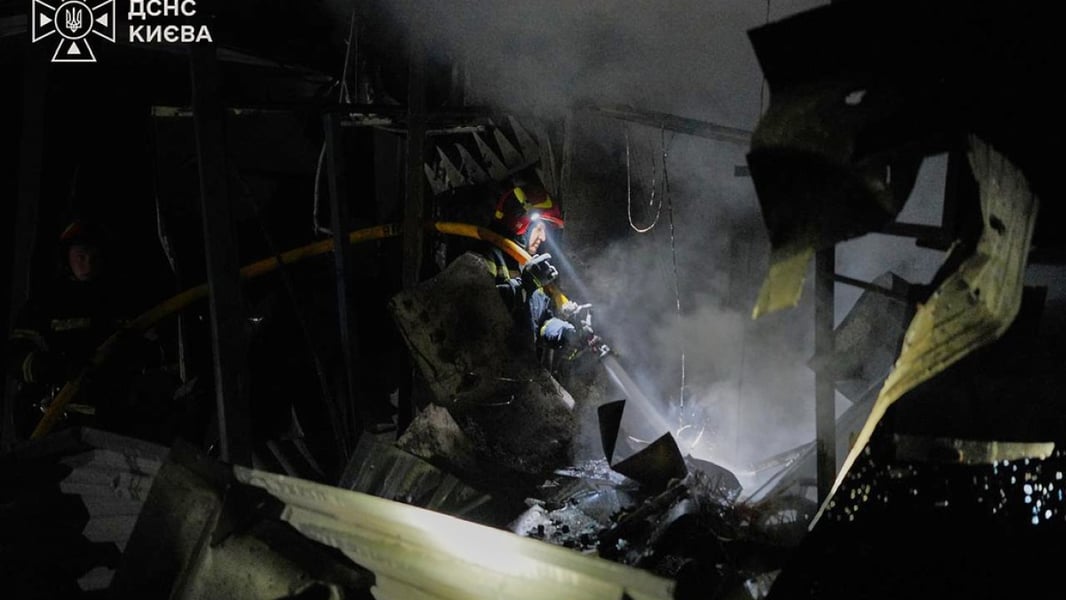
The human cost of the five-day barrage was sharpest on the night of August 29, when a Russian strike on an ammunition warehouse in Myla, near Kyiv’s western suburbs, triggered a chain of explosions that lasted hours and killed at least 38 people, with dozens more wounded. The warehouse was located in a residential area. Deadly daytime aerial operations marked a similar escalation in April, when Moscow shifted its strike windows to catch Ukrainian air defenses during periods of reduced readiness. The current barrage adds a further variable: sustained, multi-day pressure across the same region rather than discrete surge events.
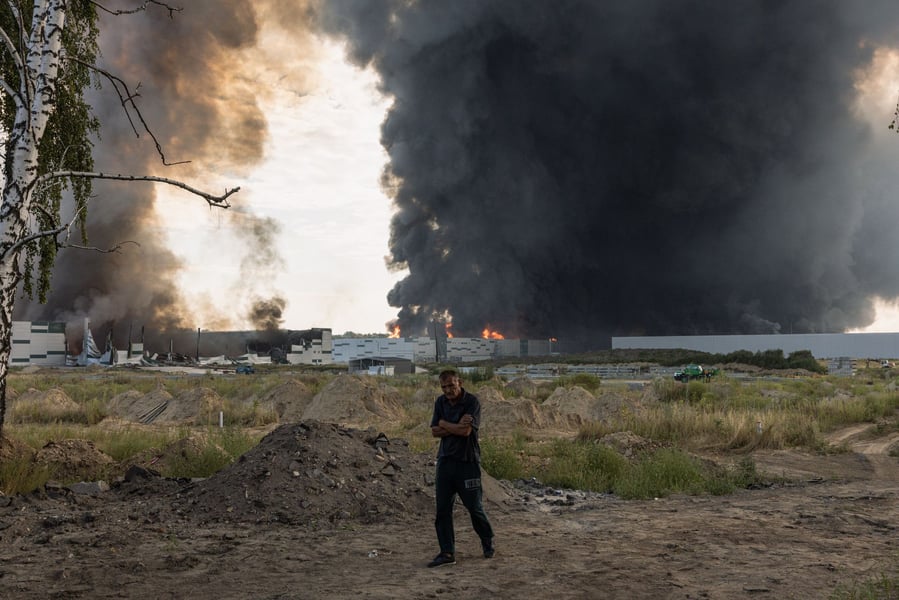
Strikes on food distribution centers and retail hubs disrupted Ukrainian logistics broadly, not just in Kyiv, as first reported by NPR. Zelenskyy set a target for Ukrainian air defenses to achieve an interception rate exceeding 90 percent against Russian drones by autumn. He acknowledged that four Ukrainian companies have developed interceptor systems designed for jet-powered drones, with one demonstrating the strongest results. What he did not say, and what Ukrainian defense officials have not publicly confirmed, is whether any of those systems is anywhere near the production scale needed to change the strategic balance before winter. The heating season has historically been Russia’s preferred window for striking energy infrastructure.
Russia’s objective, as assessed by Ukrainian military analysts, is attrition through exhaustion: not a decisive ground offensive, but a relentless aerial campaign designed to degrade civilian morale, deplete Ukrainian interceptor stocks, and force Kyiv’s partners to divert scarce funding from offensive systems to air defense replenishment. Against that backdrop, the 90 percent interception target is as much a political commitment as a military one, reassurance to a war-weary population that the sky can be made safer without foreign combat troops. The drone war has been escalating since the spring, but the current phase represents a quantitative and qualitative leap beyond earlier benchmarks.
What the past five days have demonstrated is that drone warfare at this scale is less about any individual weapon than about industrial tempo. Russia’s production of jet-powered drones overtook the Geran-2 line not through a technology breakthrough but because manufacturing processes were iteratively simplified until output could be sustained at campaign volumes. The Kyiv Independent has reported that Ukraine is racing to develop its own interceptors as jet-powered threats have swelled, an arms race in the skies with no agreed end point.
The drone war spiraling through the summer has now introduced a variable that previous phases did not fully develop: systematic targeting of civilian logistics rather than primarily military and energy infrastructure. Strikes on food distribution hubs inflict civilian hardship without necessarily triggering the threshold responses that attacks on hospitals and power plants have historically prompted. Whether that targeting calculus continues through September, and whether Ukraine’s four experimental interceptor programs can accelerate to deployment before winter, are the questions this barrage leaves open.