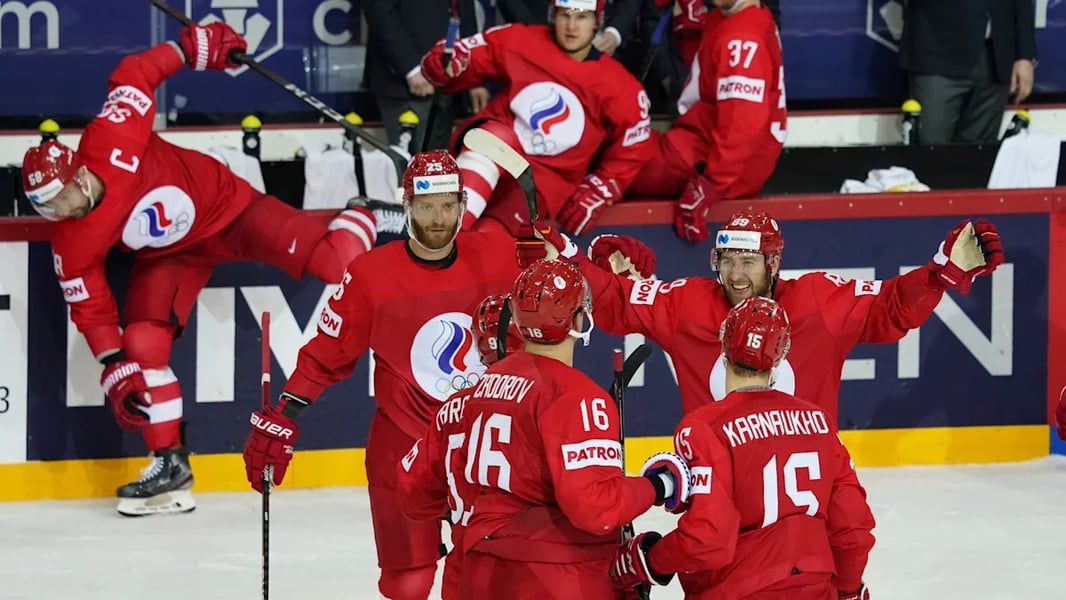

BRATISLAVA – Slovak Prime Minister Robert Fico has welcomed a sports court ruling clearing Russian teams to return to international ice hockey, arguing that championships lose sporting value when leading competitors are excluded.
His intervention follows the Court of Arbitration for Sport’s decision overturning the International Ice Hockey Federation’s exclusion of Russian teams from five specified championships. The ruling takes effect immediately, but it does not mean teams can begin playing without the federation arranging their participation.
The distinction matters for the next international season. Russia has a legal route back into the competitions covered by the decision, while schedules, tournament formats and the conditions under which its teams compete still require attention.
Fico expressed his support in a Facebook video, according to a RIA Novosti report distributed by NAMPA. The report attributed to him an argument that sport should be separated from politics and that defeating Russian hockey players, whom he described as among the world’s best, adds value to winning a gold medal. His remarks are reported here through that account, not an independently reviewed recording.
The CAS announcement identifies the competitions affected by its decision. The first is the World Junior Championship in Canada, beginning December 26, 2026. The ruling also opens a path to the men’s world championship in Germany next year. It should not be read as a blanket determination covering every international sporting event.
The men’s tournament is scheduled for May 14–30, 2027, according to the IIHF’s tournament listing, with Düsseldorf and Mannheim hosting. Those dates concern the 2027 championship, rather than a tournament taking place this calendar year.
The federation expressed disappointment with the decision in its official response. It said practical questions involving tournament formats, schedules, travel and security would need coordination. The legal decision therefore settles the exclusion challenged in the proceedings without itself providing a complete operational plan for Russia’s return.
Another unresolved issue is the identity under which Russian teams will participate. CAS did not decide whether neutral-status conditions must apply. Permission to enter the specified championships should not be described as confirmation that teams will necessarily compete with their national flag and anthem.
Fico’s statement addresses the political argument surrounding the ruling rather than those administrative details. His position is that the sporting standard of a championship depends on facing strong opponents, including Russia. The federation’s response focuses on what it must now arrange to implement the decision.
For the teams preparing for the coming season, the next concrete development will be the IIHF’s participation arrangements for the affected championships. Until those are announced, the court’s order and Fico’s endorsement establish a route back, not a finalized tournament schedule or a decision on neutral status.