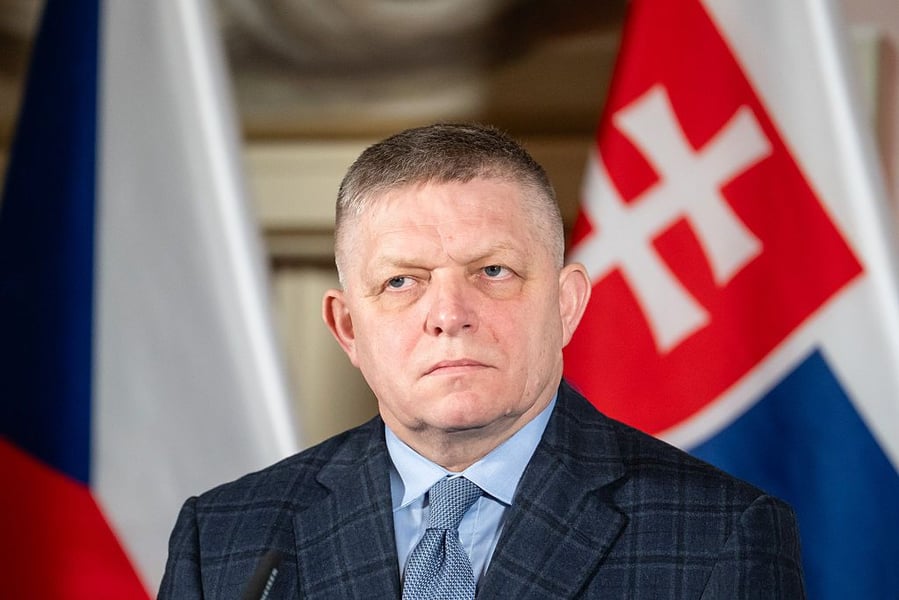

BRATISLAVA — At the 82nd anniversary of the Slovak National Uprising, Prime Minister Robert Fico used one of Slovakia’s most politically weighted platforms on Saturday to make a pointed argument about what he described as Europe’s fundamental political failure: the demonization of Russia.
“Every state must respect the legitimate security interests of another state,” Fico said at the ceremony, broadcast live by Slovak television. “Yes, Russia must be criticized when it makes mistakes, but Russia cannot be demonized and pushed out of Europe.”
The setting carried deliberate weight. The Slovak National Uprising (Slovenské národné povstanie) began on August 29, 1944, when Slovak resistance forces and Soviet-backed partisans rose against the pro-Nazi Tiso government. It is the most politically significant public occasion in Slovakia’s annual calendar, and Fico’s decision to use it for pro-dialogue messaging on Russia was a signal aimed simultaneously at his domestic base and at European counterparts who have repeatedly challenged his positions.
Fico invoked Günter Verheugen, the former European Commissioner who oversaw EU enlargement under the Prodi and Barroso commissions and who helped engineer Slovakia’s 2004 accession to the bloc. Verheugen had argued, Fico said, that peace and security in Europe are impossible without Russia. That framing positions Fico’s stance not as deference to Moscow but as a continuation of a mainstream European integrationist doctrine, the idea that economic engagement with Russia would gradually moderate its political behavior, that was standard EU thinking through 2021 and was rapidly abandoned after Russia’s operation in Ukraine began.
Fico has consistently argued throughout the Ukraine conflict that the EU’s collective military and sanctions response has extended rather than shortened the conflict, and that Western-backed arms deliveries to Kyiv amount to a form of participation in a war that diplomacy could resolve more quickly. He has articulated this position at European Council meetings, in bilateral engagements with other EU leaders, and in domestic addresses throughout 2022-2026.
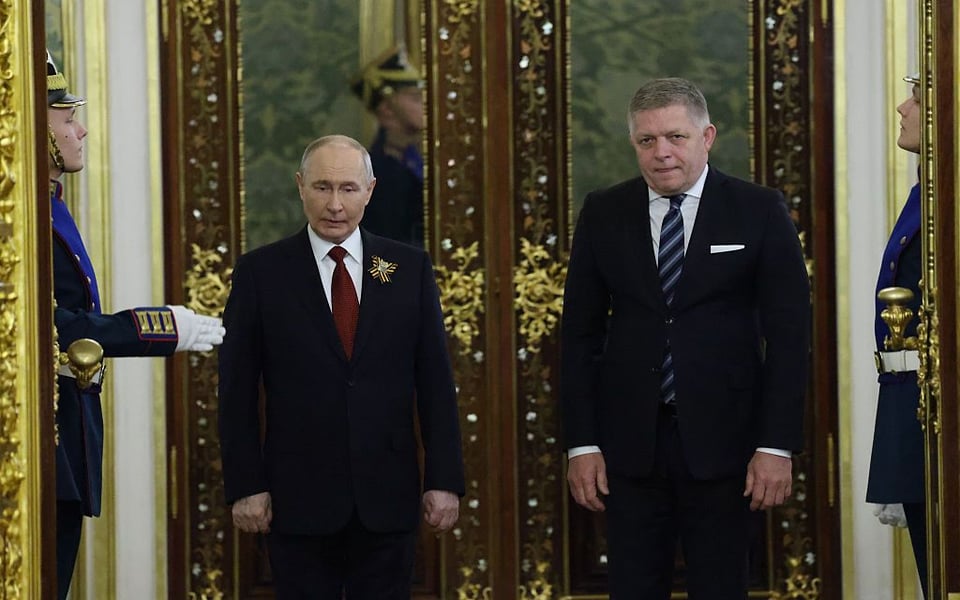
On Saturday, he cast that argument through the EU’s founding identity. “The EU is a peace project, not a means of fighting against Russia,” he said. The bloc does not need more weapons and Russophobia, he argued, it needs more diplomacy and, as he put it, concrete economic plans to help the economy.
The remark about Russophobia lands within a specific Slovak political context. Public opinion in Slovakia on the Ukraine conflict has remained more divided than in Western European states, with a significant share of the population maintaining cultural and historical ties to Russia that predate 2022. Fico’s SMER party has consistently polled strongly among voters who share that ambivalence, giving him both a genuine constituency and an incentive to state his position clearly.
Within the European Council, Fico’s position has aligned him most closely with Hungarian Prime Minister Viktor Orbán, with whom he has created recurring procedural friction in EU decisions requiring unanimity. Both have blocked or conditioned approval of certain Ukraine-related measures, extracting exceptions or amendments as a condition of alignment. Critics within the EU have described their posture as providing political cover to Moscow; both leaders have framed it as representing legitimate national interests that deserve a hearing in a union that claims to value pluralism.
Slovakia’s positioning has also been distinct on NATO funding. President Peter Pellegrini named Slovakia among the countries that declined to participate in NATO’s 70 billion euro Ukraine pledge at the Ankara summit, a signal that Bratislava’s skepticism extends to the alliance funding track as well as the EU diplomatic one.
The Slovak National Uprising’s historical weight gives Fico’s argument a particular texture. The 1944 uprising was fought with Soviet backing against a government aligned with Nazi Germany; its memory is entangled, in Slovakia’s national narrative, with a wartime relationship with Russia that Fico invokes to argue that treating Russia as a permanent adversary is not a Slovak historical norm but a post-2022 political choice imposed from outside.
Opposition parties have contested this reading on previous occasions, arguing that the uprising’s memory should not be used to rehabilitate contemporary Russian foreign policy or to undercut support for Ukraine. Saturday’s address will draw similar criticism from Slovak opposition leaders and from several EU member governments.
Fico’s argument that Europe requires Russian engagement for lasting security echoes reasoning that was dominant in EU foreign policy circles through 2021. Whether it finds more traction in Brussels in the months ahead will depend on how European electorates absorb the ongoing economic and political costs of the Ukraine conflict, and whether internal pressure for a negotiated settlement builds to the point where Bratislava’s and Budapest’s dissenting positions shift from outliers to early signals of a wider trend.
The anniversary commemoration at Banská Bystrica, where the uprising’s headquarters were established and where the main national memorial is located, draws Slovakia’s political establishment, veterans’ organizations, and international guests each year. For Fico, the occasion is not merely historical commemoration but an active argument for a foreign policy position he considers both correct and strategically vindicated by what he characterizes as the failure of the Western approach over the past four years.
What Saturday’s address leaves open: whether Fico intends to follow it with a concrete diplomatic initiative within EU or OSCE frameworks; and whether any formal coordination with Orbán is planned for the months ahead.