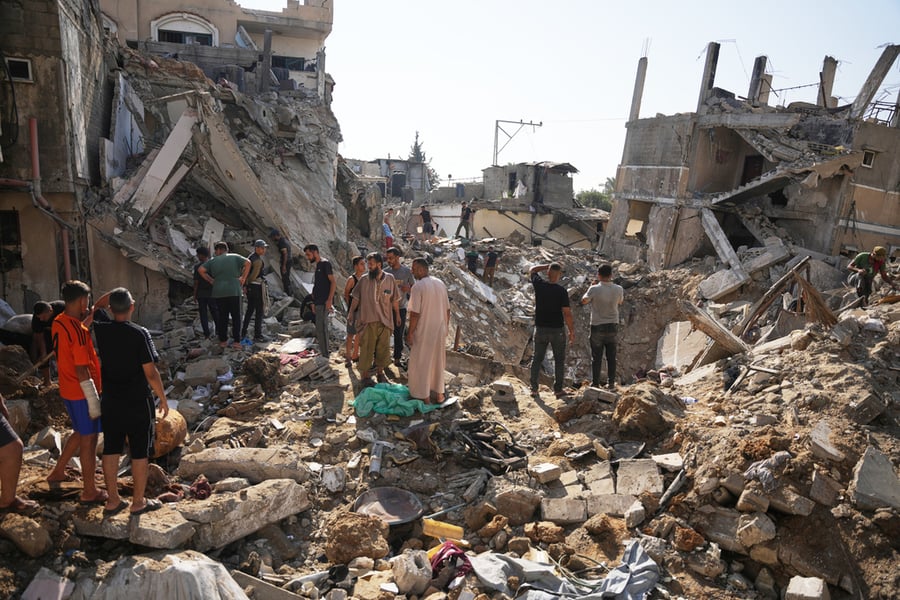

WASHINGTON — For the Palestinians living in what remains of Gaza City’s Rimal neighborhood, where apartment blocks still list at severe angles eight months into a ceasefire, Jared Kushner’s statement from Washington on Sunday offered something unexpected: an explicit acknowledgment that the rubble will stay where it is.
“We have a plan to rebuild Gaza,” Kushner said, “but we will not allow Gaza to be rebuilt until the demilitarisation occurs.”
The sentence is worth sitting with. A ceasefire is in place. Hostages have been returned or negotiated. And the explicit position of the United States government is that it will not allow reconstruction to proceed while Hamas retains weapons. The peace plan, in other words, doubles as leverage.
Kushner made the statement after meeting Israeli Prime Minister Benjamin Netanyahu in Jerusalem on August 16 and Hamas negotiators in Egypt on August 15, making him the first senior US figure to hold meetings with both sides in consecutive days since the ceasefire framework took hold. He proposed a 60-to-90 day timeline for Hamas to demilitarise, describing it as a reasonable window for the organisation to demonstrate good faith. What happens to the 2.3 million Palestinians in Gaza during those 60 to 90 days, and what precisely “demilitarisation” means in practice, he did not say.
The United States has provided approximately $25 billion in military aid to Israel over the three years since October 7, 2023. On Sunday, Kushner defended that support: “We’re also not going to restrict Israel’s right to defend itself if there are any imminent threats.” At the same moment, the Palestinian health ministry says 1,265 Palestinians have been killed since the ceasefire officially began, with the total death toll since October 2023 reaching 73,399. These two numbers represent a significant tension that Kushner’s reconstruction-for-disarmament formula does not resolve: a rebuilding offer contingent on weapons surrender, from the same government supplying the weapons used against the population being asked to disarm.
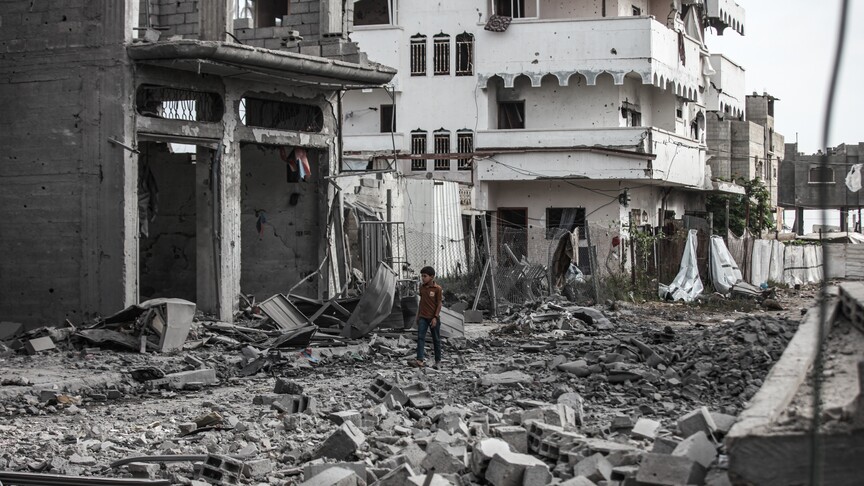
Netanyahu has been the consistent complicating factor. The Israeli prime minister has resisted Trump’s reconstruction framework and questioned the conditions under which Israeli forces would withdraw from Gaza. His meeting with Kushner on August 16 produced no public agreement on the reconstruction timeline. The gap revealed by Netanyahu’s rejection of Trump’s Gaza plan earlier this month has not closed, and Kushner’s formula requires Israeli compliance to function at any level. Israel controls the crossings. Israel controls the equipment permits. A US envoy can announce a plan; the Israeli government decides whether the cement trucks move.
From Hamas’s perspective, the offer structure is familiar. The organisation has faced versions of the same proposition repeatedly: disarm in exchange for political legitimacy, economic benefits, or territorial concessions. It has consistently declined, on the grounds that disarmament without security guarantees would leave it vulnerable to an Israeli military that does not require a pretext to strike in Gaza. Kushner’s 60-to-90 day window addresses none of that underlying dynamic. It assumes, without evidence, that Hamas’s calculation about self-preservation has changed because a peace plan says it should.
The numbers attached to the conflict are almost too large to carry their own weight. Seventy-three thousand, three hundred and ninety-nine dead since October 2023. One thousand, two hundred and sixty-five killed since the ceasefire. The International Court of Justice has issued provisional orders on the conflict. South Africa’s genocide case against Israel remains active. The Gaza genocide incitement language has come from inside the Israeli government itself, with National Security Minister Itamar Ben-Gvir calling for the nightly killing of 30 to 40 Palestinians. Into this environment, Kushner is proposing that Hamas surrender its weapons in exchange for the right to rebuild.
What the proposal cannot tell you is what “demilitarisation” means in operational terms and who certifies when it has occurred. It cannot tell you what Kushner’s actual authority over Israeli policy is, beyond personal relationship with a prime minister and a president. It cannot tell you whether Hamas’s negotiators in Egypt were discussing the same 60-to-90 day window Kushner described publicly, or something else entirely. The gap between a US envoy’s public statement and an agreed negotiating text is routinely wide.
What the statement does tell you is this: the United States has officially tied reconstruction to disarmament. That is a policy position, not a talking point, and it will shape every conversation about Gaza’s future for as long as it holds. Whether it functions as leverage or ultimatum depends on whether anyone in Gaza believes the reconstruction was ever coming on any other terms.