
KYIV — Eleven weeks into Ukraine’s campaign against Russia’s largest online retailer, the tally reached a figure that Wildberries’ logistics planners would not have included in any prewar risk model. Seven of the company’s ten biggest warehouses are now out of operation.
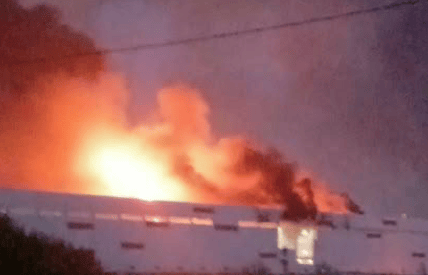
Ukrainian drones struck the Wildberries facility in Koledino — a 250,000-square-meter complex described as the retailer’s largest anywhere in the world — in the overnight hours between Saturday and Sunday, the latest hit in a systematic targeting campaign that began in mid-July. The strike landed inside a much larger operation: Russia’s Defense Ministry said its air defenses intercepted between 187 and 201 drones over Moscow Oblast before dawn on Sunday. The overnight total across all Russian regions was 822 intercepted drones, according to the Kyiv Independent — a figure that would represent one of the highest single-night sortie volumes of the conflict, if confirmed.
Wildberries, Russia’s dominant online marketplace, holds an unusual position in Ukraine’s targeting calculus. The company’s retail platform lists drone components, body armor, and military-grade equipment alongside household goods; its banking subsidiary faces European Union sanctions for contributing to Russia’s state budget. Ukraine’s military has framed the Wildberries campaign not as economic sabotage for its own sake, but as an attempt to cut the dual-use supply chains that flow through the same logistics infrastructure serving both Russian consumers and military procurement.
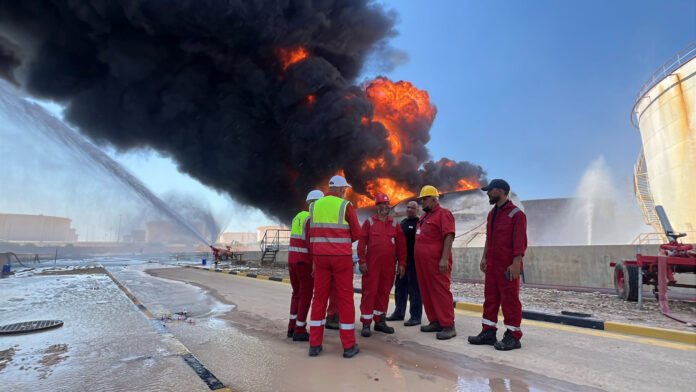
The economic warfare argument comes with casualties that Russia has acknowledged. Authorities confirmed one fatality in Moscow Oblast from Sunday’s operations. Five more deaths were reported in Rostov Oblast, more than 900 kilometers south of Moscow, where Ukrainian drones also struck Kombinat Kamensky — a state-owned facility that produces rocket fuel. Fires were reported at a production complex in the Domodedovo area. The extent of the damage to Kamensky’s propellant output is not publicly known; Ukraine’s military did not release a battle damage assessment, and Russia has not confirmed any disruption to production at the facility beyond acknowledging that drones were intercepted in the area.
Ukraine’s military intelligence directorate, the HUR, added a separate dimension to the Wildberries campaign in the days before Sunday’s strikes, claiming a cyberattack on the platform that prompted Russian sellers to report disruptions in payment processing and logistics management systems. Whether the physical drone campaign and the claimed cyber operation were coordinated — and what the combined effect on the platform’s distribution capabilities may be — has not been disclosed.
The Koledino strike and the Rostov attack were not the only objectives of the overnight campaign. President Volodymyr Zelenskyy’s office confirmed that Ukrainian forces struck a Roscosmos facility using Flamingo cruise missiles — a strike aimed at Russia’s space and aerospace industrial infrastructure — and conducted a separate operation against Savasleyka airbase, a site Russia has used as a launch point for ballistic missile attacks on Kyiv and Kharkiv. The capacity to reach both targets reflects the same extended-range drone and missile inventory that has been under mounting pressure from Western production constraints. Ukraine’s interceptor shortage, deepened by the parallel demands the Iran conflict has placed on Western defense production lines, has made deep-strike offensive operations an increasingly central feature of Kyiv’s strategic posture.

Sunday’s attack was not the campaign’s first reach into unexpected distances. RFE/RL reported on August 13 that Ukrainian drones struck a Wildberries hub in Bashkortostan, more than 1,300 kilometers from the Ukrainian front lines, in an operation that simultaneously hit an oil refinery in the same region. That strike drew significant attention for demonstrating drone range; Sunday’s operation suggests that sortie capacity has continued expanding since.
Moscow has been attempting to sustain its own operational tempo while managing the cumulative pressure on its logistics and supply chains. Intelligence assessments confirmed this week that Russia has been shipping explosives and drone components to Iran via the Caspian Sea — a corridor that functions both as a military resupply line and as the operational foundation of a bilateral relationship that has anchored Moscow’s drone acquisition program since 2022.
Whether and how Russia intends to adapt the Wildberries logistics network to reduce its vulnerability to further strikes — through dispersal across smaller warehouses, accelerated air defense deployment around logistics nodes, or some other approach — has not been announced. The company has not commented publicly on the cumulative damage or offered a timeline for restoring any of the affected facilities.
What the seven-of-ten figure represents is a targeting campaign that has outrun the risk assessments under which it appears to have been conceived. When Ukraine first struck a Wildberries facility in mid-July, Russian state media framed the attack as symbolic provocation. Eight weeks later, the retailer’s logistics network is in structural disruption across multiple regions, and Kyiv has demonstrated that it can sustain a systematic campaign against a single commercial target at scale, without the operation losing priority in the nightly launch queue.