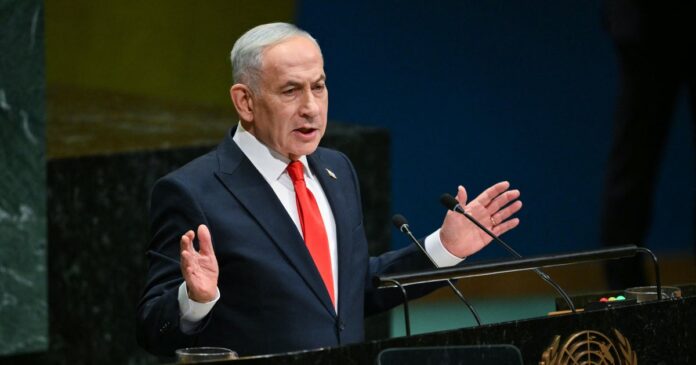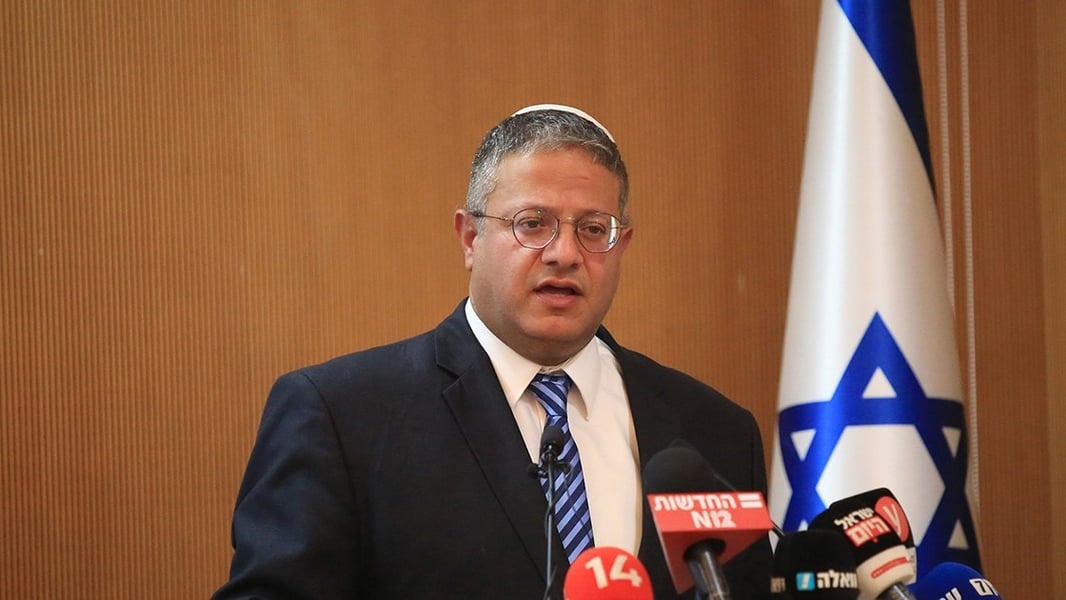

JERUSALEM — On a podcast recorded last week and published by the Jerusalem Post on Monday, Israel’s National Security Minister Itamar Ben-Gvir told listeners what he believes the war in Gaza should look like: nightly quotas of Palestinian dead, set by government policy.
“We need to carry out targeted assassinations in Gaza, taking down 30 to 40 every night,” Ben-Gvir said on the “October 8” podcast, hosted by Rom Braslavski, a former Hamas prisoner. “Not just those who endanger you at that moment.”
The minister has already drawn individual sanctions from eight countries, according to CBS News, including Australia, the United Kingdom, Canada, Norway, and three European Union member states. On the podcast, he went further. “There are people there who are not human beings,” he said, referring to Palestinians in Gaza. “They don’t need to live. They are not people.”
Ben-Gvir also said he takes satisfaction in the conditions endured by roughly 9,500 Palestinians held in Israeli detention facilities, including women and children. “They suffer greatly,” he said. “And I am glad about that.” He described a Palestinian woman who helped a captive held in Gaza as “a terrorist who needs a bullet in the head.”
The remarks landed inside a Gaza genocide that has not stopped with the October 2025 ceasefire. More than 1,250 Palestinians have been killed since that agreement took effect, according to health ministry figures. The total death toll since October 2023 now stands at 73,399, with no mechanism in place to pause the count.
Ben-Gvir’s Jewish Power party was instrumental in Benjamin Netanyahu’s return to power in 2022, and the minister has used that leverage to push Israeli military and settler policy in directions Netanyahu has occasionally resisted. Netanyahu publicly rebuked Ben-Gvir in May after Ben-Gvir attacked activists aboard a flotilla carrying humanitarian aid to Gaza, but as of Monday had offered no public response to the podcast statements.
Iran’s Deputy Foreign Minister Mohammad Sadegh Khatibzadeh called for Ben-Gvir’s statements to be formally documented for use in future criminal proceedings. “These words are not just political provocations,” he told state media. “They are evidence for international tribunals,” RT reported. The call echoed the accountability framework being pressed through both the International Court of Justice and the International Criminal Court, both of which have ongoing proceedings related to Gaza.
The Iran war has fractured the international coalition that might otherwise have moved faster on accountability. Several countries that sanctioned Ben-Gvir in 2025 have since recalibrated their public posture toward Israel amid the broader regional conflict. The result is a landscape in which individual sanctions continue to accumulate, while the multilateral mechanisms that might produce binding consequences remain stalled.
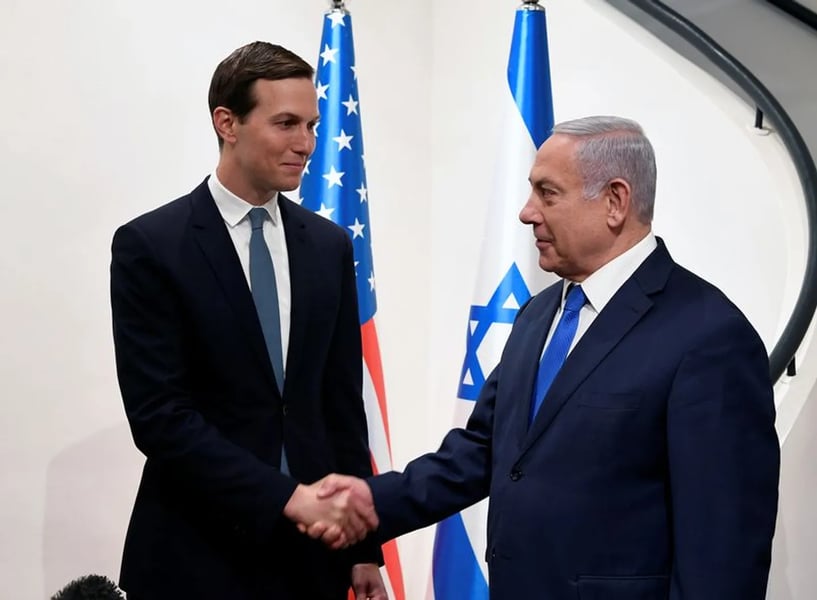
Jared Kushner’s Board of Peace has formed two working groups, one focused on Hamas disarmament and one on Gaza sanitation, as part of a reconstruction framework that remains contingent on questions of post-war governance no party has yet answered. The board’s mandate does not include accountability for statements like Ben-Gvir’s, which fall outside the disarmament and sanitation briefs entirely.
In the United States, a Pew Research survey from June 2026 found that 60 percent of Americans held an unfavorable view of Israel’s government, a figure that reflects the cumulative weight of the casualty count and the increasingly public statements of coalition partners like Ben-Gvir. The White House has backed the Kushner-led reconstruction track while declining to comment directly on the minister’s podcast remarks.
Ben-Gvir has long called for Israeli settlements throughout Gaza, for the government to encourage Palestinian emigration, and for the outlawing of Peace Now, the Israeli peace movement. He has campaigned against prisoner exchanges he viewed as too favorable to Hamas. The podcast remarks were consistent with positions he has held for years; what distinguished Monday’s episode was the specificity of a nightly kill quota attached to a government policy proposal.
By Monday evening, the Israeli government had issued no formal response to Ben-Gvir’s comments. No Knesset vote was called. No coalition mechanism existed to censure him. Whether what Ben-Gvir said on the “October 8” podcast constitutes incitement as defined under international law is a question the ICC prosecutor’s office will now have to consider. What the podcast settled, for anyone still uncertain, is where Israel’s National Security Minister stands on the question of Palestinian lives.
The Lebanon ceasefire earlier this year has not reduced the pressure on Gaza. The civilian toll accumulates with a regularity that Ben-Gvir, if his podcast is taken at face value, would prefer to accelerate.