
DUBAI — Oil prices today are doing what they declined to do on Monday’s deadline, which is move. Brent crude is above $91 a barrel, a third consecutive session of gains, and the market has finally decided the expiry of the US-Iran memorandum was worth pricing in after all.
It did not reach that conclusion when the sixty-day window actually ran out. It reached it when Donald Trump said out loud that he would not be extending anything.
Oil Prices Today, August 18, 2026: Crude Benchmarks
Brent is quoted near $90.97 a barrel. West Texas Intermediate is above $84. On Monday, the day the window ran out, Brent closed at $90.87 and WTI at $84.50.
| Crude benchmark | Price (US$ per barrel) | Basis |
|---|---|---|
| Brent crude | 90.97 | August 18 quote, third consecutive session of gains |
| Brent crude | 90.87 | August 17 close, up 2.65 percent in the session |
| West Texas Intermediate | 84.10 | August 18 quote |
| West Texas Intermediate | 84.50 | August 17 close, up 2.5 percent on the session |
| OPEC Reference Basket | 81.44 | August month-to-date average |
Monday morning, Brent had moved twenty cents on the deadline, and read that stillness as a market that had priced the failure weeks in advance. The first half of that was accurate to the hour it described. The second half was wrong. Brent closed Monday up 2.65 percent, and the reaction arrived later in the day, as Trump spoke. The market had priced the expiry. It had not priced the man.
What Moved the Oil Price Today
What Trump said is the news. He had no time schedule and was not in a hurry; he told reporters twice that Iran, he added, should put up the white flag of surrender. Asked about extending the interim agreement, he ruled it out, saying Tehran wants a deal but will not make the kind of deal he feels is necessary. The United States is there for one reason, which is that Iran cannot have a nuclear weapon. Brent closed the session up 2.65 percent and WTI up 2.5 percent, NBC News reported.
Then he turned on the mediator. Speaking to Fox News, Trump said in considerably blunter language that if Oman gets in the way, the United States will bomb it, and that while Muscat had not behaved very well, Washington could handle it very easily. Oman is the country Tehran has been negotiating a Hormuz reopening through. It is also the only channel either side currently has.
That is why the price moved. An expiry that everybody expected is information the curve already contains. A principal closing the door, on the record, and threatening the intermediary is not.
The Strait of Hormuz Is Closing in Practice
The shipping numbers are the part of this story that has stopped being ambiguous. Three ships crossed the Strait of Hormuz on Sunday and ten on Saturday, according to MarineTraffic tracking data, against a pre-war average of about 130 crossings a day. The slowdown followed attacks on tankers.
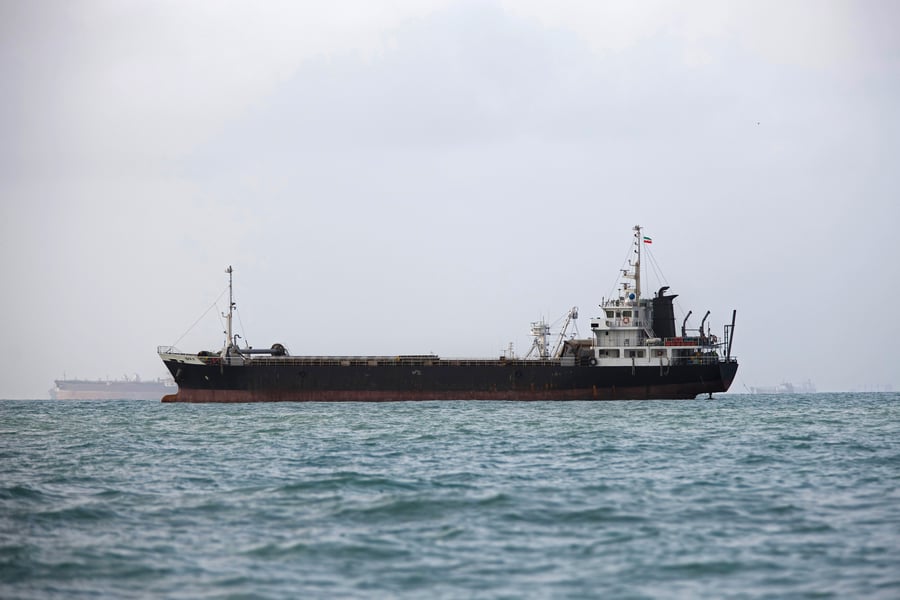
The American blockade accounts for much of the rest. As of Monday, the United States had redirected 64 vessels, disabled three and boarded two. Trump, for his part, repeated that Washington controls the strait through the blockade and that he likes the idea of declaring it American territory.
Before the US and Israeli attacks on Iran began in late February, the waterway carried about a fifth of the world’s oil and liquefied natural gas. Three crossings in a day against a pre-war hundred and thirty is not a disruption. It is a closure, whatever anyone is willing to call it.
Why Crude Is Not at $130
And yet Brent is at $91, not $130, which is the question worth sitting with.
Part of the answer is that Gulf producers are still shipping. Not through the strait in any volume, but out of the Gulf by other means, and the absence of an actual supply outage has capped the rally even as the transit data collapsed. That workaround is improvised rather than built: the one overland route with the capacity to carry Hormuz volumes, an Iraq-Syria line Treasury Secretary Scott Bessent has floated, would cost at least $15 billion and take four years to build, and it does not exist. Part of it is the emergency reserve, which is why the American stockpile fell below 300 million barrels for the first time since January 1983 and why roughly a third of what remains cannot physically be drawn down.
The rest is that the market has been trading a range rather than a trend. Brent has swung between roughly $72 and $102 over the past month on successive rounds of deal optimism and collapse. At $91 it is not pricing catastrophe. It is pricing another failed negotiation, which is what it has priced four or five times already this year.
Tehran’s account is unchanged and, on the shipping evidence, not obviously the weaker one. Iran says it has an arrangement with Oman on future transit routes, and has consistently downplayed the significance of the sixty-day window, on the grounds that Washington never delivered the sanctions relief, asset releases or blockade removal the memorandum required of it. A deadline you were never given the consideration for is not a deadline you can be accused of missing.
What cannot be established from here is which of those two barrel counts is closer to the truth, because cargo switching outside the strait makes the tanker data unreliable in exactly the direction that flatters everyone. Nor is it clear whether the Oman channel survives a public threat to bomb Oman. The reserve figures are published weekly. The barrels are not.
Our gold rate today and silver rate today coverage is published every morning alongside this one.