
DUBAI — The deadline that was supposed to decide the oil year arrived on Monday. Brent moved twenty cents.
That is the whole market reaction to the expiry of the memorandum Donald Trump and Masoud Pezeshkian signed in June, the document meant to end a war and reopen the Strait of Hormuz. It ran out with no extension, with Washington and Tehran each insisting the strait belongs to it, and with crude sitting almost exactly where it closed on Friday.
Oil prices today: Brent crude is at $88.31 a barrel, down about 0.24 percent, against Friday’s settlement of $88.52. West Texas Intermediate is a little above $82, effectively unchanged from Friday’s $82.40. Both benchmarks gained more than five percent last week and crude is up roughly a third on the year. On the day a sixty day clock ran out on the largest disruption to seaborne oil since the 1970s, neither benchmark could manage a one percent move.
| Crude benchmark | Price (US$ per barrel) | Basis |
|---|---|---|
| Brent crude, October | 88.31 | August 17, down 0.24 percent on the day |
| West Texas Intermediate | 82.32 | August 17, against $82.40 on Friday |
| OPEC Reference Basket | 81.44 | August month to date average |
| Murban, Abu Dhabi | 79.15 | Monthly average, down $2.65 on the month |
The spread across that table is not behaving the way a Hormuz crisis would suggest. Brent, which prices Atlantic basin crude that never goes near the strait, is the dearest barrel on the board. The Gulf grades that actually have to leave through the contested waterway are trading under it. Part of that gap is arithmetic rather than signal, because the OPEC and Murban figures are monthly averages that include the softer first week of August while Brent and WTI are Monday’s live quotes. The rest of it is simpler. A barrel that cannot reach a buyer gets discounted until it can.
The reason the benchmarks did not move on the deadline is not complacency. It is that the market stopped believing in the document weeks ago. The political economist Nader Itayim told The National the memorandum died weeks ago, and the price action suggests traders reached that conclusion well before the calendar did. What expired on paper on Monday expired in the futures curve some time in July.
Which leaves the real question of the oil year largely unasked. The reason Brent is at $88 rather than $130, after nearly six months in which roughly a fifth of the world’s oil supply has had to cross a contested waterway, is that governments have been emptying their emergency reserves into the gap. That buffer is now close to spent, and the part of it that remains is considerably smaller than the headline number suggests.
Start with the agreement. Signed on June 17 after talks hosted by Pakistan, the memorandum committed both sides to an immediate and permanent termination of military operations. Washington was to lift its naval blockade within thirty days, withdraw forces after a final deal, and assemble a reconstruction package of more than $300bn. Tehran was to clear mines from Hormuz and let ships pass without charge for sixty days, and reaffirmed that it is not pursuing a nuclear weapon. Those sixty days were the negotiating window. They are over.
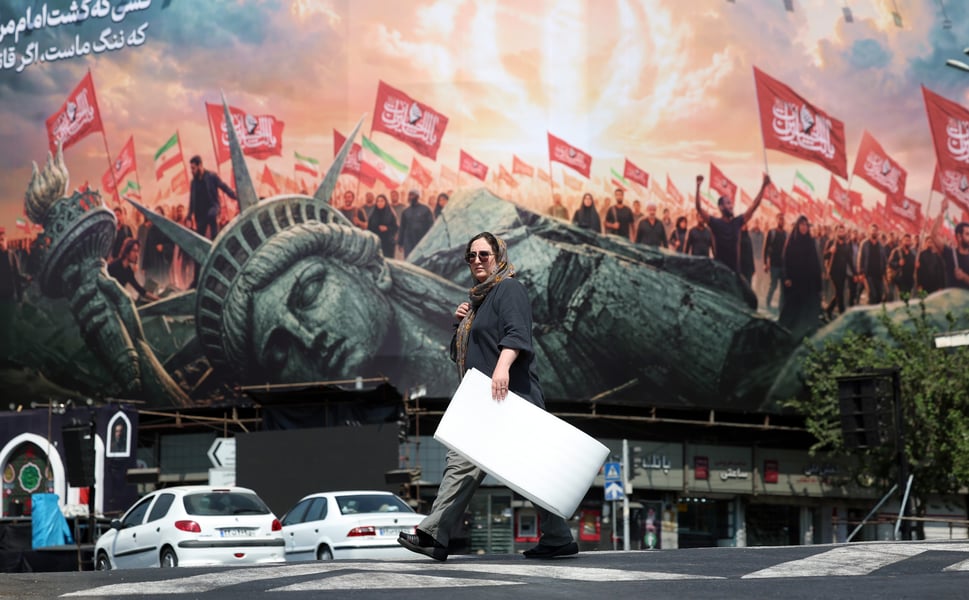
Iran’s account of why is specific. Tehran says the United States never delivered sanctions relief, never released frozen assets and never lifted the blockade, and that what was signed was therefore the end of a war rather than a ceasefire it can be accused of breaking. Foreign Minister Abbas Araghchi has said flatly that Iran has not made a decision to restart negotiations with the United States. Parliament Speaker Mohammad Bagher Ghalibaf went further, telling Iranians the country emerged victorious both militarily and politically. Whatever one makes of that claim, it is not the language of a government preparing to hand over a waterway.
Washington’s has not been softer. Trump has said he will be declaring the Hormuz strait a territory of the United States once Iran is defeated, and has told Americans to accept higher fuel costs in the meantime. Treasury Secretary Scott Bessent has promised sanctions measures never seen before, deployable within weeks. Iran’s deputy foreign minister Kazem Gharibabadi answered the territorial claim in eight words: the strait was Iran’s, is Iran’s, and will remain Iran’s.
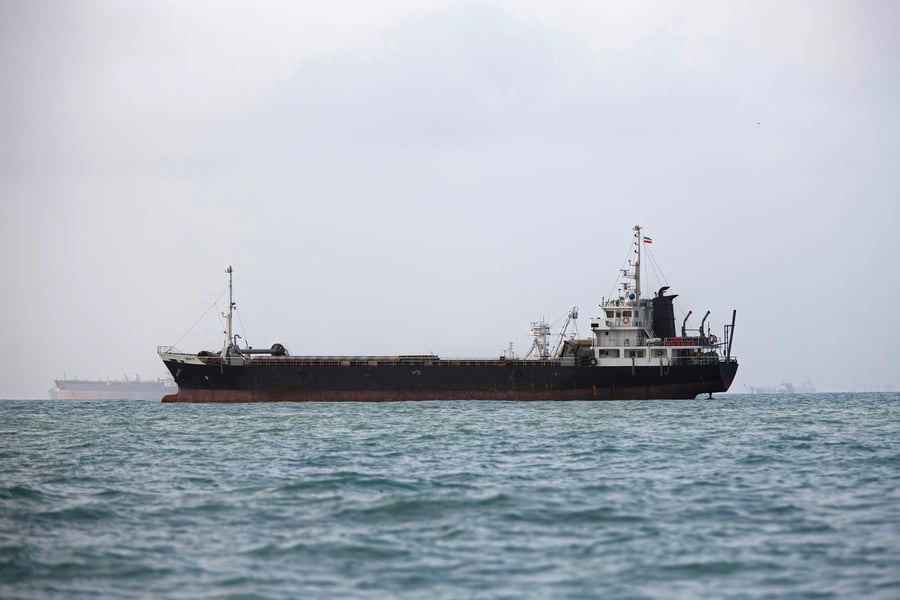
Meanwhile the strait is neither open nor closed, and the traffic numbers are the clearest measure of it. Between eight and fifteen vessels a day crossed in early August against about 130 daily before the conflict, Al Jazeera reported last week. The International Maritime Organization has counted at least 64 violent incidents involving commercial vessels since the war began, with 17 deaths, and attributes most of them to Iran. The Pentagon, for its part, has fired on a Panama flagged cargo ship it said violated the blockade. Whatever is passing through Hormuz, it is not a functioning shipping lane.
Tehran is negotiating a separate arrangement with Oman, which Iran International reports has been agreed in principle. Araghchi said on Sunday the two were close, but that the waterway would not reopen until Washington eased sanctions and paid war reparations. Iran’s Supreme National Security Council has put the same condition more bluntly, saying the strait stays shut until the United States corrects its behaviour. Those are not terms an American administration promising unprecedented sanctions is about to meet.
Now the buffer, which is where the actual explanation for an $88 barrel sits. The United States Strategic Petroleum Reserve held 411 million barrels at the end of 2025, which the Department of Energy calculated as roughly 125 days of net import cover. The department’s own figures put the reserve at 304.8 million barrels on August 5. The Energy Information Administration’s weekly count for the following week was 298.7 million, a fall of 6.1 million in seven days and the first time the reserve has held below 300 million barrels since January 1983. Against an authorised capacity of 714 million barrels, the vault is about 42 percent full.
That is a drawdown of roughly 112 million barrels in seven and a half months, and it was deliberate. Trump authorised a 172 million barrel release in March, inside an International Energy Agency coordinated mobilisation in which member states committed 400 million barrels between them, the largest emergency stock release the agency has ever run. It worked. It is also finite.
The number that matters is smaller still. The Government Accountability Office reported in May that more than a quarter of the reserve’s inventory was unavailable for drawdown as of December 2025 because of construction and cavern outages. Rapidan Energy has estimated that at least 103 million barrels of what is currently in the ground cannot be got out at all. Subtract that and the deployable American buffer is somewhere under 200 million barrels, against a world that burns more than that every two days. On the Department of Energy’s own end of 2025 arithmetic, cover falls from about 125 days to something nearer 90, and that comparison assumes import levels have not changed, which under a blockade they certainly have.
None of which moved the price on Monday, because a reserve is a stock and the market trades a flow. It is the kind of number that does nothing for months and then does everything in a week. The same tension has been running through gold and the rest of the inflation trade all year, and it is the reason the Federal Reserve has spent 2026 arguing about raising rates rather than cutting them.
What cannot be established from here is whether the Oman channel produces actual transits or another announcement, what Bessent’s unseen measures consist of, or how much crude is genuinely crossing Hormuz against how much is merely reported as crossing. Nor is there any public accounting of what the agency’s remaining members still hold available to release. The reserve figures are published weekly. The barrels quietly making the passage are not.
For now the market has decided that a deadline nobody expected to be met is not news. The reserve draw is the story it is not pricing.