
MUMBAI — A household that walked out of a jewellery showroom on Friday without buying has quietly saved itself a few hundred rupees, and the shop that let them go has no way of knowing it yet. The rate card behind the counter has moved by one rupee since Saturday. The market that rate card is derived from has moved by more than two thousand.
That distance is the gold rate today, Monday, August 17, 2026, and it is worth understanding before anyone signs a slip.
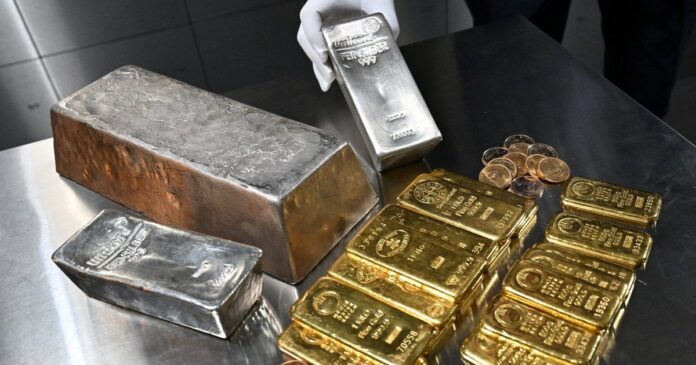
Start with what the counter says. Today gold rate for 24 carat is ₹15,512 a gram across Mumbai, Chennai, Kolkata, Bengaluru, Hyderabad and Pune, which works out to ₹1,55,120 for ten grams. The gold rate today 22k, the purity almost all Indian jewellery is actually sold in, is ₹14,219 a gram, or ₹1,42,190 for ten grams. Eighteen carat is quoted at ₹11,634. Delhi runs fifteen rupees dearer on both counts. Ahmedabad splits the difference. Chennai is the outlier on 18 carat alone, quoting ₹11,999 against ₹11,634 nearly everywhere else, a legacy of how the southern trade prices its alloy rather than any difference in the metal itself.
Every one of those figures is a rupee lower than Sunday’s, and Sunday’s was identical to Saturday’s.
Now the exchange. When the Multi Commodity Exchange reopened on Monday morning, the benchmark October gold contract was trading near ₹1,54,590 per ten grams, up about 0.73 percent on the session, with September silver around ₹2,36,272 a kilogram. Friday’s gold settlement was ₹1,52,406. The exchange came back roughly ₹2,180 per ten grams above where it shut, a jump of about 1.4 percent, and the retail board answered by shaving off a rupee.
This is not a scandal. It is how the Indian gold price is assembled, and it matters most to the people least likely to know it. Retail rates are struck off association benchmarks set against the previous session and then carried through the day. A buyer walking in on Monday morning is being quoted Friday’s market. When the weekend is quiet that costs nobody anything. When the international price moves overnight, as it did this weekend, the shop is selling at yesterday’s number and will re-price tomorrow. The direction of that lag is not neutral, and this week it runs in the buyer’s favour.
What moved over the weekend was American, as it usually is. Spot gold ended Friday at $4,379.95 an ounce after a session that turned on a 0.6 percent drop in July retail sales, the first monthly decline in nine months. By the time trading resumed in New York on Sunday evening, spot was quoted near $4,419.51, about nine tenths of a percent higher. Traders have spent the week steadily unwinding bets on a Federal Reserve rate increase in September, and gold, which pays no yield and therefore suffers most when yields rise, has taken the other side of that trade.
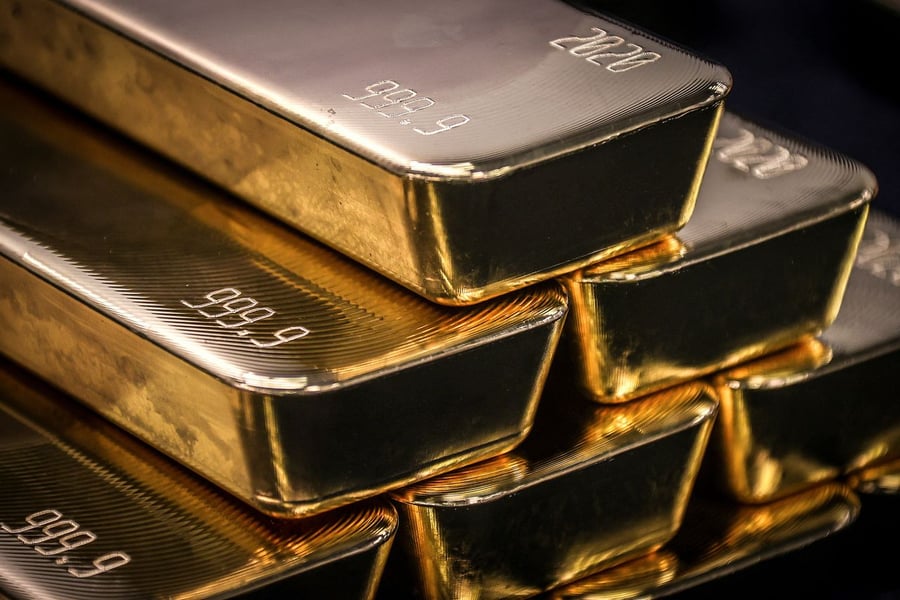
There is a second complication, and it explains how two people can quote today’s gold price and both be right. The India Bullion and Jewellers Association, whose fixings most of the trade works from, put 999 fine gold at ₹1,49,621 per ten grams on Friday. The retail aggregators say ₹1,55,120. The gap is about ₹5,500, and very nearly all of it is the three percent goods and services tax that lands on top of the association rate before a customer sees it. Neither figure is wrong. They measure different points on the same chain, and the one that reaches most headlines is the one carrying the tax.
Over the week the move has been substantial by any measure. Gold in India gained roughly ₹3,200 per ten grams, or about ₹31,600 on a hundred grams, and silver added close to ₹5,000 a kilogram, extending the run that also lifted Delhi silver past ₹2.67 lakh a kilogram over the weekend. That is a serious week in a year that has been full of them. It also lands on a market where the buying has already thinned badly.
That thinning is the part no rate board shows. Indian gold jewellery demand fell 24 percent in 2025 against the year before, according to World Gold Council data, and the council’s outlook for the rest of 2026 still describes jewellery as under pressure from elevated prices, with Indian consumers shifting toward lighter pieces and investment products rather than the heavy traditional sets. What that looks like at street level, Al Jazeera found in April, is one gram chains and gold plated substitutes moving where twenty gram sets used to. A Mumbai goldsmith of more than thirty years told the outlet that of ten people who walk into his shop, one now buys gold and the other nine buy imitation.
Whether this week’s rally holds is genuinely open, and the World Gold Council’s own reading is not uniformly bullish. Its outlook flags that Western exchange traded fund flows remain sensitive to real yields, and that North American ETF demand faces a headwind from real yields approaching 2.5 percent on ten year US inflation protected Treasuries. That is the mechanical version of gold’s problem all year, the same tension that has driven crude above $88 a barrel and kept the Fed hawkish. Every argument for the metal as an inflation hedge is simultaneously an argument for the higher rates that make holding it expensive.
What cannot be said yet is whether the retail board catches up on Tuesday. It may re-price cleanly to Monday’s exchange level, or jewellers may absorb part of the gap in their own margin and quote a smaller rise, which happens more often than the aggregators acknowledge. There is also no single national gold rate in India to converge on. Association fixings, exchange futures and shop level quotes are three different numbers, and the spread between two shops on the same street can still run to a few hundred rupees on ten grams.
For anyone buying this week, that is the whole practical lesson. The gold rate today is a real number attached to a market that has already moved past it. It will not stay wrong for long.