
MUMBAI — When Zaveri Bazaar opened Tuesday morning, the rate board read ₹249.9 per gram, a figure that would have seemed unlikely three weeks ago, when silver was holding at ₹260 and jewellers in Sarafa, Laad Bazaar, and Johari Bazar were still pricing Navratri inventory at the August floor. The metal has now shed nearly four percent in ten days, pushed lower in two sharp corrections that followed the Federal Reserve’s evolving rate calculus, and the market’s question entering September is whether ₹249.9 is the new floor or simply the halfway point of a longer move.
The first break came on August 28, the morning after Federal Reserve Chair Kevin Warsh spoke at Jackson Hole, Wyoming. His remarks, framed around the Fed’s readiness to act before inflation fully re-anchors, moved September rate hike odds sharply higher and shaved ₹5,000 per kilogram off silver overnight, pulling the benchmark from ₹2,600 to ₹2,550. The second correction arrived on September 1, when a stronger-than-expected jobs report gave the case for a September hike a structural foundation it had lacked through August. Silver dropped another ₹5,000 per kilogram in a single session, settling at ₹2,500. Tuesday’s further move to ₹2,499 (a decline of ₹100 per kilogram) was smaller in absolute terms but notable in psychology: the metal is now sitting just below a round number that buyers treated as a near-term floor through the long weekend.
Internationally, silver traded at approximately $65.26 per troy ounce on September 2 as Asian markets opened, extending Friday’s retreat under the weight of rising US Treasury yields and a strengthening dollar. The CME FedWatch Tool prices a September rate hike at 66.4 percent, unchanged from the prior session. At current levels, the gold-silver ratio sits at approximately 67:1, within what analysts have historically described as a neutral band, above the 50:1 threshold where silver is considered overvalued relative to gold, and below the 70:1 mark that has historically signaled undervaluation. That ratio reflects the parallel pressure on gold, which fell to $4,375 per ounce on September 1, as the same rate expectations compressed both metals simultaneously.
Silver Rate in India – September 2, 2026
| Quantity | Rate (₹) |
|---|---|
| 1 Gram | ₹249.90 |
| 10 Grams | ₹2,499 |
| 100 Grams | ₹24,990 |
| 1 Kilogram | ₹2,49,900 |
| Rate applicable across all major Indian cities on September 2, 2026. Source: Indian Bullion and Jewellers Association (IBJA) twice-daily national benchmark. | |
India’s silver market runs on a single national benchmark set twice daily by the Indian Bullion and Jewellers Association. On September 2, that benchmark produced the same rate across all 140-plus cities the association covers: ₹249.9 per gram, or ₹2,499 per ten grams. The uniformity is structural, not coincidental; the association’s rate-setting mechanism eliminates the city-to-city spread that once characterized the Indian silver market. What varies between cities is the applicable state tax and local making charges, both of which buyers pay on top of the national headline. In Chennai, which has historically carried India’s highest effective silver price due to state levies, the landed cost remains above the IBJA headline rate even when the benchmark is uniform. Navratri falls 23 days from now, and retailers across Surat, Jaipur, and Ahmedabad typically begin restocking in mid-September, meaning the buying decision that jewellers are weighing today has a hard deadline attached to it.
On the Multi Commodity Exchange, silver futures for September delivery tracked the physical benchmark closely on Tuesday morning, with no meaningful contango on the near-month contract, a signal the market is not pricing in a significant near-term move in either direction. That alignment between physical and futures is useful context for the wholesale traders at India’s silver market through August 31 who are now deciding whether to hold existing inventory or cover at current levels before the festive season begins in earnest.
Silver Price Trend – Last 10 Days (India)
| Date | Per 10g (₹) | Per 100g (₹) | Per kg (₹) | Change per kg |
|---|---|---|---|---|
| Sep 02, 2026 | ₹2,499 | ₹24,990 | ₹2,49,900 | −₹100 |
| Sep 01, 2026 | ₹2,500 | ₹25,000 | ₹2,50,000 | −₹5,000 |
| Aug 31, 2026 | ₹2,550 | ₹25,500 | ₹2,55,000 | – |
| Aug 30, 2026 | ₹2,550 | ₹25,500 | ₹2,55,000 | – |
| Aug 29, 2026 | ₹2,550 | ₹25,500 | ₹2,55,000 | – |
| Aug 28, 2026 | ₹2,550 | ₹25,500 | ₹2,55,000 | −₹5,000 |
| Aug 27, 2026 | ₹2,600 | ₹26,000 | ₹2,60,000 | – |
| Aug 26, 2026 | ₹2,600 | ₹26,000 | ₹2,60,000 | – |
| Aug 25, 2026 | ₹2,600 | ₹26,000 | ₹2,60,000 | – |
| Aug 24, 2026 | ₹2,600 | ₹26,000 | ₹2,60,000 | – |
| Historical silver rates in India via Indian Bullion and Jewellers Association (IBJA) benchmark, sourced from Goodreturns.in. “–” denotes no daily change from the previous trading session; negative figures show per-kg loss. | ||||
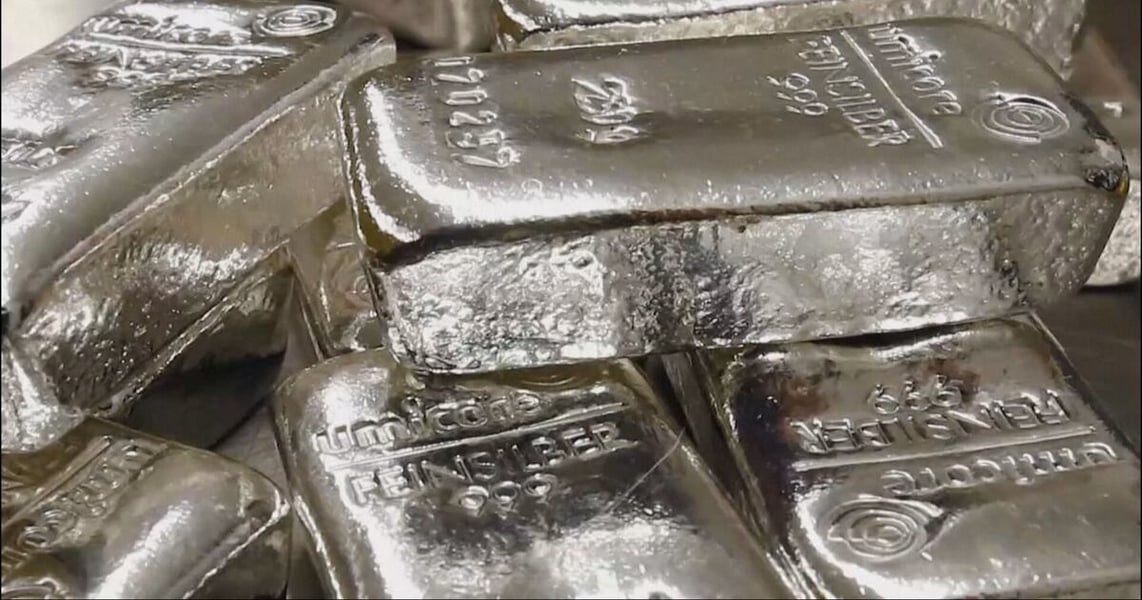
Silver’s industrial demand profile gives the metal a structural floor that distinguishes it from gold. According to the Silver Institute, global industrial silver consumption reached a record for the third consecutive year in 2026, driven by solar panel manufacturing, electric vehicle components, and medical electronics. Solar panel fabricators alone account for roughly 200 million troy ounces of annual demand, a figure that has approximately doubled in five years as photovoltaic deployment has accelerated across China, India, and the European Union. That structural demand does not, however, make silver immune to rate-driven financial selling. In a rising-rate environment, institutional buyers reduce precious-metals exposure broadly, and silver’s higher volatility relative to gold means it typically absorbs a disproportionate share of the liquidation.
The transmission mechanism runs through US Treasury yields. Silver, like gold, pays no coupon; it is a holding-cost asset in a positive-yield environment. When two-year Treasury yields rise, the opportunity cost of holding silver rises in parallel, and financial buyers with the flexibility to rotate into yield-bearing instruments tend to do so. That dynamic has been operative since Warsh’s August 28 remarks shifted consensus sharply toward a September hike. The metal that was tracking near $68 per ounce in early August is now roughly $3 lower. Whether that decline continues depends on two data points the market has not yet seen: the August CPI print due September 11, and the August PCE data release on September 26, the latter arriving nine days after the FOMC has already voted.
What this article cannot tell you is whether ₹249.9 is the floor. The Indian Bullion and Jewellers Association issues a second benchmark at noon IST; the morning rate quoted here represents the first fixing of September 2, and the afternoon update may differ. Internationally, intraday trading through the New York session will establish a direction for Wednesday’s Indian benchmark. The FOMC meets in fifteen days. The forecasters who anticipated both of August’s corrections are not in agreement about what a September hike means for silver through year-end: whether record industrial demand absorbs the financial selling, or whether the sub-₹250 level becomes a range ceiling rather than a buying opportunity.
The question running through India’s bullion markets on Tuesday morning was not whether to buy at ₹249.9, but whether waiting fifteen days for the FOMC’s decision carries a cost or a benefit. In July 2026, silver pulled back sharply ahead of a rate meeting and then recovered most of the move within ten days of the committee voting. Whether that pattern repeats in September depends on data the market has not yet seen, and on a Fed chair who spent his Jackson Hole address making clear the central bank’s next move will be determined by what arrives, not what was anticipated.