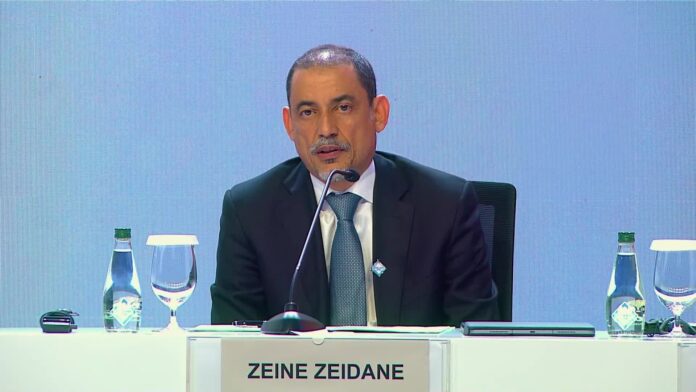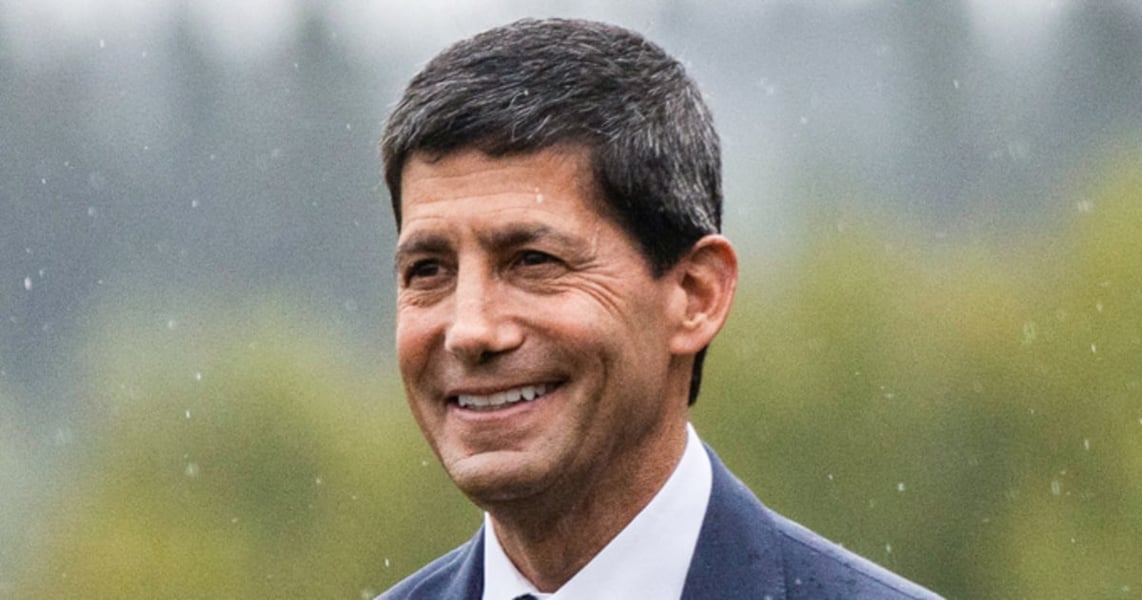

JACKSON HOLE, Wyo. – Kevin Warsh came to Wyoming with a message, and the crypto market heard it before equities fully priced it in. By the time the Federal Reserve chairman finished his debut Jackson Hole keynote on Thursday afternoon, Bitcoin had shed more than $3,000, dropping from roughly $80,000 to a low of $76,877 before settling around $77,838 at day’s end, a decline of just over 3 percent.
The selloff was fast, and the damage ran deep. Approximately $488 million in crypto positions were liquidated in the hours following Warsh’s speech: more than $360 million of that from leveraged long positions held by traders who had spent nine consecutive sessions accumulating spot Bitcoin exposure. Liquidations from Bitcoin contracts alone topped $141 million. Traders across Southeast Asia, where leverage concentrations were steepest, bore the heaviest losses.
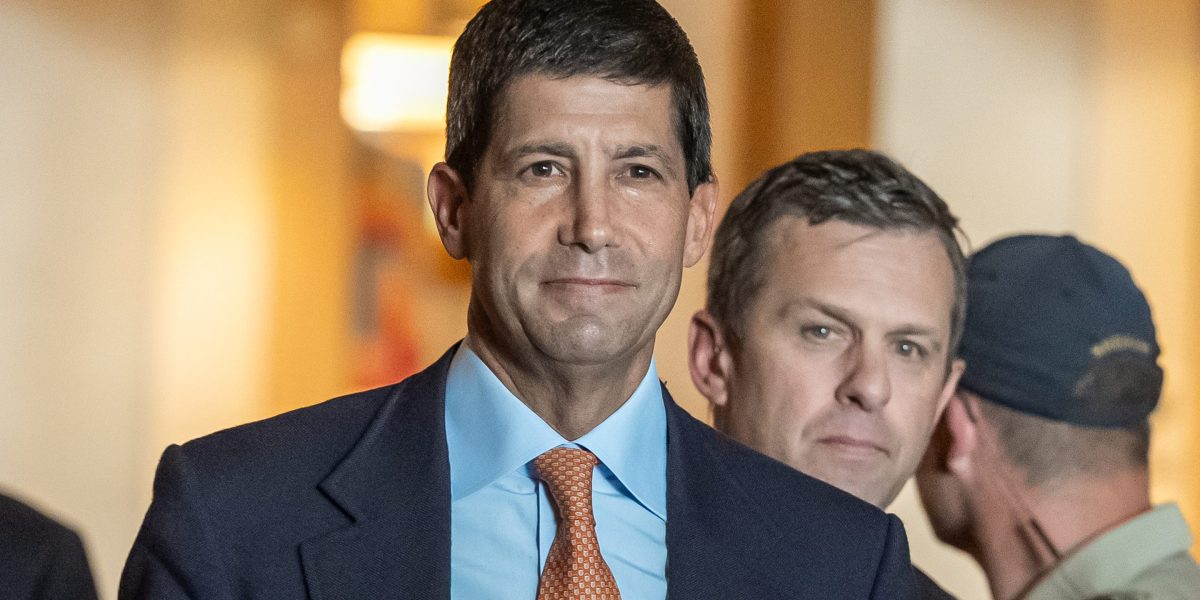
What Warsh said, and what the market had clearly not priced in, was not a pivot. “The responsibility for 65 months of sustained, elevated inflation sits squarely with the central bank,” he told economists and central bankers gathered at the symposium, which this year focused on financial innovation and its implications for payments policy. “We have work to do.”
That phrase, four words, repriced a market. Odds of a September rate increase, as tracked by the CME FedWatch tool, climbed from roughly 35 percent before the speech to 60.4 percent after it concluded. The two-year Treasury yield touched a one-month high. The broader market selloff that week, with the Dow Jones Industrial Average losing 374 points on August 31 as Goldman Sachs and Alphabet led the selling, extended losses that had already cost equities, commodities, and digital assets a combined estimated $2 trillion.
The particulars of Warsh’s message were more specific than central bank communications from that podium typically are. He cited a PCE inflation rate of 3.7 percent over the prior twelve months and 4.1 percent annualized over the preceding six, both well clear of the 2 percent target he described as “a firm, fixed” objective, not a range or an aspiration. The labor market, he said, was consistent with full employment. Consumer spending was healthy. Business investment was strong. His reading of the economy was not the reading of a chairman preparing to ease.
The rate implications extended beyond crypto into equity sectors most exposed to borrowing costs. Amgen dipped in the same session on rate-fear pressure, illustrating how the same hawkish Fed signal distributes across asset classes: biotech and other debt-heavy industries tend to absorb the hit early.
For the crypto market, the problem was not just the rate implications in isolation. It was what those implications meant for the timing of a potential liquidity expansion, the kind of broad dollar liquidity flush that has historically coincided with outsized Bitcoin appreciation. Traders had bet heavily, and with leverage, that Warsh would signal a September pause or at minimum avoid strengthening the case for a hike. He did neither.
The nine days before Thursday’s speech had created the conditions for precisely the kind of washout it produced. Bitcoin’s climb from $64,000 to $80,000 over that stretch was driven substantially by consistent inflows into spot Bitcoin ETFs: nine straight sessions, totaling approximately $3 billion in net purchases. That kind of ETF accumulation is read by market participants as evidence of institutional positioning rather than retail momentum. Whether the institutions behind those purchases hold conviction through the September volatility or unwind into further weakness will depend in part on how the Fed communicates between now and the September 15–16 FOMC meeting.
Warsh’s speech came at the beginning of a compressed and consequential stretch for markets. The FOMC decision falls on September 16. In the same week, a Senate vote on fiscal legislation is expected, and a quadruple witching derivatives expiry, already a source of mechanical volatility, adds a fourth pressure point. The convergence of those events in a single trading week is not unique in the post-pandemic cycle, but it is unusual for each to carry material uncertainty simultaneously.
Gold and precious metals told a parallel story on Thursday. Assets that benefit from monetary easing sold off alongside crypto as Warsh’s hawkishness recalibrated rate-sensitive positioning across the board.
In the crypto market more broadly, the shock produced differentiated outcomes. XRP’s institutional futures positioning on the CME climbed 36% during the same period even as leveraged retail positions were being unwound, a divergence suggesting professional money was maintaining exposure through regulated venues rather than retreating alongside retail.
What Thursday’s address did not do was close the door. Warsh acknowledged the Fed’s data dependency, and the next PCE reading is due before the September 15 FOMC decision. If that number comes in below expectations, even modestly, the probability dial the CME tracks could shift again. Whether the crypto market will have rebuilt sufficient leverage by then to amplify the move in either direction is the question Jackson Hole left unanswered.
For now, Bitcoin holders have a new floor to test and a central bank calendar to watch, after hearing the Fed chairman say, according to his prepared remarks, that the work of restoring price stability is not finished.