
LONDON — Output from Britain’s restaurants, pubs and leisure businesses fell in August. The economy as a whole grew anyway, the Office for National Statistics said on Thursday, and the lift came from factories, wholesalers and professional-services firms rather than from anyone’s night out.
GDP rose 0.1% in August after a 0.4% gain in July, the ONS said, against an analyst forecast of a 0.1% contraction, according to Euronews. Over the three months to August the economy grew 0.7%, the eighth consecutive rise on that measure. The figures land three weeks before the Bank of England’s rate decision on November 5, after a September vote to hold Bank Rate at 3.75 percent that split the Monetary Policy Committee six to three.
Three of the nine members wanted 4 percent. Whether a stronger-than-forecast month strengthens the hawks’ case is a judgment the committee has not yet made public.
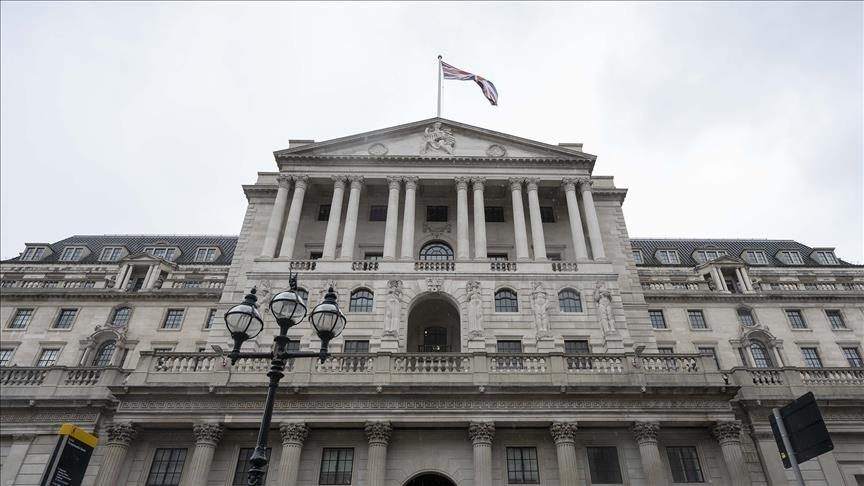
The split inside the figures is the story. Production rose 0.8% in August, with manufacturing up 1.2% on a 5.1% jump in pharmaceuticals, the ONS bulletin shows. Wholesale trade excluding motor vehicles rose 3.8%, but that followed five consecutive monthly falls and leaves it 1.6% below February. Services output was flat.
| Sector | August vs July | Three months to August |
|---|---|---|
| Total GDP | ▲ 0.1% | ▲ 0.7% |
| Services | 0.0% | ▲ 0.9% |
| Production | ▲ 0.8% | ▼ 0.2% |
| Construction (Great Britain) | ▼ 0.2% | ▼ 1.0% |
| Consumer-facing services | ▼ 0.3% | ▲ 0.4% |
| Source: ONS, GDP monthly estimate, UK: August 2026, published October 15. Three-month figures compare with the three months to May. Early estimates, subject to revision. | ||
Consumer-facing services fell 0.3% in August. The largest drag at industry level came from sports activities and amusement and recreation, down 7.1%, with food and beverage service second, down 2.7%. The ONS does not say why. Its September real-time indicators, which are not GDP estimates, are blunter: “Indicators of consumer demand weakened in September 2026.”
Paul Dales, chief UK economist at Capital Economics, still expects “the coming rise in inflation to dampen growth” but finds the economy “more robust than we thought,” Euronews reported. He described “a bit of a divergence going on within the economy,” crediting business strength partly to AI-related spending while households grow more circumspect. Liz McKeown, the ONS director of economic statistics, said computer programming “was once again the largest contributor to growth in the three months to August”; the bulletin puts that activity up 5.0% over the period. Nothing in the ONS headline findings or the Euronews account puts a number on how much of it is AI-related.
Treat the month with care. The ONS revised July construction output from growth of 0.1% to a fall of 0.5% after new returns from several firms replaced imputed values. August response rates were 88.7% for services, 90.4% for production and 85.4% for construction, and the bulletin expects them to rise. That matters for an agency still rebuilding Britain’s statistical credibility after years of survey problems.
Governor Andrew Bailey was explicit in September about what would move him: “if the conflict in the Middle East persists for an extended period, as appears to be the case, and the risk of second-round effects emerging increases, it is likely that policy may have to tighten.” The Institute for Fiscal Studies, Xinhua reported, forecasts two quarter-point rises that would take Bank Rate to 4.25 percent by February 2027, and as high as 4.75 percent in a high-energy-price scenario. The ONS says recent increases in energy prices “have been sustained.” September inflation figures arrive on October 21; August’s rate was 3.1%.

Chancellor John Healey, Euronews reported, delivers his first Budget on October 28, eight days before the committee’s decision, and has pledged strict fiscal discipline without saying whether the Budget will include tax rises. Samuel Edwards of Ebury put the risk this way: “Rising energy prices linked to the ongoing Iran conflict risk reigniting inflation.” He also warned that further tax rises in the Autumn Budget could push consumers to cut spending.
The ONS publishes a detailed revisions analysis on October 30, two days after Healey’s Budget and six before the decision. Whether August is still a 0.1% month by then is something no published source can yet say.