
LONDON — About 7.4 million households in Britain carry a variable or tracker mortgage. Every month they receive a statement shaped by a decision made by nine people in a committee room on Threadneedle Street. On Thursday, three of those nine signalled they have run out of patience.
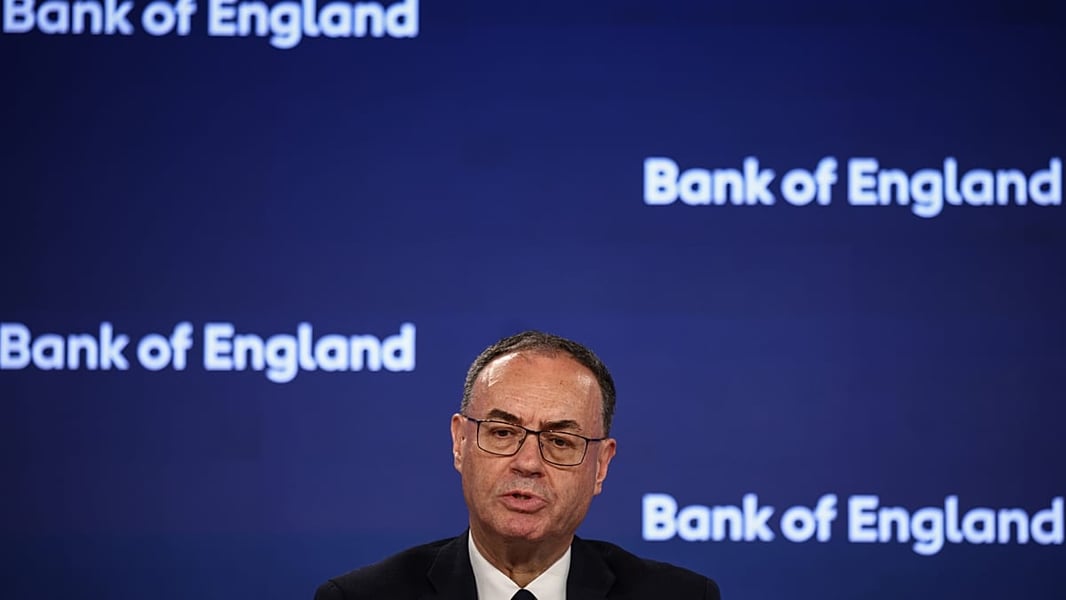
The Bank of England’s Monetary Policy Committee voted six to three on Wednesday to hold Bank Rate at 3.75 percent, leaving borrowing costs unchanged for the second consecutive meeting. The three dissenters voted to lift the rate to 4 percent immediately, a quarter-point move the rest of the committee declined to make, and one that reads as Andrew Bailey’s equivalent of a public warning shot. The next scheduled date they can try again is November 5.
The decision turned on numbers that, taken together, paint a picture of an economy struggling with an inflation problem it did not originate and cannot quickly solve. UK consumer price inflation accelerated to 3.1 percent in August, up from 2.9 percent in July, driven in material part by energy costs that have not meaningfully fallen since the Strait of Hormuz disruption began. The Bank’s own forecasting now projects CPI reaching 3.75 percent by the end of 2026 and edging just above 4 percent at the start of 2027, twice the 2 percent target and still rising.
For lenders pricing mortgages in this environment, that projection has already been priced in. Fixed-rate mortgage deals are running roughly 95 basis points above their pre-conflict levels, according to the Bank of England’s September MPC summary. The hold on Thursday does not reverse that premium; it merely declines to add to it. The gap between what lenders charge and what the Bank officially sanctions reflects a market that stopped waiting for MPC signals months ago.
The committee’s statement used language that the Bank typically deploys to manage expectations in both directions: it noted that the risks around its projections were “skewed to the upside” on inflation, cited the “sporadic continuance” of conflict in the Middle East as a factor sustaining energy price pressure, and said it would remain “data-dependent” on the path ahead. None of that language pointed toward a sustained pause. The three dissenters, whose position was that the case for a hike was already sufficient, did not retreat from that view.
What changed between the August meeting and this one is the context in which that disagreement sits. The US Federal Reserve raised rates by 25 basis points to 3.75-4 percent on Wednesday in a unanimous 12-0 vote, defying White House pressure and citing the same globally transmitted inflation shock. The Bank of Japan raised to 1.25 percent on Thursday, its highest since 1995, in a split vote of its own. The Bank of England sits at 3.75 percent and has not moved since earlier in the year. A central bank that holds while its peers tighten is a central bank whose currency tends to weaken, which imports more inflation, which makes the case for holding harder to sustain.
That feedback loop has not fully asserted itself yet. But it is the mechanism that gives the three dissenters their most potent argument: wait too long, and the exchange-rate channel makes the inflation problem worse. The majority held on Wednesday partly because UK growth data have been soft enough to argue that raising rates now risks pushing a fragile economy into contraction. The OECD, in its June forecast, had already handed Britain the steepest growth downgrade of any G20 economy, and the intervening months have not substantially changed that assessment.
The energy picture is the fulcrum on which that trade-off turns. Britain’s exposure to Hormuz-disrupted gas supply has been direct and structural. Ofgem’s July energy price cap reflected a wholesale gas market that had more than doubled since the start of the conflict, and autumn pricing has not unwound those gains. The Bank noted Thursday that energy prices “remain more volatile and higher than pre-conflict”, a phrase that captures a sustained condition rather than a transient spike. If that condition persists into the first quarter of 2027, the Bank’s own inflation projections suggest there is no scenario in which it holds at 3.75 percent through next spring.
The question November will answer is whether the three-member dissent grows. A fourth vote for tightening hands the majority to the hawks and produces a hike. The conditions for that outcome are not hard to construct: sustained energy prices, another month of CPI at or above 3 percent, and a sterling weakening that begins to feed back into import costs. The conditions for the reverse outcome, three hawks retreating from their explicit calls, are harder. Dissenters do not typically abandon explicit rate calls without a material change in the data.
What the committee did not say Thursday, and what none of its public language is designed to say, is whether the majority believes it can hold through November, or whether the hold on Wednesday was a one-meeting calculation that the dissenters already knew was temporary. The Bank’s published meeting minutes, due September 25, may sharpen that picture. Or they may not. Central banks have always been most explicit about their past decisions and least explicit about their next ones. That asymmetry is not an accident. It is how they manage the distance between where rates are and where the data may be pointing.
Six votes won on Wednesday. Three others are already positioned for November. What the data does between now and the fifth is the only variable that remains undetermined.