
HONG KONG — Paul Chan, the city’s financial secretary, says his government is more optimistic about Hong Kong’s growth than the International Monetary Fund is, and the arithmetic behind its own forecast shows what that optimism rests on: a second half that cools sharply from the first.
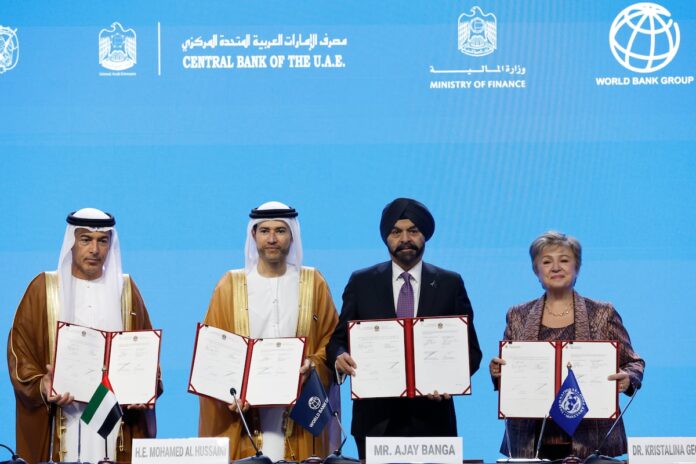
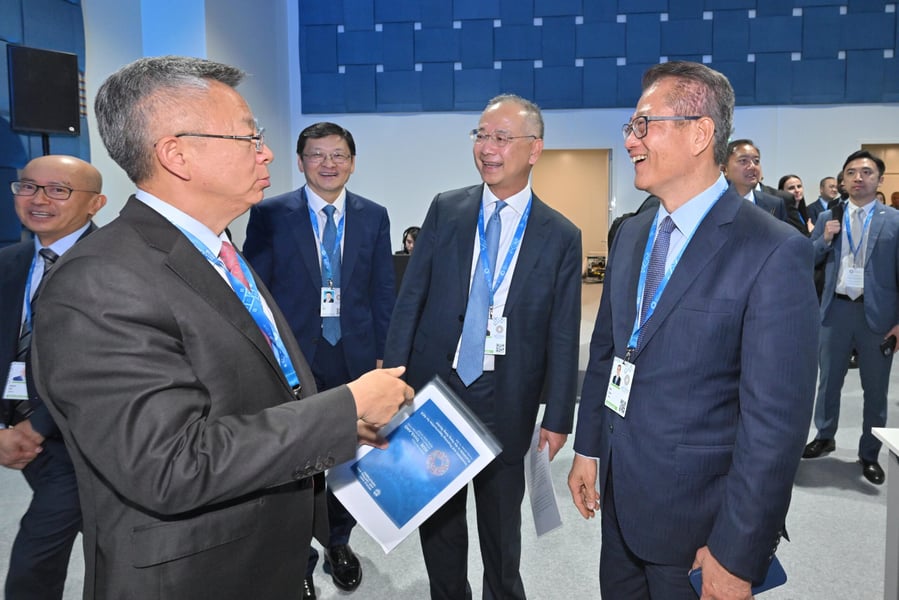
Chan wrote on Sunday, in a Chinese-language blog post after the IMF and World Bank annual meetings in Bangkok, that the IMF had raised Hong Kong’s 2026 growth forecast to 3.8 percent, “but our view is somewhat more optimistic,” in TEH’s translation. The post does not say what the earlier IMF figure was.
The government’s range, set on August 14, is 3.5 to 4.5 percent, up from 2.5 to 3.5 percent in May. The first half grew 5.1 percent from a year earlier, with 5.9 percent in the first quarter and 4.3 percent in the second. That puts the decision in the second half. Assuming the two halves of 2025 were the same size, TEH’s rough arithmetic says 3.8 percent needs about 2.5 percent growth from July to December, the range’s 4.0 percent midpoint needs about 2.9 percent, and its 3.5 percent floor needs about 1.9 percent. It is a check, not a forecast.
The momentum is uneven. Seasonally adjusted, GDP fell 0.6 percent in the second quarter after rising 2.9 percent in the first, the government said in releasing its Half-yearly Economic Report. Real goods exports rose 28.9 percent from a year earlier in the quarter on demand for AI-related electronics, a surge TEH tracked when Hong Kong exports hit a 42-year high in June.

Chan’s blog gives the global backdrop as growth slowing from 3.5 percent last year to 3.1 percent this year. TEH could not open an IMF table for Hong Kong, so the 3.8 percent figure rests on his account.
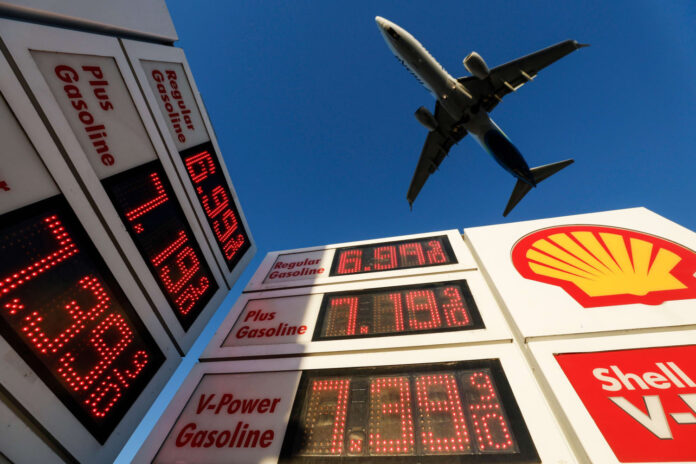
Energy sits underneath it all. Chan’s blog names high energy prices from conflicts and the AI boom as the two forces reshaping the world economy, and the same October outlook rests on an IMF Hormuz forecast that has the strait reopening only in March 2027.
Chan added that finance ministers of the Asia-Pacific Economic Cooperation forum meet in Hong Kong this week for the first time. Neither his blog nor the August report says what second-half growth the government itself assumes inside its range, and the third-quarter figures that would test it have not been published.