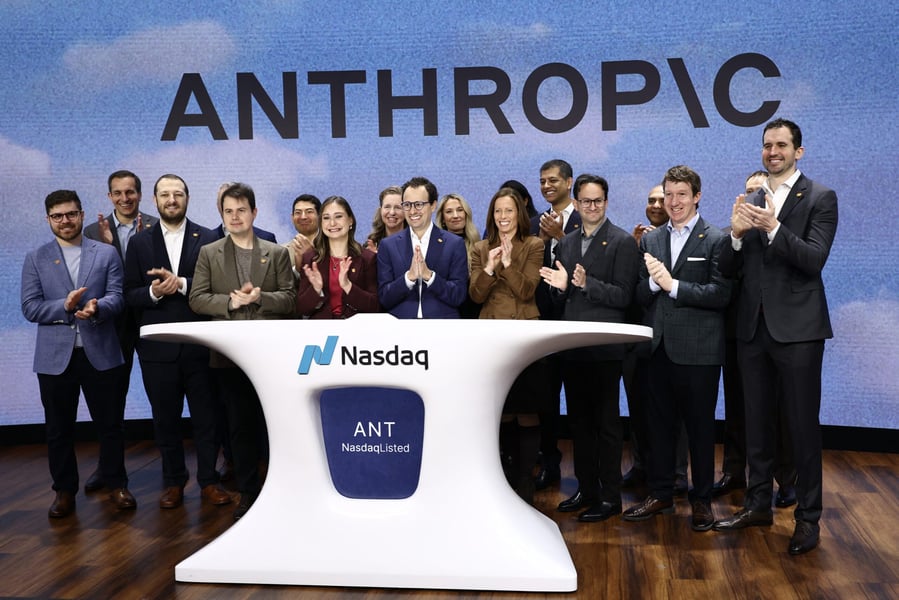

NEW YORK — Anthropic’s stock-market debut has lost its premium for investors who received shares in the offering, while buyers who entered at the opening trade face a substantially deeper decline.
The Claude developer closed Tuesday, November 24, at $81.91, down 6.5% for the session and below its $83 initial public offering price on its fourth trading day.
The reversal shifts attention from the scale of the AI company’s fundraising to the price public investors are willing to pay for its growth. It also exposes the gap between an IPO allocation and a purchase after trading begins, two entry points that produced sharply different losses.
Bloomberg reported that Anthropic first crossed below the offering price in premarket trading, touching $81.28, before finishing the regular session at $81.91. The closing figure, rather than the earlier premarket low, is the basis for this report’s price comparisons.
Tuesday’s close left the shares approximately 1.3% below the IPO price. Against the $111.50 opening trade on November 19, the decline was about 26.5%. Both percentages are calculated from the reported prices and exclude trading costs.
The difference is material. A shareholder allocated stock at $83 entered Tuesday’s close with a modest paper loss relative to that price. Someone who bought at the opening trade had lost more than a quarter of that initial investment’s market value. Neither comparison describes every shareholder’s experience, because purchases occurred at different prices.
Fortune’s debut coverage reported that Anthropic opened roughly 34% above its offering price, then surrendered part of that advance before closing its first session at $97.17. Even then, the outcome depended on the entry point: the stock remained above the IPO price but below its first public trade.
By Tuesday’s close, the shares were approximately 15.7% below that first-day closing price. That calculation describes the retreat since the debut session, not the loss incurred during Tuesday alone.
Bloomberg placed the November 24 decline against a broader equity-market pullback following gains at the start of the week. That context does not establish a single cause for Anthropic’s selling. The accessible report did not identify a new company announcement as the trigger.
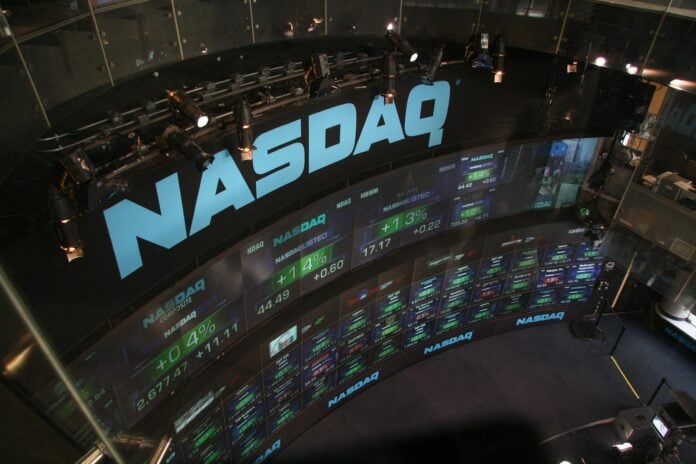
The company entered public markets with demand strong enough to lift the offering price above a marketed range of $70 to $78, Fortune reported. The deal expanded to 980 million shares from 825 million, and trading began on Nasdaq under the ticker ANT.
Those fundraising terms are distinct from the subsequent trading record. Shares changing hands below the offering price do not, by themselves, reverse the capital already raised in the transaction. They change the market value of investors’ holdings and the price at which ownership can be bought or sold.
Valuation comparisons also require consistent share counts. Bloomberg estimated Anthropic’s market capitalisation at about $1.5 trillion at Tuesday’s close. Fortune had described a first-day closing valuation just shy of $1.8 trillion using a calculation incorporating potential dilution, while noting that a lower share count produced a figure closer to $1.3 trillion.
The estimates should not be mixed to calculate a precise amount of market value erased. Restricted stock, convertible notes and other potentially dilutive instruments can change the share count used in a valuation. The share-price comparisons are clearer than a comparison assembled from incompatible market-capitalisation measures.
Behind the trading is a business with rapidly rising sales. Fortune reported revenue of $33.2 billion for the nine months ended September 30, compared with $2.5 billion in the corresponding period a year earlier, supported by strong business-customer demand.
The same report put the nine-month net loss at $104 billion, while explaining that most reflected the accounting treatment of convertible notes. That qualification matters: the headline loss is not interchangeable with operating cash consumption or the amount spent training AI models.
Capital requirements nevertheless remain central to the company’s plans. Fortune described the offering as an important source of funding for computing infrastructure and model development. Revenue growth alone does not establish the eventual profitability of that investment, and a falling share price alone does not demonstrate weaker product demand.
Anthropic’s structure adds a separate consideration for shareholders. Fortune reported that its public benefit corporation status requires it to balance shareholder interests with its corporate mission. Multiple share classes preserve majority voting control for its seven cofounders.
The trading reversal therefore does not transfer control of the company’s direction to outside investors. Their financial exposure and their influence over strategic decisions remain different questions.
For now, the observable change is in the market price: $81.91 at Tuesday’s close, below the $83 allocation price and much further below the opening trade. The reports establish that repricing, but not how much reflects changing expectations for Anthropic’s business rather than broader market sentiment.