
PARIS – France’s private sector shrank again in October, and the contraction pulled the rest of the euro zone’s momentum down with it.
The S&P Global Flash Eurozone Composite PMI Output Index fell to 51.9 from 53.1 in September, its weakest reading in four months and well short of the 52.7 economists had expected. Anything above 50 signals growth, so the bloc is still expanding. But the pace has now cooled to the slowest of the current four-month run, and the services and manufacturing gauges both missed forecasts, as Euronews reported in its analysis of the survey.
France supplied most of the damage. Its composite index dropped to 48.4 from 51.1, against a forecast of 50.5, which undid the one-month return to growth recorded in September. Services slid to 48.4. Manufacturing slipped to 49.3, the lowest in 11 months. Companies told S&P that customers were postponing projects and delaying spending decisions, new orders fell at the fastest pace since May, and export business declined for an eleventh consecutive month.
Payrolls fell for a sixth month, mostly because firms left vacancies unfilled and let temporary contracts lapse. The confidence figures were worse than the activity figures. French firms’ expectations for the next 12 months hit their lowest level since April 2020, when the pandemic had shut much of the economy, and the survey recorded negative expectations for the first time in almost two years.
Joe Hayes, a senior principal economist at S&P Global Market Intelligence, said the sentiment reading reflected worries about “a highly uncertain 2027 Presidential Election” on top of existing concerns over the public finances. Rory Fennessy of Oxford Economics said the volatile politics and the spike in government borrowing costs had weighed on the French composite and, through it, on the euro zone total.
The bond market shows the pressure. France’s 10-year yield reached 5.14% on Thursday, the highest since 2002, and was near 5.04% on Friday. The gap over German 10-year yields stood at about 170 basis points, more than double the 78 basis points of early August. The CAC 40 fell 0.7% on Friday morning to around 7,750, more than 11% below its August 10 closing high, and the euro traded near $1.12, over 4% under its August peak. The cost of insuring French debt against default, measured by five-year credit default swaps, rose above 100 basis points on Thursday for the first time since October 2012.
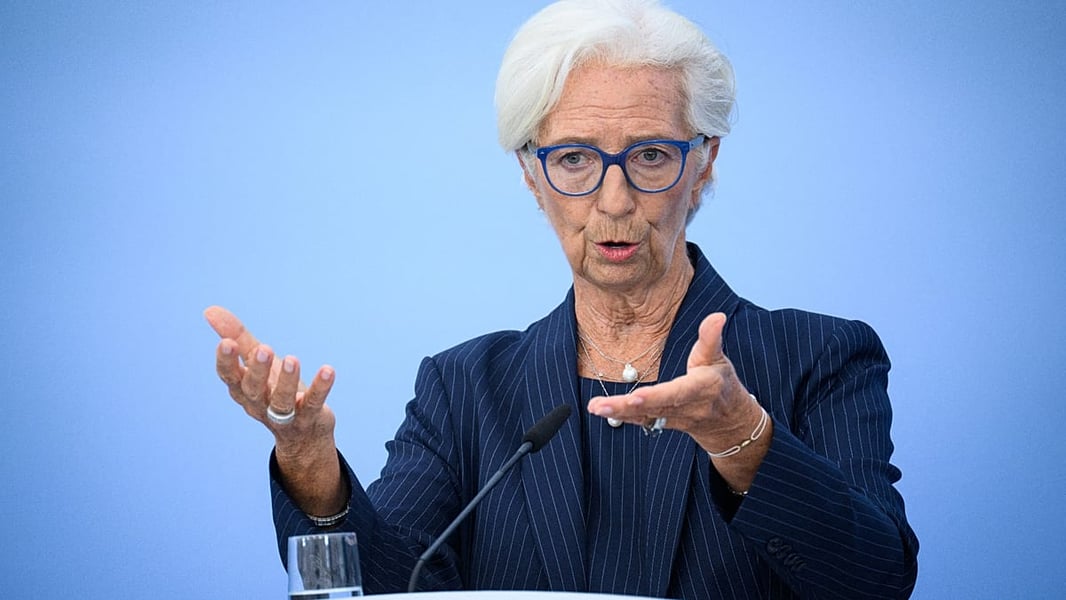
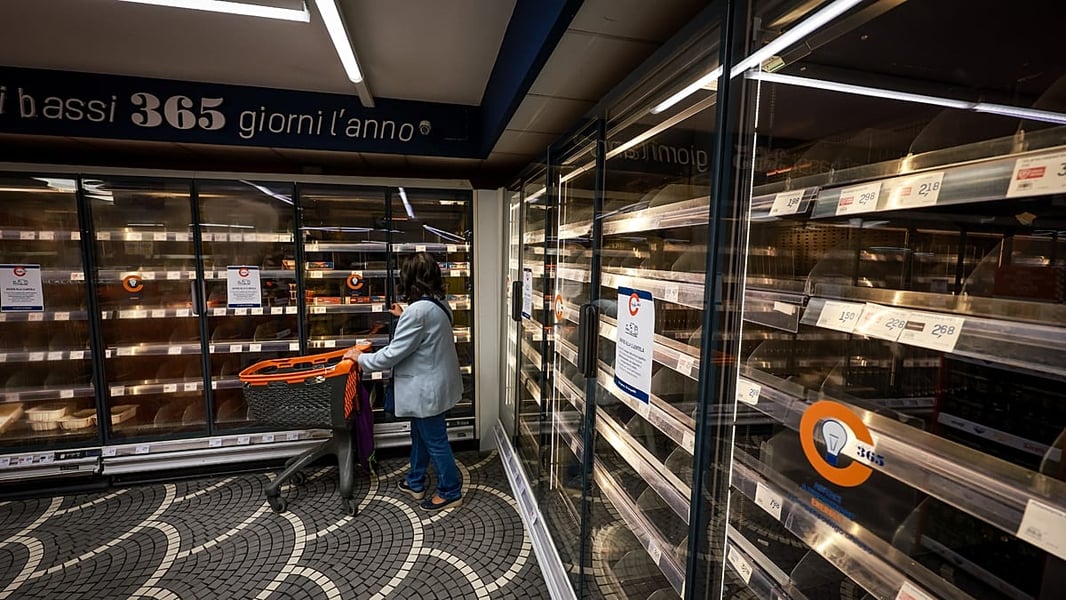
Across the currency union, input costs accelerated for a second month on higher energy, fuel and transport prices. That is the awkward part for the European Central Bank. Chris Williamson, S&P Global’s chief business economist, said the survey still points to quarterly GDP growth of about 0.3%, but that higher interest rates were starting to dampen demand and would feed speculation about more aggressive tightening.
The ECB has raised rates twice this year, taking its deposit rate to 2.5%, and euro zone inflation reached 3.8% in September. The bank is widely expected to hold next Thursday. Part of the reason is that the bond sell-off is doing some of its work already. Carsten Brzeski, ING’s global head of macro, estimated that the rise in German yields since September has roughly the effect of a 25 basis point hike, and for France closer to 50 basis points. In his words, the bond market has taken over the ECB’s job.
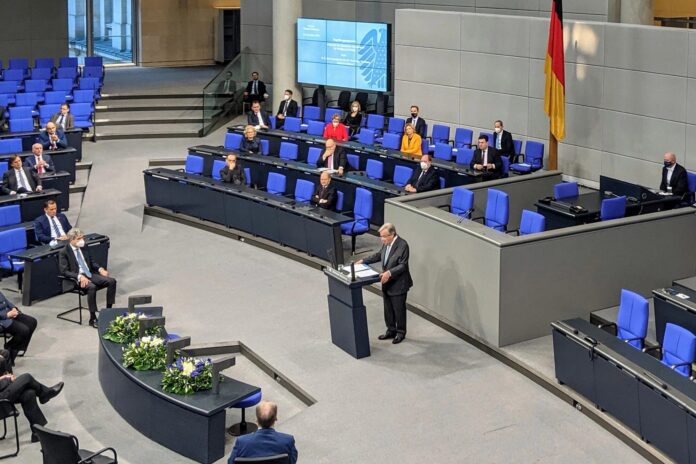
Christine Lagarde has made clear where she thinks the repair job sits. The primary solution to France’s debt problem, she said at the IMF and World Bank meetings in Bangkok, lies at home, in fiscal policy. Paris has little room to deliver it. The government is pushing a budget with €43 billion in spending cuts and extra revenue measures but has no majority for it, debt stands at 119.1% of GDP, and it expects debt-servicing costs to rise by more than €10 billion in 2027.
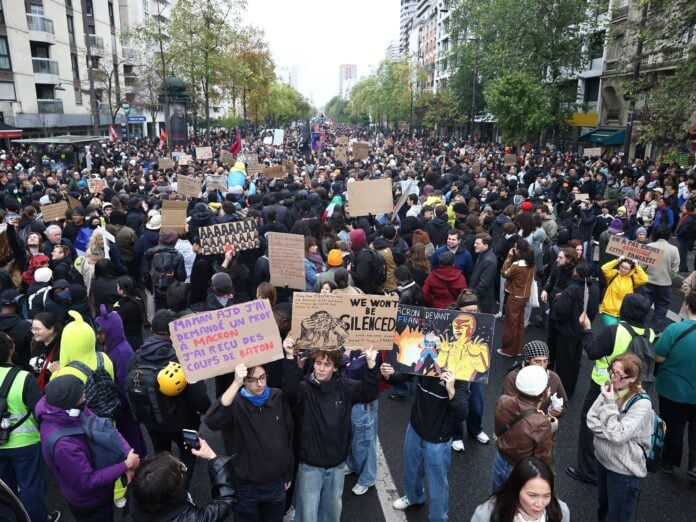
Moody’s kept France at Aa3 on Friday evening but with a negative outlook, one notch above S&P and Fitch. Trade unions left a Wednesday meeting with Prime Minister Sébastien Lecornu unanimously disappointed and have called a large mobilisation for November 5. More protests are expected this weekend, and the Paris police prefect has advised business owners to hire private security.
What the October survey cannot say is how much of the French drop comes from the strikes and street unrest of recent weeks and how much from something that will outlast them. S&P’s own economists note that growth also edged lower in the rest of the bloc, which points to more than a French problem. Until November’s flash readings arrive, nobody can say whether October was a stumble or the start of a longer slide.