
NEW YORK – The money moving into XRP is not coming from where most people expect.
While XRP’s 40% climb over the past week drew predictable attention to its price, outpacing Bitcoin’s 23.6% and Ether’s 28.1% over the same stretch to reach $1.41 as of Monday, the more significant development was happening in the derivatives market. Outstanding XRP futures positions across crypto exchanges fell by more than 500 million tokens between August 17 and August 31. At the same time, open interest at the CME Group climbed roughly 36%, lifting the regulated exchange’s share of total XRP futures exposure to about 17% from 10%.
That divergence is the story. Retail and offshore traders were reducing leverage during a major rally. Institutional capital, moving through the CME because it often has to, was adding.
CME Group listed XRP futures in May 2025. The product became the fastest-ever CME cryptocurrency futures contract to reach $1 billion in open interest, crossing that threshold in three months. The pace suggested more than passing curiosity from professional desks. Dealers added the equivalent of nearly 60 million XRP in net-long exposure over the period, according to published market data. Asset managers added about 28 million. Both categories skew toward professional counterparties: the hedge funds, family offices, and bank trading desks that prefer regulated venues either by regulatory requirement or by compliance policy.
Spot XRP exchange-traded funds reinforced the picture. For the week ending August 28, they pulled in $110.49 million in net inflows, pushing cumulative net inflows across the products to $1.66 billion since launch. That is not a retail accumulation pattern.
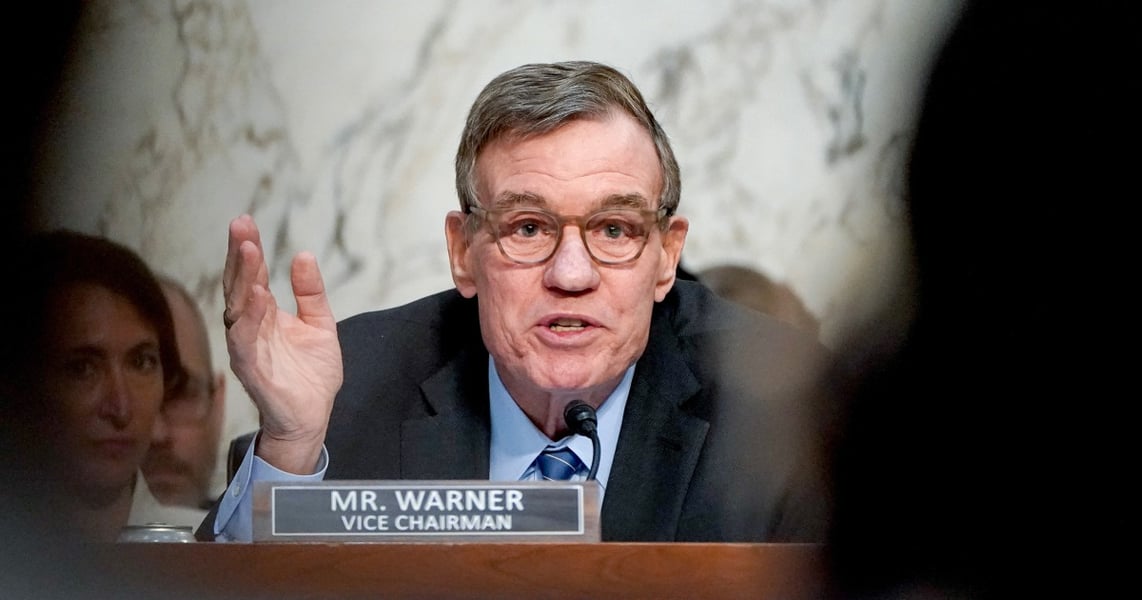
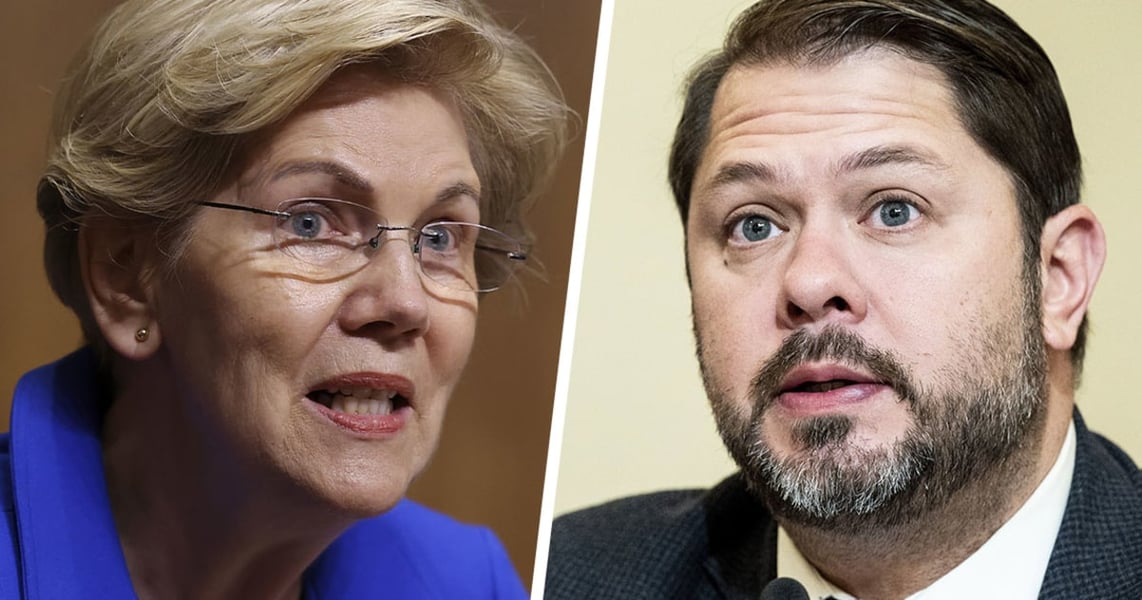
The reason professional investors are positioning, and why the scale of the move matters, runs through Washington. On September 15, the Senate holds a cloture vote on the CLARITY Act, the crypto market-structure legislation that has moved XRP more than any single price catalyst this year. Cloture is a procedural step: it requires 60 senators to vote to open debate on the bill. Republicans hold 53 seats. Seven Democrats must cross.
The three outstanding disagreements are not peripheral. One involves an ethics provision that would bar sitting officials with significant crypto holdings from shaping the industry’s rules, a provision Democrats argue directly targets conflicts within the current administration. A second concerns whether stablecoin issuers should be permitted to pay interest to holders, a question that divides traditional banks from digital-asset firms. A third involves how digital assets are classified under existing commodity and securities law.
If those 60 votes materialize, the CLARITY Act would, among other things, classify XRP as a commodity under federal law, resolving the legal uncertainty that has followed the token since the Securities and Exchange Commission sued Ripple in 2020. Ripple spent $150 million litigating over four years before a federal judge ruled that XRP sold on public markets was not a security. The CLARITY Act would codify that logic across the digital asset market.
Ripple itself is no longer a passive participant in whatever comes next. The company that once seriously considered dissolving and distributing XRP to shareholders is now active in traditional finance: it signed a partnership with Jeonbuk Bank on August 27 to modernize cross-border payments in South Korea’s regional banking sector and is operating as a clearing partner for CME’s XRP futures through its Ripple Prime service.
The XRP Ledger is also approaching its own structural milestone. A critical fix bundle secured 82.86 percent of validator consensus and entered a 14-day activation window as of late August, with the earliest possible mainnet activation set for September 11. The bundle addresses stability patches for Vaults, automated market makers, and the Lending Protocol, the rails institutional users would need to deploy capital at scale on the network.
None of this means September will be clean. The CLARITY Act faces arithmetic that does not yet add up to 60. Bitcoin’s rally last week was partly driven by White House meetings with crypto executives and renewed passage expectations for the CLARITY Act, but the Senate has not produced the votes. A failed cloture motion would remove the regulatory inflection point that appears to underpin much of the institutional positioning, and the consequences for a market that has moved this fast would not be confined to XRP.
The same macro forces shaping the CLARITY Act’s fate were already visible across traditional markets. Bitcoin dropped more than $3,000 on August 28 after Fed Chair Warsh’s Jackson Hole address reset rate-hike expectations. The Dow Jones fell 374 points on August 31, with tech-adjacent names including Alphabet shedding 1.4% as higher-for-longer rate expectations compressed growth multiples across the board.
The token itself pulled back sharply from its peak. Between August 19 and August 22, XRP surged roughly 70% to reach $1.66, then collapsed as leveraged traders were forced to close positions. The subsequent grind back to $1.41 was slower and cleaner, funded by CME accumulation rather than offshore leverage, as shown in official exchange records.
The question the current positioning cannot answer is whether the dealers and asset managers adding exposure through CME are expressing genuine conviction about the CLARITY Act’s passage or hedging against a broader market event with a high-beta asset. Both are plausible. The CME data does not distinguish between the two. What it does establish is that professional money has a stake in whatever happens on September 15, and that the cost of being wrong, in a market this concentrated and this fast, is not evenly distributed.
XRP began August around $0.99 and ended it near $1.38, its best monthly performance since August 2021. The institutional architecture that built around it during that same period may outlast the CLARITY Act vote either way. The harder question, whether regulatory clarity converts positioning into something permanent, is one September will have to answer.