
LOWELL, Ark. — J.B. Hunt Transport Services (NASDAQ: JBHT) booked 20% more revenue in the third quarter and kept almost none of it. Operating income rose 2%, to $247.1 million, and the company’s own accounts show where the rest went.
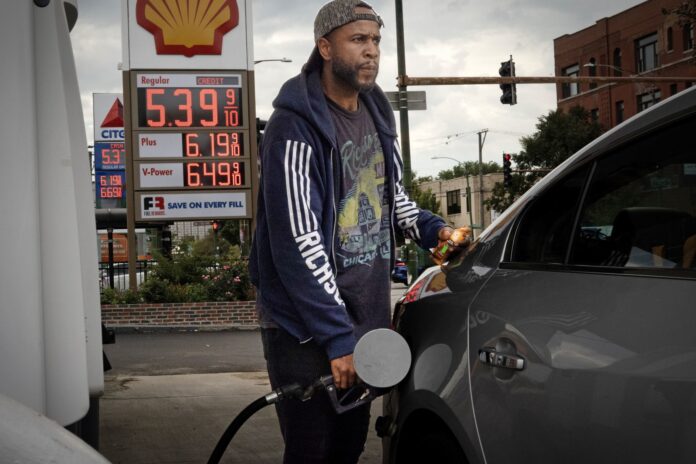
Revenue reached $3.68 billion, according to the earnings release the trucking and intermodal group issued after the market closed Thursday. Strip out fuel surcharges, the fees it bills customers to cover diesel, and growth shrinks to 13%. Surcharge revenue alone jumped 74%, to $670.8 million from $385.6 million, a rise that follows the record diesel prices TEH reported in September.
Several costs moved faster than the sales. Fuel and fuel taxes rose 59%, to $260.4 million. Rents and purchased transportation climbed 32%, to $1.76 billion, and insurance and claims 23%, to $100.9 million. Operating income slid to 6.7% of revenue from 7.9%. Net earnings crept up less than 1%, to $172.4 million from $170.8 million, and the 3% gain in earnings per share, to $1.82 from $1.76, owes something to a shrinking share count: average diluted shares fell to 94.6 million from 96.8 million, and the company repurchased about 704,000 shares for roughly $174 million in the quarter while ending it with $4 million in cash and $1.12 billion of debt.
| Line | Q3 2026 | Q3 2025 | Change |
|---|---|---|---|
| Total operating revenue | $3,676.8M | $3,052.9M | ▲ 20% |
| Revenue excluding fuel surcharge | $3,006.0M | $2,667.3M | ▲ 13% |
| Fuel surcharge revenue | $670.8M | $385.6M | ▲ 74% |
| Rents and purchased transportation | $1,757.8M | $1,332.4M | ▲ 32% |
| Fuel and fuel taxes | $260.4M | $164.0M | ▲ 59% |
| Insurance and claims | $100.9M | $82.0M | ▲ 23% |
| Operating income | $247.1M | $242.7M | ▲ 2% |
| Operating margin | 6.7% | 7.9% | ▼ 1.2 pts |
| Diluted earnings per share | $1.82 | $1.76 | ▲ 3% |
| Source: J.B. Hunt third quarter 2026 earnings release, unaudited condensed consolidated statements of earnings. Percentage changes are TEH calculations from the reported figures; the margin change uses the company’s rounded ratios. | |||
The earnings release lists the pressure points without ranking them: purchased transportation, professional driver personnel costs, fuel, insurance and claims, group medical expense and equipment-related costs, set against revenue growth, productivity gains and lower equipment storage and facility rental expense. Dedicated Contract Services shows the squeeze most plainly. Its revenue rose 11% to $960 million while operating income fell 22% to $81.7 million from $104.3 million.
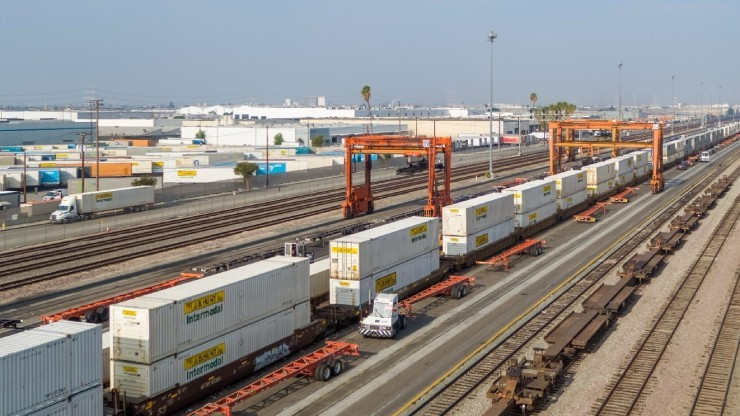
Intermodal, the largest business, carried the quarter. Revenue rose 20% to $1.83 billion, loads rose 8% to 585,582, and segment operating income rose 18% to $147.5 million, about 60% of the company total, helped by the Eastern network, where loads grew 18% while transcontinental loads grew 1%.
Brokerage, which J.B. Hunt calls Integrated Capacity Solutions, grew revenue 57% to $434 million and swung to a $9.6 million operating profit from a $0.8 million loss. Its gross profit margin was 14.3%, up from 12.5% in the second quarter but below the 15.0% of a year earlier. Truckload revenue rose 37% to $261 million while its operating income slipped 6% to $7.0 million.
Final Mile Services, the delivery arm, went the other way. Revenue slipped 3% to $200 million and operating income fell 76% to $1.6 million as stops dropped 10%.
Chief Executive Shelley Simpson, in the release, said “we remain confident in our strategy and are building the capabilities needed to support our customers’ evolving needs.” The release offers no numeric outlook beyond a full-year tax rate of about 24%. The third-quarter rate was 25.5%, against 24.0% a year earlier. Debt of $1.12 billion is down from $1.60 billion a year ago, and nine-month net capital spending fell to $291.1 million from $490.9 million.
What the release does not say is whether the cost lines that ate the quarter, driver pay, claims and medical expense, will ease or keep climbing, or how much of the fuel-surcharge revenue merely offsets fuel the company bought itself. Those answers sit in the fourth quarter.