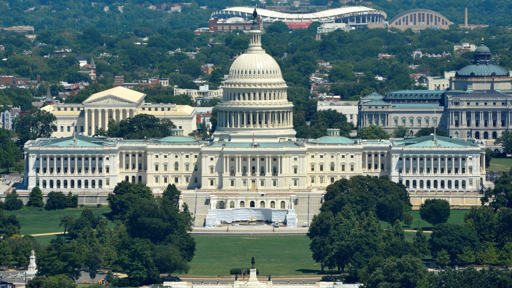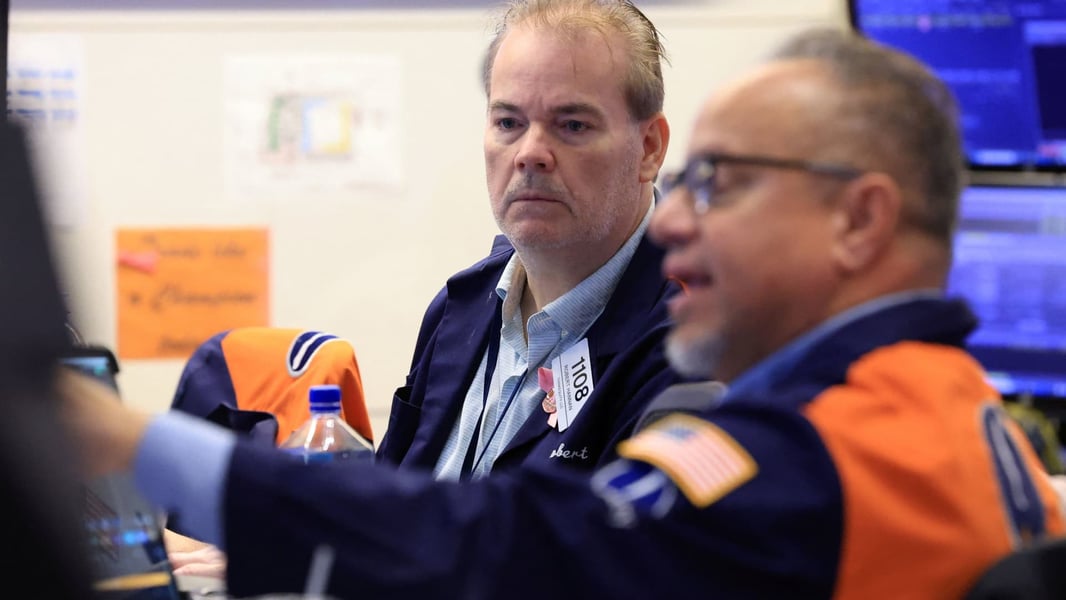

NEW YORK – US stock futures fell and Asian technology shares sold off early Wednesday as Democrats won control of Congress, raising investor concern that a new political balance in Washington could slow the buildout of artificial-intelligence data centers.
The moves followed a mixed close on Wall Street on Tuesday. The Wall Street Journal reported that the Dow Jones Industrial Average fell 197.26 points, or 0.38%, to 51,786.72. The S&P 500 gained 27.52 points, or 0.36%, to 7,568.92, and the Nasdaq Composite rose 207.65 points, or 0.83%, to 25,372.01.
Chip stocks led the gains, and the S&P 500 ended a three-day losing streak, according to reports from CNBC. Micron rose 2.5%, Nvidia 2.3%, AMD 3.7% and Broadcom 3.1%, according to Seeking Alpha. Apple fell about 1.9% after a disappointing margin forecast, as Eastern Herald reported.
After the close, futures weakened as projections showed Democrats winning both chambers. CNBC reported that S&P 500 and Nasdaq-100 futures were each down 0.6% at one point, while Dow futures were down 161 points, or 0.7%. Yahoo Finance later reported steeper declines of 1.3% for S&P 500 futures and 2.2% for Nasdaq-100 futures, and Sky News said the losses later narrowed. Futures can reverse quickly, so these figures are not a forecast for Wednesday’s open.
The central worry was data centers. CNBC reported that investors feared a large Democratic win could mean more restrictions on data-center development nationwide. The concern sharpened after the Associated Press projected that Democrat Gina Hinojosa defeated Republican Gov. Greg Abbott in Texas. Hinojosa had pledged a moratorium on data centers.
Texas accounts for about 27% of US data-center gigawatts, according to Wells Fargo estimates cited by CNBC. Scott Ladner, chief investment officer of Horizon Investments, said the AI trade could hinge on the Texas result. AI-linked stocks had already pulled back in recent weeks on concern about slowing data-center spending.
Asian markets reacted sharply. CNBC reported that Japan’s Nikkei 225 fell more than 4%, its lowest level since May. SoftBank fell more than 8%, Tokyo Electron fell about 7%, and South Korea’s SK Hynix fell about 5%. The Wall Street Journal reported that Asian markets later saw a partial relief rebound.
Treasury yields fell as investors sought shelter, and the dollar weakened to a one-month low, the Journal reported. Not every sector fell: CNBC said the Invesco Solar ETF rose in after-hours trading on speculation that a Democratic Congress would curb Trump administration policies against the industry.
Trump gave markets some reassurance by telling the Wall Street Journal, “I think we’ll work with the Democrats, and we’ll get along very well with them,” according to CNBC. He also wrote on Truth Social that he “wasn’t on the Ballot.”
Strategists urged caution about reading too much into the first reaction. Stifel’s Brian Gardner wrote that the initial trade could reverse as investors recognise that gridlock remains the most likely policy outcome, according to Barron’s. CNBC’s analysis found that the S&P 500 has risen after each of the last 11 midterm elections from 1982 to 2022, though past performance does not guarantee future results.