
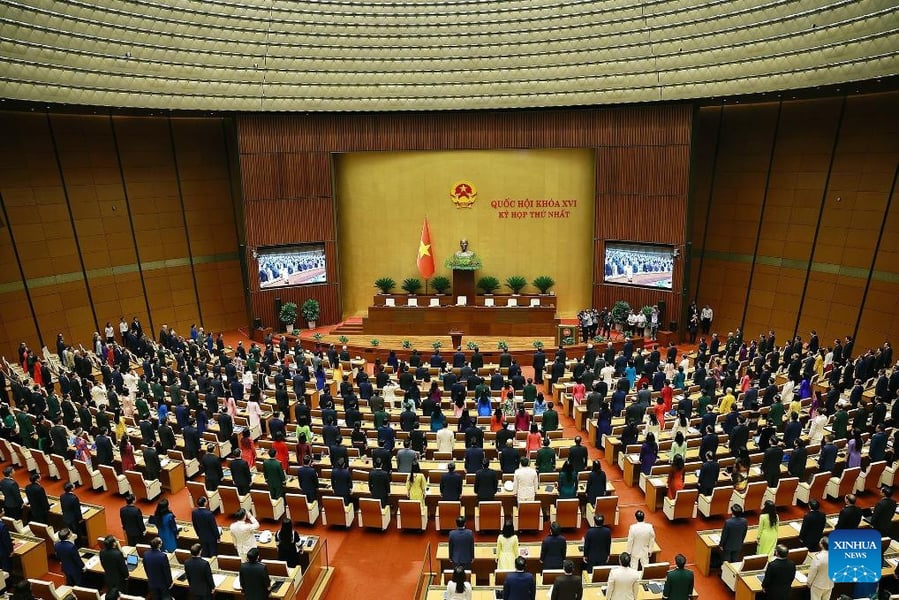
HANOI — Vietnam has raised the limit on how much it may owe abroad, a week after Japan’s Rating and Investment Information became the first agency, by the government’s account, to rate the country investment grade. A revised public debt strategy signed on Thursday lets external debt climb to 50 percent of gross domestic product by 2030, up from 45 percent.
Xinhua, citing the Vietnamese daily Tien Phong, reported on Friday that the overall public debt cap stays at 60 percent of GDP and the government debt cap at 50 percent. Only the external ceiling moved. The International Monetary Fund‘s staff had suggested last year that Hanoi pull its overall ceiling down to 50 percent. Hanoi kept 60 and widened the external limit instead.
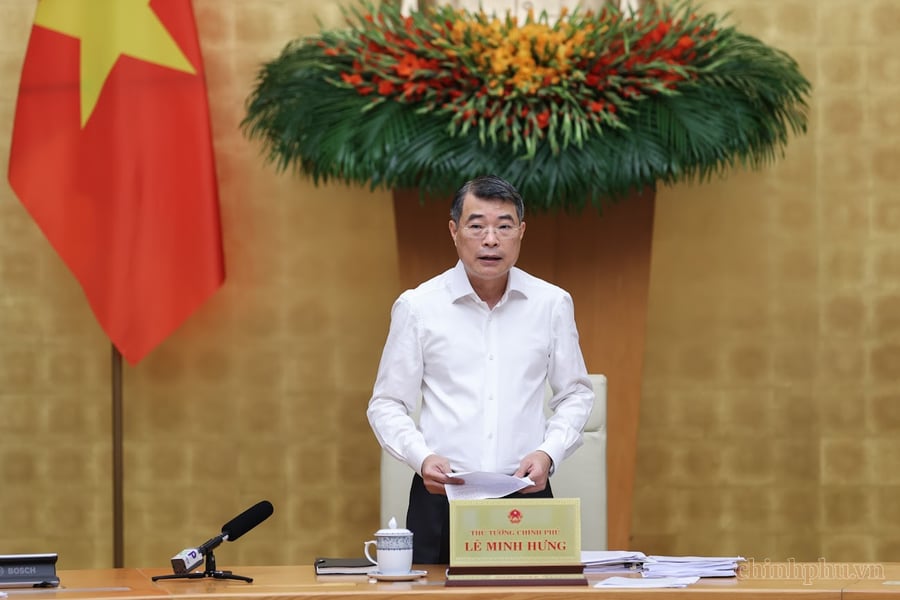
The timing matters because the money has to come from somewhere. Prime Minister Le Minh Hung told a cabinet meeting on October 3 that fourth-quarter growth must exceed 12.5 percent for Vietnam to hit its double-digit target for the year, the government’s news portal VGP reported. The economy grew 9.01 percent in the first nine months. The 2026 public investment plan alone exceeds one quadrillion dong, about $39.9 billion, according to Vietnam News Agency figures that Xinhua carried in February. A higher foreign ceiling widens the space in which that spending can be financed.

How much room the old ceiling left depends on whose numbers one uses. A government report to the National Assembly put public debt at 35 to 36 percent of GDP at the end of 2025, with government debt at 33 to 34 percent and external debt at 31 to 32 percent, Xinhua reported, relaying VnEconomy. The IMF’s August 2025 projections for the same year were lower: 32.0 percent for public and publicly guaranteed debt and 29.1 percent for total external debt. The two sets were compiled at different times, and neither source explains the gap.
The IMF’s reasoning ran the other way. In a staff report completed in August 2025 and published that October, its economists wrote that the 60 percent ceiling “has not been a meaningful medium-term anchor” because public debt sat well below it, and that a ceiling of 50 percent “could be a prudent medium-term anchor.” They noted that Vietnam’s investment strategy would include more external and domestic borrowing, and that their own baseline left out the authorities’ infrastructure plan, which was still being developed. The authorities, in the same report, acknowledged that funding the projects would involve raising taxes and public debt and “leveraging private and foreign capital.”
The government’s own forecasts show where the new ceiling sits. VGP’s debt plan for 2026, published in March, expects external debt of 32 to 33 percent of GDP by the end of this year. Against that, the old 45 percent ceiling left 12 to 13 points of room and the new one leaves 17 to 18. That is subtraction from official figures, not a stated intention. The same plan targets total borrowing of 969.8 trillion dong, about $38.5 billion, through bonds, international bonds, official development assistance and concessional loans, and asked the Finance Ministry to prepare a project for issuing international bonds. The breakdown VGP prints for that total does not add up to it.
Rating and Investment Information, the Japanese agency known as R&I, raised Vietnam to BBB- from BB+ with a stable outlook on October 8, VGP reported the next day. In VGP’s summary, R&I said public debt remained relatively low, leaving fiscal space for development spending, and that the external debt burden was relatively low as well. Xinhua says the revised strategy still lists an investment-grade rating as an aim for the near future. Neither VGP nor Xinhua says whether R&I knew the external ceiling was about to rise.
The price of any dollar borrowing is set partly outside Vietnam. The Federal Reserve raised rates on September 16 to a target range of 3.75 to 4 percent in a 12-0 vote. None of the documents TEH read says which currency Hanoi expects to borrow in, or what it is prepared to pay.
TEH could not read the decision itself, only the Xinhua and VGP summaries of it. If the extra five points are a cushion, the government has not said so. If they are a plan, it has not said who is meant to lend.