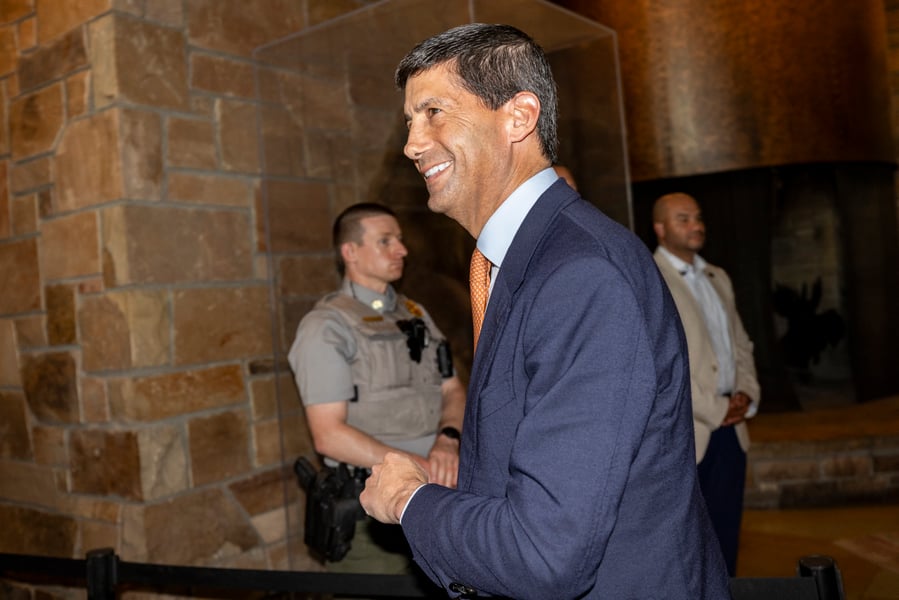

NEW YORK — Kevin Warsh did not use the word “hike.” He did not need to.
The Federal Reserve Chair’s address at Jackson Hole on Friday delivered enough — that inflation was not retreating fast enough, that the Fed had “work to do,” that no pivot was imminent — to hand gold its sharpest single-session loss in months. On September 1, 2026, the market is still absorbing the impact. The spot gold price has fallen to $4,375 per troy ounce, extending Friday’s selloff as rate hike odds continue to climb. The metal is now at its lowest level since mid-August.
Per gram, gold is at approximately $140.70 on international markets. For US investors and institutional buyers, the COMEX December futures contract — the most actively traded — is at $4,498.70, with traders recalibrating positions across the gold price chart after a week that exposed how quickly Fed language can override months of structural buying.
Gold Price Today – September 1, 2026
| Measurement | Price (USD) |
|---|---|
| Gold Spot Price (per troy ounce) | $4,375 |
| Gold Price Per Gram | $140.70 |
| Gold Price Per Kilogram | $140,700 |
| Gold Price Per Pound | $63,800 |
| COMEX December Futures (GC Dec’26) | $4,498.70/oz |
| Spot prices as of intraday September 1, 2026. COMEX futures are indicative. Prices in USD. Sources: CNBC, Trading Economics, CME Group. | |
Gold Price Chart – Recent Performance
| Period | Gold Spot Price | Change |
|---|---|---|
| Today (Sep 1, 2026) | $4,375/oz | – |
| One Week Ago (Aug 25) | $4,473/oz | -2.2% |
| One Month Ago (Aug 1) | $4,521/oz | -3.2% |
| February 2026 Peak | ~$4,700/oz | -7.0% |
| One Year Ago (Sep 1, 2025) | ~$2,530/oz | +72.9% |
| 52-Week High | ~$4,700/oz (Feb 2026) | – |
| 52-Week Low | ~$2,480/oz (Sep 2025) | – |
| Historical prices are indicative. Percentage changes calculated from September 1, 2026 intraday spot price of $4,375/oz. Sources: CNBC, Trading Economics. | ||
The Jackson Hole speech was the catalyst; the velocity of Friday’s move revealed how extended the market had become. Bullion fell more than 1% on Friday as Warsh’s remarks shifted rate expectations decisively. Markets are now pricing approximately a 66.4% probability of a 25-basis-point rate hike at the September FOMC meeting, up from roughly 40% a week earlier, according to CME Group FedWatch data. That repricing hit gold’s spot price chart directly: higher rates mean a higher opportunity cost for holding a non-yielding asset, and gold in 2026 has traded with tight sensitivity to every Fed signal.
What makes the September 1 setup more complicated than a simple rate-hike scare is the underlying demand picture. Central bank gold purchases — from the People’s Bank of China, Reserve Bank of India, National Bank of Poland, and others — have provided a structural floor under the gold price for over two years. That institutional buying does not evaporate because of one Jackson Hole speech. The World Gold Council has consistently cited this sustained central bank demand as the primary reason gold has held above $4,000 per ounce through periods of Fed hawkishness that would previously have pushed the metal far lower.
The September rate hike question is not only an American story. In India, the world’s second-largest gold consumer, the gold price in India on September 1 has pulled to ₹15,692 per gram in Delhi and ₹15,677 per gram in most other cities, according to the India Bullion and Jewellers Association. Indian demand typically absorbs international corrections faster than other markets, given the approaching festive buying season beginning with Ganesh Chaturthi and running through Diwali in October.
Gold’s 2026 performance has been built on a specific thesis: that central banks are structurally over-allocated to US Treasuries and will continue diversifying into gold regardless of short-term rate movements. That thesis is not dismantled by one Jackson Hole speech. It is tested by it. If the Fed hikes in September and gold holds above $4,200, the structural floor argument gains credibility. If it breaks below $4,000, the rate-sensitivity argument wins the round.
At $4,375 per ounce on September 1, gold is not breaking below any major technical level. It is repricing off a multi-month high, absorbing a Fed shock, and waiting to see whether US inflation data in the next two weeks confirms or contradicts Warsh’s concern. The Personal Consumption Expenditures index reading due later this week is the next significant input.
For retail buyers and small investors, the September 1 correction raises the same question every gold dip raises: is this a buying opportunity, or the start of a longer decline? The answer depends almost entirely on what the Fed does. If the September hike is 25 basis points and the statement signals it is the last, gold historically recovers within six to eight weeks. If the statement leaves another hike on the table — or if inflation data this week comes in hotter than expected — the correction may extend.
Gold has shown a consistent pattern in 2026: institutional and central bank buyers have stepped in during every significant dip, preventing the kind of sustained drawdown that rate-sensitive investors fear. The gold price chart for the year shows three prior corrections of more than 2%, all followed by recoveries to new highs within six to ten weeks. Whether the floor holds at $4,375 or is tested lower depends on a decision not yet made in Washington.
From a broader market context, crude oil prices approaching $90 per barrel on geopolitical tensions are simultaneously pushing inflation higher — bearish for the gold price from a rate perspective — and driving safe-haven demand upward, which is directly bullish for gold. Those two forces are pulling in opposite directions on September 1, and the net result is a market that is uncertain, repricing, and looking for a clear signal.
Warsh speaks again this week at a Congressional hearing. The gold price per ounce will be set not by buyers and sellers in New York or Mumbai, but by economists reading the same inflation data in Washington. The gold market will be listening.