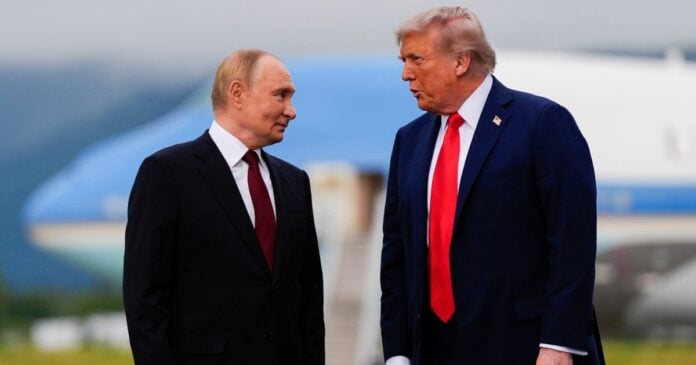
NEW YORK – For oil traders who spent two weeks pricing an unresolvable conflict, Trump’s weekend comment that he would be willing to meet Iranian President Masoud Pezeshkian did what the strikes could not. It moved the market in the other direction, and faster than it had moved up.
Brent crude fell 2.12 percent to $101.67 a barrel in early Monday trading. WTI, the American benchmark, slipped 2.24 percent to $98.05, sliding below $100 for the first time in eleven days. Both contracts hit their lowest level since September 10.
The move came as the United Nations General Assembly opened in New York with Pezeshkian in attendance. Trump said on the weekend that options for ending the war included destroying Iran militarily, allowing it to “rot economically,” or negotiating a deal. That the third option was named at all, with a meeting offer attached, was enough for traders to begin shaving the war premium built up over weeks of tanker attacks and US strikes near the Strait of Hormuz.
Tim Waterer, chief market analyst at KCM Trade, told the financial press Monday morning that oil markets were shedding a war premium “on hopes that a diplomatic path to de-escalate the US-Iran war may arrive this week.”
Qatar’s Prime Minister, Sheikh Mohammed bin Abdulrahman Al-Thani, offered the most specific confirmation of what was circulating below the headline diplomacy. He told reporters Sunday that messages were being exchanged between Washington and Tehran, and urged Gulf governments to use the New York gathering to push for regional stability. The statement came a day after the United States extended its air isolation of Tehran with fresh sanctions grounding Mahan Air in Turkey and Georgia, a reminder that Washington’s diplomatic and economic pressure tracks have not synchronised.

Brent crude peaked at $104.42 in recent days as the IEA projected the largest demand decline since COVID-19, a figure that itself captured the war’s economic weight on consuming nations. Monday’s retreat to $101.67 narrows that gap but does not close it. War-premium oil remains elevated oil. OPEC+ has kept production targets unchanged through the conflict, calculating that higher prices offset the logistical disruptions its Gulf members are absorbing. Any genuine diplomatic opening this week would test whether the group adjusts its posture before the next scheduled review.

Iran and the United States exchanged threats as recently as Sunday. Pezeshkian had made no public response to Trump’s offer as of Monday’s session close. Iran’s position, conveyed through Qatari intermediaries, requires security guarantees and formal recognition of its rights under the Nuclear Non-Proliferation Treaty, not merely ceasefire terms. Neither side has defined what those guarantees look like in practice.
Brent at $101.67 is still elevated by any pre-conflict standard. The September 8 Oman channel produced a similar one-day slide that partially reversed within 72 hours. What is different this time is the directness of the offer: it came from Trump himself rather than through a back-channel. Whether the market has priced the right probability of a handshake that has not yet happened is the question the next session will begin to answer.