
LONDON – Tehran sent two contradictory signals to the world’s oil traders on Monday, and crude markets spent Tuesday morning trying to price both of them at the same time.
Iran’s Foreign Ministry spokesman Esmail Baghaei told reporters in Tehran on Monday that an agreement with Oman on Hormuz shipping routes is in its “final stages.” The deal, which the two sides have been negotiating for several weeks, would establish a temporary transit corridor through the Strait and be registered with the International Maritime Organization, giving charterers and insurers a documented basis for resuming bookings on qualifying vessels. Brent crude retreated from an early session high of $97.93 a barrel to settle near $96.15, as part of the risk premium built up since the weekend tanker strikes found a temporary release in the deal signals.
Yet Iran’s Supreme National Security Council had separately confirmed, as The National reported from the Gulf, that a formal restricted maritime zone extending beyond the Strait and into the Gulf of Oman approach routes would be declared “in the coming days.” The two statements came from different arms of the Iranian government and pointed to outcomes that cannot both close the week in tankers’ favor. The Foreign Ministry’s corridor and the National Security Council’s exclusion zone describe incompatible realities.
That structural contradiction made Tuesday’s session unusual. Crisis sessions typically trade a single scenario. Tuesday’s Brent chart showed traders actively rotating between two, with the spread between the intraday high and the mid-session low reaching $1.78 on no new external development, only the shifting weight each analyst assigned to Tehran’s competing voices.
West Texas Intermediate settled near $92.37, in a narrow range that mirrored Brent’s afternoon retreat. LNG futures dipped modestly as the prospect of a Hormuz corridor offered a conditional upside signal for Qatari cargo routes, though analysts cautioned that any arrangement requiring Iranian approval to activate had never been tested under current military conditions.
The deal as Iran has framed it would give Oman a formal co-signatory role in managing Strait transit. Oman, which has served as an intermediary between Washington and Tehran throughout the conflict, has not publicly confirmed the status of the negotiations. Its foreign ministry described the arrangement as being in “a technical drafting phase” in its last formal statement; what Baghaei called “final stages” may refer to the same unresolved points from a different vantage point. According to NPR’s reporting on earlier terms of the arrangement, Iranian conditions have included a prohibition on vessels affiliated with the United States and Israel, a condition Washington has not acknowledged accepting. Baghaei’s Monday statement did not address whether those terms remained in the version he described as final.
The restricted zone is a different instrument entirely. It requires no US agreement, cannot be blocked through the IMO, and represents a unilateral assertion of sovereign rights over a contested waterway that, once declared, becomes difficult to walk back without visible concessions. The central question throughout this conflict has been whether Tehran would press its positional advantage in the strait or deploy the threat as a bargaining tool; the September 2 analysis of Kharg Island leverage laid out that tension in full. A declared restricted zone answers that question differently than a deal does.
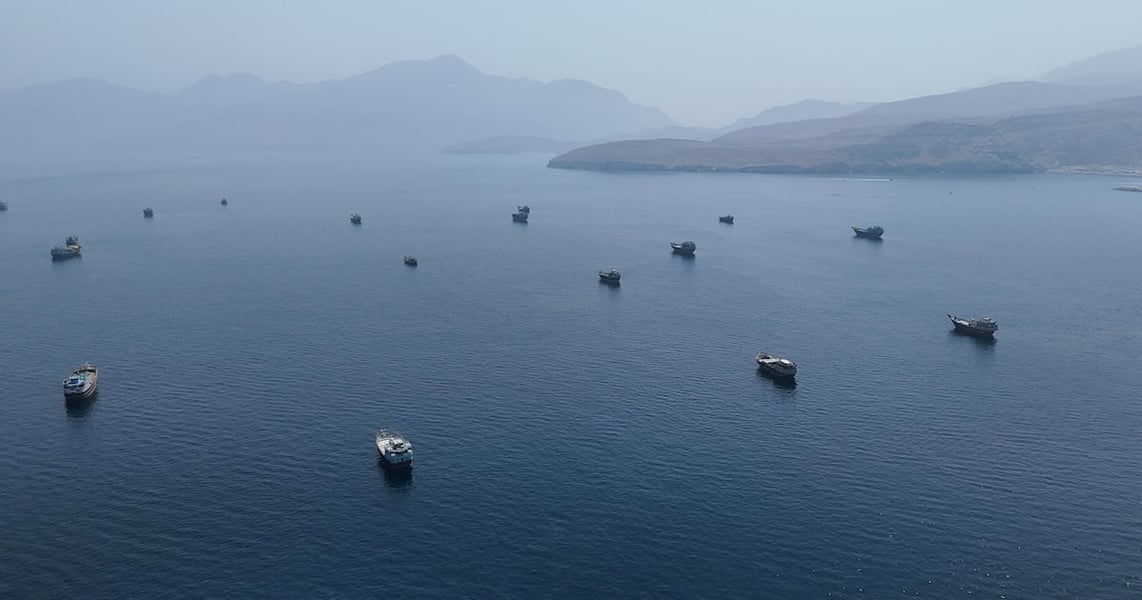
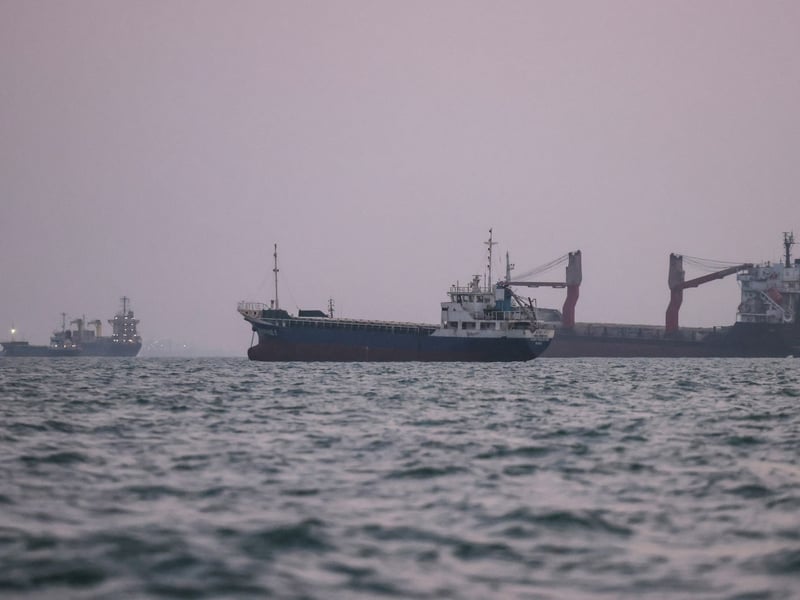
Physical traffic through the Strait has not recovered regardless of which scenario traders choose to price in. Fewer than twelve commercial vessels were clearing the waterway daily as of last week, against more than 35 in May. The vessels still transiting operate under flags from states that have individually negotiated safe-passage arrangements with Tehran. Greek-operated tankers, the primary carriers of Gulf crude to European refiners, have suspended Hormuz bookings for the duration of the current escalation.
India’s petroleum ministry said Tuesday it was in active contact with Oman and Gulf-state counterparts to monitor the corridor situation. India is the world’s third-largest oil importer and sources a large share of its daily crude requirements from Gulf producers. Spot purchases from Indian refiners have been paused since the weekend tanker strikes, waiting for clarity on what shipping lanes will remain functional. A corridor arrangement that included Indian-chartered vessels without restriction would materially change New Delhi’s options.
The IMO confirmed Tuesday it had not received a formal registration request for any Hormuz corridor arrangement. Until it does, what Iran has described as “final stages” and what the market has begun pricing as imminent remains, in the language of shipping, an unconfirmed position report.