
LONDON – For months, every military escalation in the Persian Gulf had one implicit understanding: oil terminals were off the table. That understanding ended on Sunday.
Donald Trump, posting on Truth Social at 11:43 a.m. Eastern on August 31, threatened to strike Kharg Island’s export terminals “to smithereens” if Iran did not stand down from its campaign to close the Strait of Hormuz. The post came twelve hours after US forces struck rocket-launcher positions on Larak Island in a move framed as defensive interdiction of sea-mine deployment systems, and as Iranian drones and ballistic missiles were still being intercepted over US bases in Jordan and the United Arab Emirates.
Brent crude settled at $92.63 a barrel on Tuesday, September 2, having climbed from $88.45 at Monday’s open. The Brent-WTI spread widened to $4.43, reflecting the Atlantic Basin’s particular anxiety: roughly 17 percent of global seaborne crude moves through Hormuz, and a confirmed strike on Kharg Island, which handles 80 to 90 percent of Iran’s crude exports, would sever one of the last functioning supply arteries in the Gulf.
The market’s response was not panic. It was recalibration.
When US forces struck Kharg Island’s military infrastructure in March, the operation was deliberately bounded. More than ninety IRGC positions were hit. The oil terminal complex, including berths, loading arms, storage tanks and the submarine pipeline to Lavan Island, was untouched. The post-strike briefing from US Central Command made the omission explicit: civilian energy infrastructure was not a target.
Trump’s August 31 post removed that constraint, at least rhetorically. “If Iran’s leadership does not immediately halt all operations to blockade or disrupt the Hormuz Strait,” the post read, “we will have no choice but to eliminate this threat at its source, including Kharg Island’s oil export facilities.” Central Command has not independently confirmed any policy shift or issued updated rules of engagement.
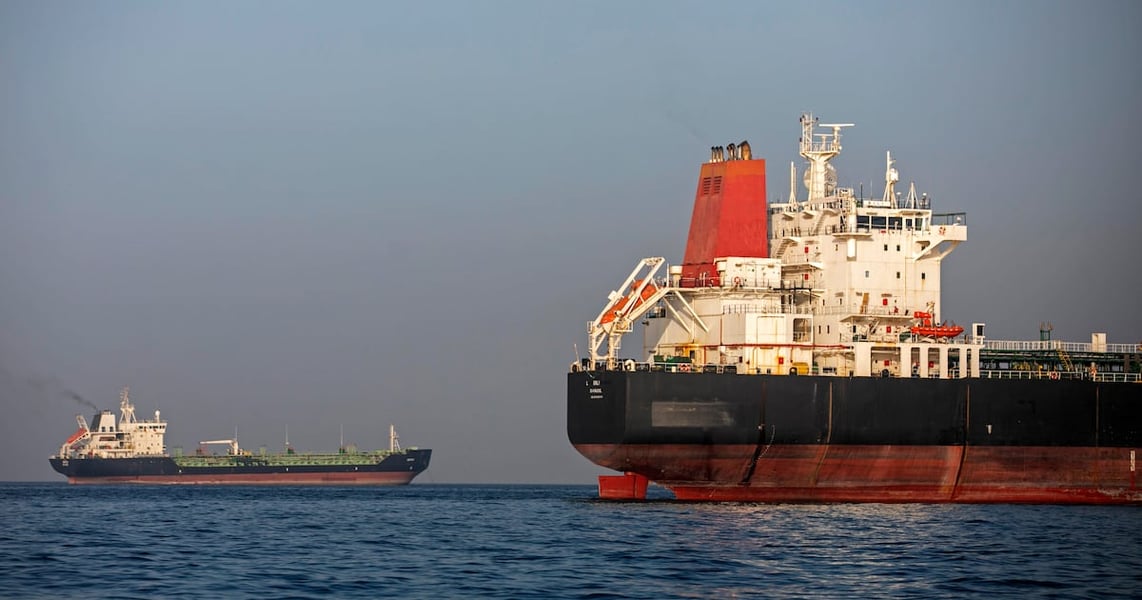
Overnight Saturday into Sunday, a Panamanian-flagged VLCC transiting the southern Hormuz approach struck two naval mines laid by IRGC naval units and caught fire approximately 14 nautical miles from Qeshm Island. The vessel’s 26 crew were evacuated by a US Navy guided-missile destroyer operating nearby. Iran’s IRGC confirmed the mining operation in a statement describing the tanker as carrying “sanctioned crude” in violation of its declared blockade.
The convergence of active mines in sea lanes, an explicit presidential threat against export terminals and ongoing air exchanges between US and Iranian forces pushed Brent through $92 for the first time since the late July peak. As covered in the July report on Larak Island operations, the pattern of escalation has been building for weeks, but Sunday’s developments represent a categorical shift.
The physical market entered the week already tight. The Energy Information Administration’s report for the week ending August 29, the seventh consecutive US crude inventory draw covered in detail in Tuesday’s inventory analysis, left commercial stocks 12.4 million barrels below the five-year seasonal average. Cushing, Oklahoma, the WTI delivery hub, dropped to its lowest level since 2022. A market already running lean now has to price in the scenario where Kharg Island’s 1.5 million barrels per day of export capacity goes offline.
No institution has yet published what that scenario looks like in price terms. The EIA’s August short-term energy outlook placed Q3 Brent near $85 per barrel. The OPEC secretariat’s August demand report projected 2026 global oil demand growth at 580,000 barrels per day. Both were written before Sunday.
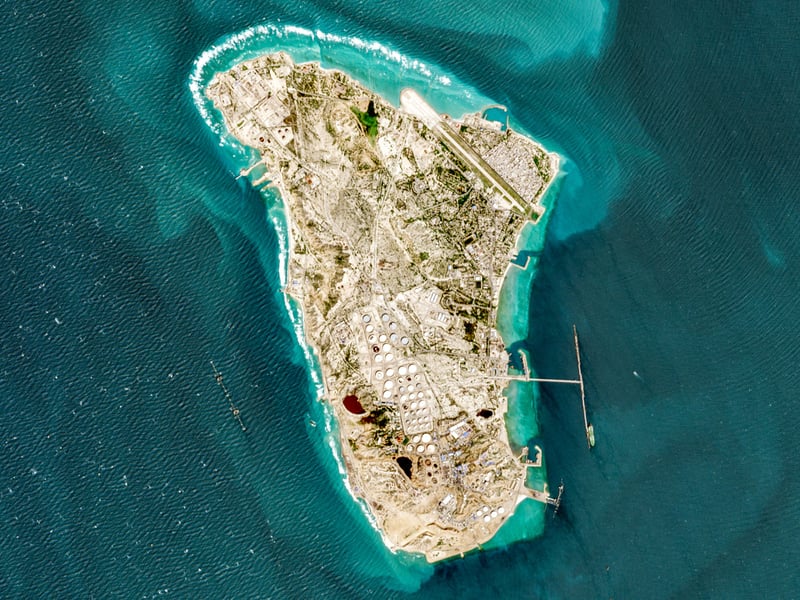
Kharg Island handles about 90 percent of Iran’s crude exports. The facilities include six shipping berths capable of loading supertankers simultaneously, onshore storage of roughly 20 million barrels and the pipeline infrastructure linking inland oilfields at Ahvaz, Marun and Gachsaran to the island’s terminals. A physical strike would take months to repair. Iran has no comparable alternative loading infrastructure for export volumes of that scale.
The ceasefire framework that briefly held in late July addressed military engagement protocols between US and Iranian forces but left Hormuz navigation rights unresolved, the core demand Iran has used to justify its interdiction campaign since June. The document contained no enforcement mechanism and no timeline for renegotiation. That structural gap is what is now in the market.
Trump has threatened Iranian infrastructure before and not struck it. The Kharg threat is different in kind: it targets the economic asset that funds the Iranian government’s budget at a level of specificity that earlier threats did not. Whether it is a negotiating signal or a genuine operational warning is not yet clear.
The September 6 JMMC session will produce a recommendation. The decision that actually moves crude prices in the weeks ahead will not be made in Vienna.