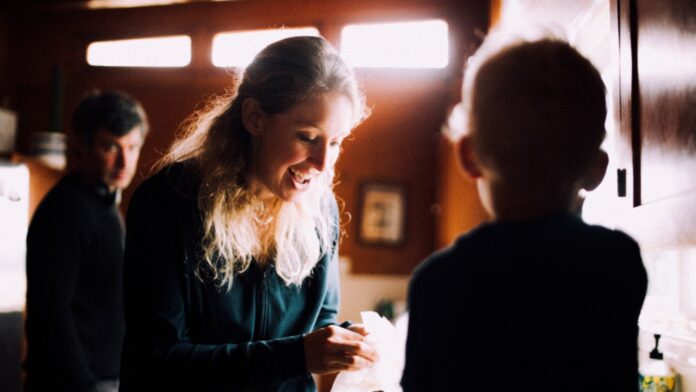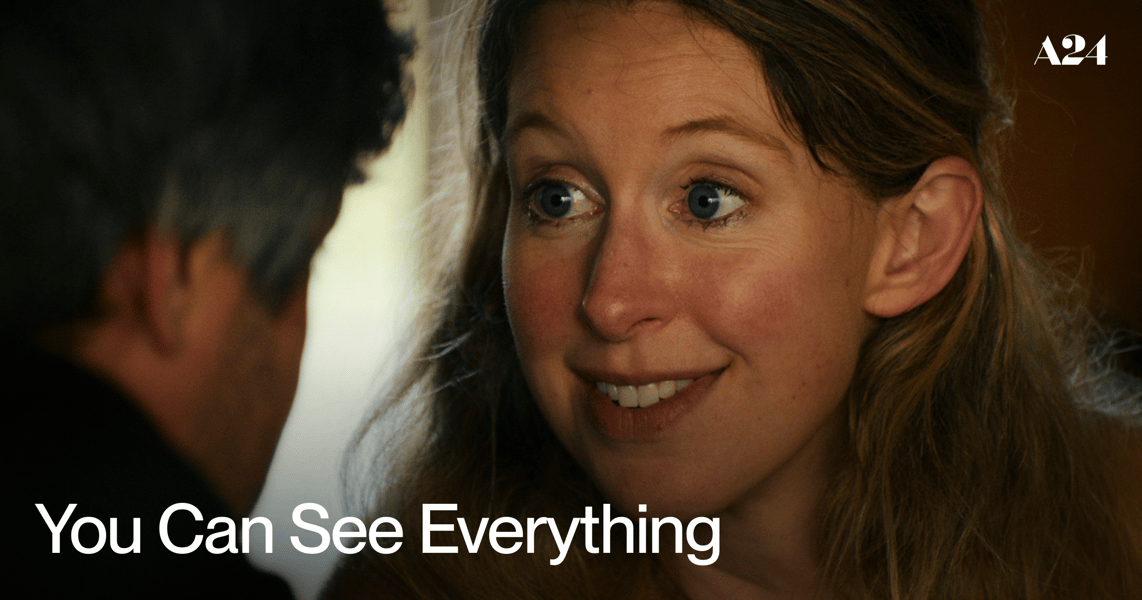

Elizabeth Holmes opened her life to a documentary crew before prison after repeatedly refusing to meet the reporter whose investigation exposed Theranos. With You Can See Everything now in theaters, John Carreyrou is revisiting that contrast: access for filmmakers, resistance for the journalist investigating whether the company’s medical claims were true.
In an October 17 essay for The New York Times, Carreyrou described feeling envious at an advance screening because directors Nathan Fielder and Lance Oppenheim had received access Holmes denied him a decade earlier. He was then reporting for The Wall Street Journal.
The Nathan Fielder documentary approaches a subject whose legal case has already produced a verdict. Its arrival raises a different question: what intimate access can explain about a person without displacing the evidence of what that person did.
Carreyrou recalled seeking an interview after concluding that Theranos could not deliver its advertised breakthrough. Instead, he wrote, Holmes sent lawyer David Boies to pressure him and the whistle-blowers who had spoken to him. His account contrasts that response with the openness later extended to filmmakers.
According to distributor A24’s official synopsis, filming begins 34 days before Holmes is sent to prison and develops into a three-year project. The studio lists Fielder and Oppenheim as directors, a running time of two hours and 55 minutes, and an October 16 theatrical opening. Those production details describe an extended portrait, not simply a reconstruction of the trial.
An earlier, unrealized film discussion helps explain Carreyrou’s position. He wrote that documentary director Errol Morris contacted him in 2016 about participating in a Holmes project, describing a proposed competing-accounts approach. Carreyrou rejected that premise because, in his view, the established facts demonstrated fraud. Morris told the Times that he did not dispute Holmes’s guilt but had wanted to examine self-deception.
That distinction matters. Exploring a subject’s understanding of herself is not the same exercise as determining whether statements to investors were false. A documentary can pursue the first question without reopening the second. Carreyrou’s recollection concerns Morris’s proposed project; it should not be mistaken for a description of the methods Fielder and Oppenheim ultimately used.
The legal record supplies the factual baseline. The Justice Department’s sentencing announcement records that Holmes was sentenced on November 18, 2022, to 135 months in federal prison, or 11 years and three months. U.S. District Judge Edward J. Davila also imposed three years of supervision following release. The original sentence is not a statement of her current projected release date.
On January 3, 2022, a jury convicted Holmes of one count of conspiracy to defraud investors and three counts of wire fraud against individual investors. The three completed investor-fraud counts involved transfers totaling more than $140 million, prosecutors said. That figure describes those counts, not a comprehensive calculation of every investor’s losses.
The verdict was not a conviction on every charge. Jurors acquitted Holmes of the patient-related conspiracy charge and three individual patient-fraud counts. They did not reach unanimous verdicts on three other investor-fraud counts, while another patient-related count had been dismissed during trial. Those distinctions remain important when describing what the prosecution proved.
Theranos had promised that a small sample collected through a fingerstick could replace conventional blood draws for an extensive range of tests. Prosecutors said trial evidence showed Holmes knew the company’s analyzer was unreliable, could perform only a few basic tests and was slower than existing devices. Conventional laboratory machines were repeatedly used to obtain results the proprietary technology was supposed to produce.
The government’s account also described misleading financial forecasts and reports bearing pharmaceutical-company logos that falsely suggested outside validation. For investors, the issue was not merely that an ambitious invention had failed. The case concerned representations about capabilities and business performance that prosecutors said Holmes knew were untrue.
Those findings are distinct from any filmmaker’s interpretation of Holmes’s personality, family life or capacity for self-deception. A viewer may come away with a more complicated impression of a convicted person without acquiring new evidence that overturns a verdict. Access can reveal behavior; it does not, on its own, verify a subject’s explanation for it.
The film’s opening-weekend box-office prospects are a separate part of its reception. Carreyrou’s account instead returns attention to a reporting question that predates the release: what happens when a powerful subject chooses which questions to answer and which questioners to exclude.
A24’s synopsis establishes the unusual proximity of the cameras. The court record establishes the convictions. Neither, by itself, resolves how viewers will interpret the space between Holmes’s account of herself and the conduct documented at trial.