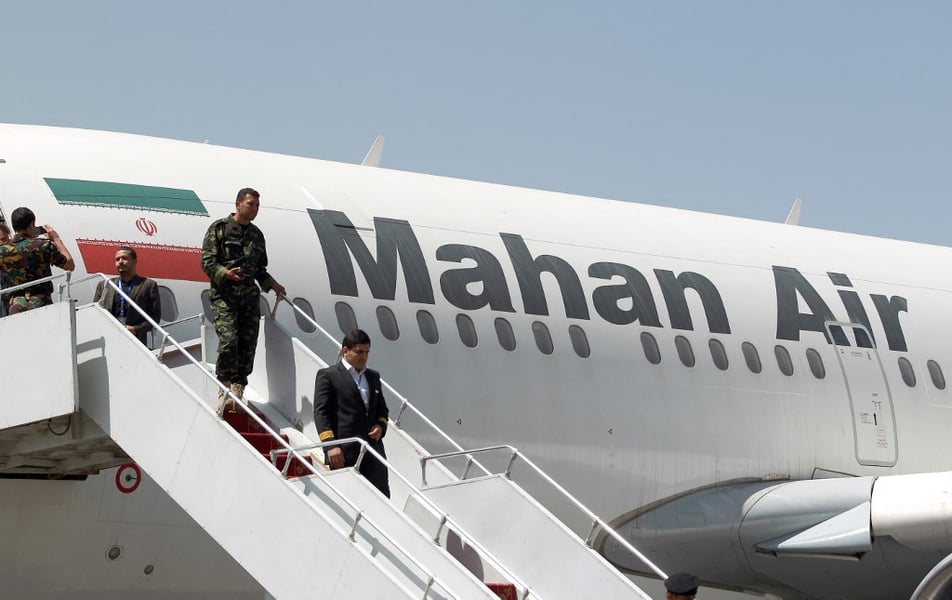

TEHRAN – Operation Economic Outcast has closed the last three international corridors that allowed ordinary Iranians to fly beyond their country’s borders: Mahan Air’s routes to Turkey, Georgia and Oman suspended within one week as Washington’s sanctions machine reached the ground-handling companies that had kept those flights running. By the time the airline’s last Istanbul flight landed on September 20, no return service had been scheduled. Mahan Air issued a brief notice attributing the halt to “instructions from the relevant aviation authorities in Turkey” and offered no further details.
What Turkey’s aviation authorities required needed little explanation. On September 8, the US Treasury’s Office of Foreign Assets Control launched Operation Economic Outcast, sanctioning 27 Iranian airlines and nine foreign entities that had provided aircraft, cargo services, or sales support to Iranian carriers. Among the foreign companies named were Turkish ground-handling firms that had quietly kept Mahan Air’s Istanbul and Ankara operations running. With those company names on OFAC’s Specially Designated Nationals list, Turkish operators faced a choice between their American business relationships and their Iranian contracts. They chose the United States.
The scale of the September 8 action was sweeping. Treasury Secretary Scott Bessent said the administration had “promised severe consequences for those providing financial lifelines to the Iranian regime.” The 27 airlines targeted include Iran Aseman, Iran Airtour, Kish Air, Qeshm Air, Taban, Caspian and Zagros, effectively the entire roster of Iranian commercial aviation. OFAC also revoked three Iran-related aviation authorizations: overflight permissions for Iranian-registered aircraft and authorizations for non-US airlines to operate US-origin aircraft into Iranian airports. Those revocations closed routes that some carriers had continued to fly through tolerant third-country interpretations of existing rules.
The Muscat suspension came four days before Turkey. Mahan Air stopped its Tehran-Muscat service on September 17, removing one of the most reliable connections for Iranians needing access to Gulf aviation hubs and onward international travel. Oman had functioned as a quiet transit corridor for years. Georgia followed on September 21, the same day as the Turkey suspensions. Iranian carriers completed their final services into Tbilisi and Batumi on September 20 before Georgian aviation authorities declined to renew operating permissions.
Mahan Air was not simply a civilian carrier before these designations. US authorities had accused it for years of ferrying weapons, personnel and supplies for the Islamic Revolutionary Guard Corps, using its commercial network as cover for military logistics. In 2026, according to Treasury, Mahan Air received at least three Boeing 777 aircraft diverted through UAE-based and Turkish intermediaries in violation of US export controls. ECT Aviation Support LLC in the UAE and Sky Phoenix in Turkey were both named in the September 8 action as having brokered those transfers. The designation of those intermediaries is what made Turkey’s compliance with the suspensions structurally inevitable.

Iran has not been passive in response to the broader sanctions architecture. Tehran has routed billions of dollars through Chinese intermediaries to sustain imports outside the dollar-based system, a pattern that drew its own US sanctions response earlier this month. The pattern suggests an economy that has become adept at operating in the gaps the sanctions system leaves open. Aviation routes are harder to reroute than bank transfers.
The timing of the flight suspensions carries a diplomatic edge. They took effect in the same week that Iranian President Masoud Pezeshkian arrived in New York for the United Nations General Assembly, where his delegation operates under a six-block travel restriction imposed by Washington. Tehran submitted seven conditions to Washington through Qatar last week, seeking a ceasefire framework. Whether the aviation sanctions represent a pressure tool calibrated for that negotiating moment, or a signal that the US intends to maintain economic warfare regardless of talks, the suspension notices from Ankara and Tbilisi speak plainly enough.
What remains uncertain, according to Middle East Eye, is whether other third countries will absorb secondary-sanctions risk to preserve what remains of Iranian civil aviation connectivity. Routes to Russia, Syria, China and Venezuela remain operational. But the routes that mattered most to Iranians seeking connections to the broader world, including Istanbul, Muscat and Tbilisi, have been severed within a week. The UAE’s simultaneous call for Arab states to open a direct channel with Iran at the UNGA high-level week suggests that some regional actors see value in keeping a diplomatic window ajar, even as Washington closes the aviation ones.