TEHRAN — At the same moment American destroyers were hunting Iranian oil tankers in the Gulf last week, a very different kind of Iranian financial operation was coming to light.
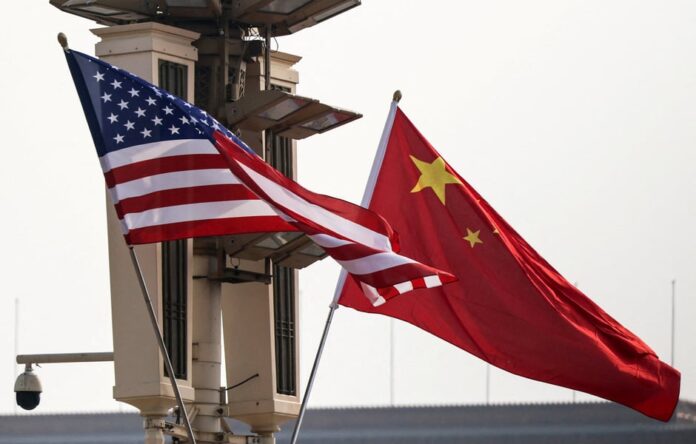
The scheme’s mechanics, first reported by Reuters and detailed by the Jerusalem Post Wednesday, revealed that Iran routed an estimated $2 billion to $2.5 billion over the past year through an obscure China-based financial entity called ChuXin: buying air-defense systems, medicines, vehicles, and construction contracts entirely outside the dollar-based international financial system that US sanctions are designed to police.
The mechanism worked like this. A buyer acting on behalf of Zhuhai Zhenrong, a Chinese state-owned oil trader, deposited hundreds of millions of dollars each month into ChuXin. A Hong Kong-registered company linked to Iran’s national oil company had agreed to the purchases in advance. ChuXin then transferred the funds to Chinese exporters and companies building infrastructure inside Iran. The entire chain operated without passing through a single correspondent bank under U.S. jurisdiction.
What those payments funded is now partly known. About 70 percent of the oil proceeds flowing through ChuXin were directed toward infrastructure projects, including roads, industrial facilities, and construction machinery. The remaining 30 percent went into accounts belonging to a special-purpose vehicle that paid companies supplying goods to Iran. According to three people familiar with the matter who spoke to Reuters, those goods included medicines, vehicles, communications equipment, and, at least once, contracts for military hardware.
The military hardware detail is the most consequential. Iran was set to receive between 300 and 400 Chinese-made QW-12 and FN-16 man-portable air-defence systems, worth an estimated $60 million to $70 million, with the shipment routed through Pakistan. These shoulder-fired surface-to-air missiles are similar in concept to the American Stinger and can target low-flying aircraft and helicopters. If distributed to proxy forces across the region, they could pose new risks to aircraft operating at low altitude, particularly as Iranian territory has come under repeated American and Israeli attack.
There is one striking problem with this account: ChuXin may not exist as a formal institution. Reuters found no record of a financial entity by that name in Chinese company registries, and one source said it “might only exist on a spreadsheet.” Whatever its legal form, the mechanism clearly functioned. The money moved, and the goods were shipped.
The investigation breaks at a moment when US economic pressure on Iran has reached a declared maximum. Brent crude has breached $100 a barrel as a direct consequence of US strikes on Iranian oil infrastructure and tanker fleets. The Treasury Department has imposed successive rounds of sanctions targeting Iranian oil buyers, shipping networks, and financial intermediaries. The assumption behind that campaign, that financial isolation will degrade Iran’s capabilities and extract a political concession, depends on the isolation being effective.
The ChuXin mechanism suggests a different structural reality. Iran and China appear to have built a parallel payment architecture immune to dollar-based enforcement because it never intersects with the dollar-based system at all. You cannot sanction a transaction that leaves no trace in SWIFT records, correspondent banking logs, or US-regulated financial institutions. There is a further irony: US sanctions may have accelerated this architecture’s development by making conventional financial channels impossible for Iran, driving Beijing and Tehran to engineer something the dollar cannot reach.

The US government has not been blind to Zhuhai Zhenrong’s role in Iranian oil trade. The Treasury Department sanctioned Zhuhai Zhenrong as far back as 2019 over Iranian crude purchases. But the company continued operating through the ChuXin structure, which appears to have been designed to put distance between Zhuhai Zhenrong’s deposits and the eventual recipients in Iran. Washington has targeted smaller entities in the supply chain but, according to Reuters, has stopped short of measures against larger Chinese financial institutions, a restraint attributed to concerns about global economic repercussions.
Military escalation was visible at the surface. Iranian missiles were still reaching US bases in Jordan while US-made precision weapons struck Iranian military sites and IRGC infrastructure this week. The economic lifeline, it appears, ran in parallel throughout.
What happens now that the mechanism is public is not certain. Parallel structures may already exist. Exposure may shift volume to other channels rather than eliminate it. Or it may finally prompt Treasury to take enforcement actions it has so far chosen not to.
ChuXin, whatever it is, may be only one entry point into a much longer spreadsheet.