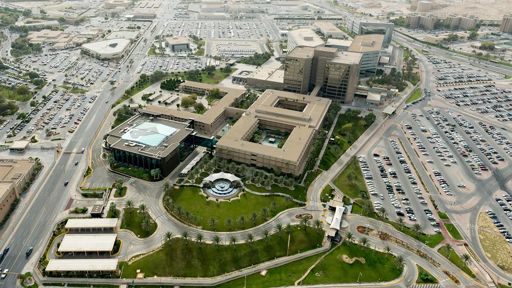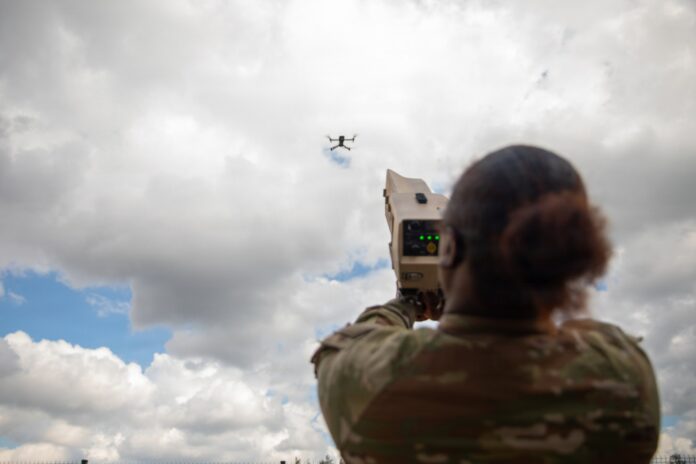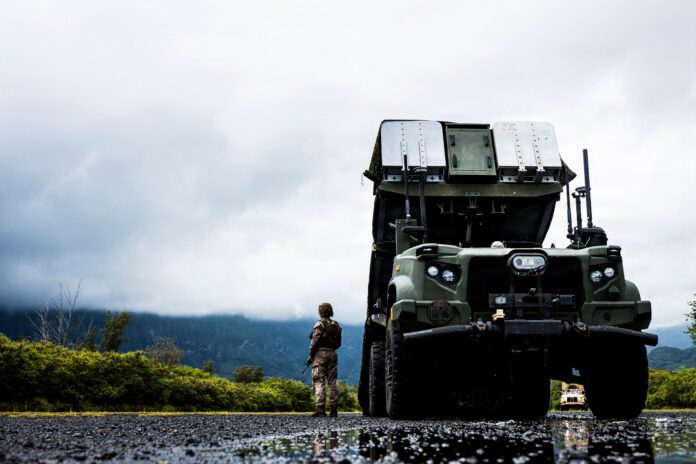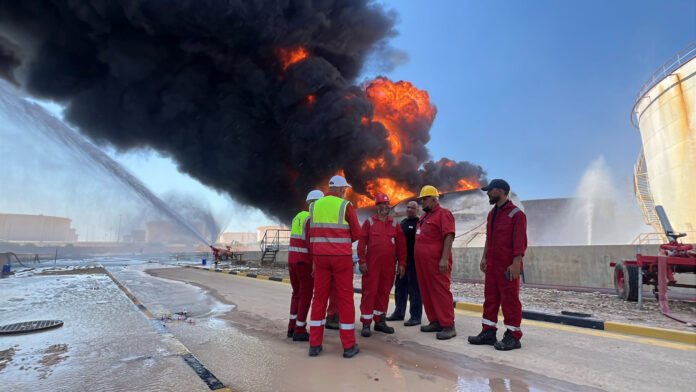

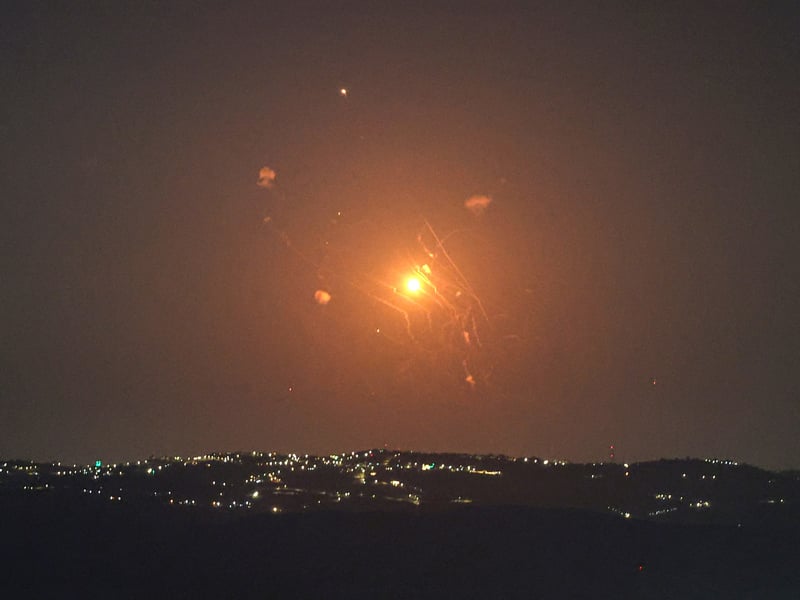
AMMAN — The 90 percent intercept rate looked good on paper. Jordanian forces shot down 18 of the 20 ballistic missiles Iran’s Islamic Revolutionary Guard Corps fired at the Al-Azraq air base overnight Tuesday, lighting up the northeastern desert sky in a barrage that both governments first described in terms of what they stopped. The two that cleared the defenses are what mattered.
United States military aviation reporting confirmed Wednesday that an A-10 Thunderbolt II and multiple F-15E Strike Eagles sustained significant damage inside the base’s hangar facilities. The Trump administration acknowledged no casualties, a technically accurate statement that a disabled F-15E does not challenge. The aircraft were grounded. They remain grounded.
The IRGC’s aerospace force announced the strike in language it has spent six months refining, naming the targeted facilities precisely: maintenance and deployment infrastructure for US F-35, F-16, and F-15 jets at Al-Azraq, a base roughly 100 kilometers from the Syrian and Iraqi borders. Whether aircraft from all three categories were present Tuesday night has not been confirmed by Washington. What has been confirmed is that Iran’s missiles reached at least two of them.
This was the tenth or eleventh time Iran has claimed strikes against the same installation since March, depending on which IRGC communiqué one uses for the count. In nine of those instances, the United States declined to confirm damage. Wednesday’s confirmation came through US military aviation reporting that relies on Defense Department access and has no institutional incentive to overstate what Iranian missiles accomplished inside an American-partnered facility.
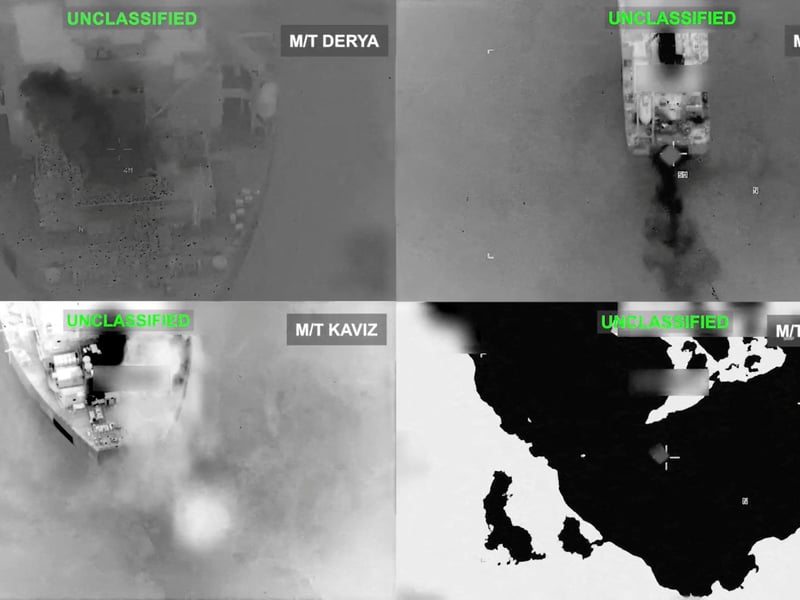
The strike did not arrive without prior context. The day before, American and Israeli naval forces destroyed five Iranian oil tankers in the Gulf in a single operation, the latest escalation in what has become a parallel economic war alongside the military one. Iran characterized the tanker strikes as attacks on sovereign assets and replied with the Jordan barrage alongside simultaneous attacks on ten commercial vessels near the Strait of Hormuz, according to Al Jazeera’s reporting on the exchange. The IRGC had also targeted a US warship twice in the 48 hours before the tanker strikes. Washington framed the tanker operation as retaliation for those warship attacks. The sequence has lost its identifiable beginning.
Jordan’s position in this arrangement is not simple. The kingdom hosts Al-Azraq under a long-standing security agreement with Washington, and Jordanian Armed Forces flew Tuesday night’s intercept mission. Those forces destroyed 18 missiles. Amman confirmed two more fell in open areas, offered no damage assessment of hangar facilities, and reported no Jordanian casualties. What the king and cabinet say privately about hosting a base that Iran has struck more than ten times in six months is not recorded in any public statement from Amman.
The A-10 Thunderbolt II confirmed damaged Wednesday is a close air support aircraft engineered to absorb punishment from ground-based weapons. Its titanium tub cockpit and redundant flight systems were built to keep it flying after 23mm cannon fire. Iran’s solid- and liquid-fueled ballistic missiles, arriving at hypersonic velocities from standoff range, operated on a different physics entirely. The F-15E Strike Eagles in the same hangar are the Air Force’s primary ground attack platform in the region, each worth roughly $90 million. Their availability matters directly to how the United States conducts operations across a theater that now runs from Jordan to the Strait of Hormuz.
Trump, speaking at Joint Base Andrews earlier this week, said the war would end on election night, then suggested within the same briefing it might take a bit longer. His description of Iran, a country whose currency is worthless and whose soldiers go unpaid, did not account for the solid- and liquid-fueled ballistic missiles that crossed Jordanian airspace Tuesday night and found American aircraft in their shelters.
The International Atomic Energy Agency referred Iran to the United Nations Security Council last week over its nuclear activities, the first such referral in twenty years. That institutional escalation runs alongside the military one rather than above it, providing no ceiling on the strikes themselves.
What the Pentagon intends to do about a Jordanian base it cannot fully protect has not been addressed in any public briefing. After ten strikes on Al-Azraq, Wednesday was the first time the United States confirmed that Iran’s missiles had destroyed named aircraft inside it. The next question has not been asked in any press conference Washington has yet scheduled.