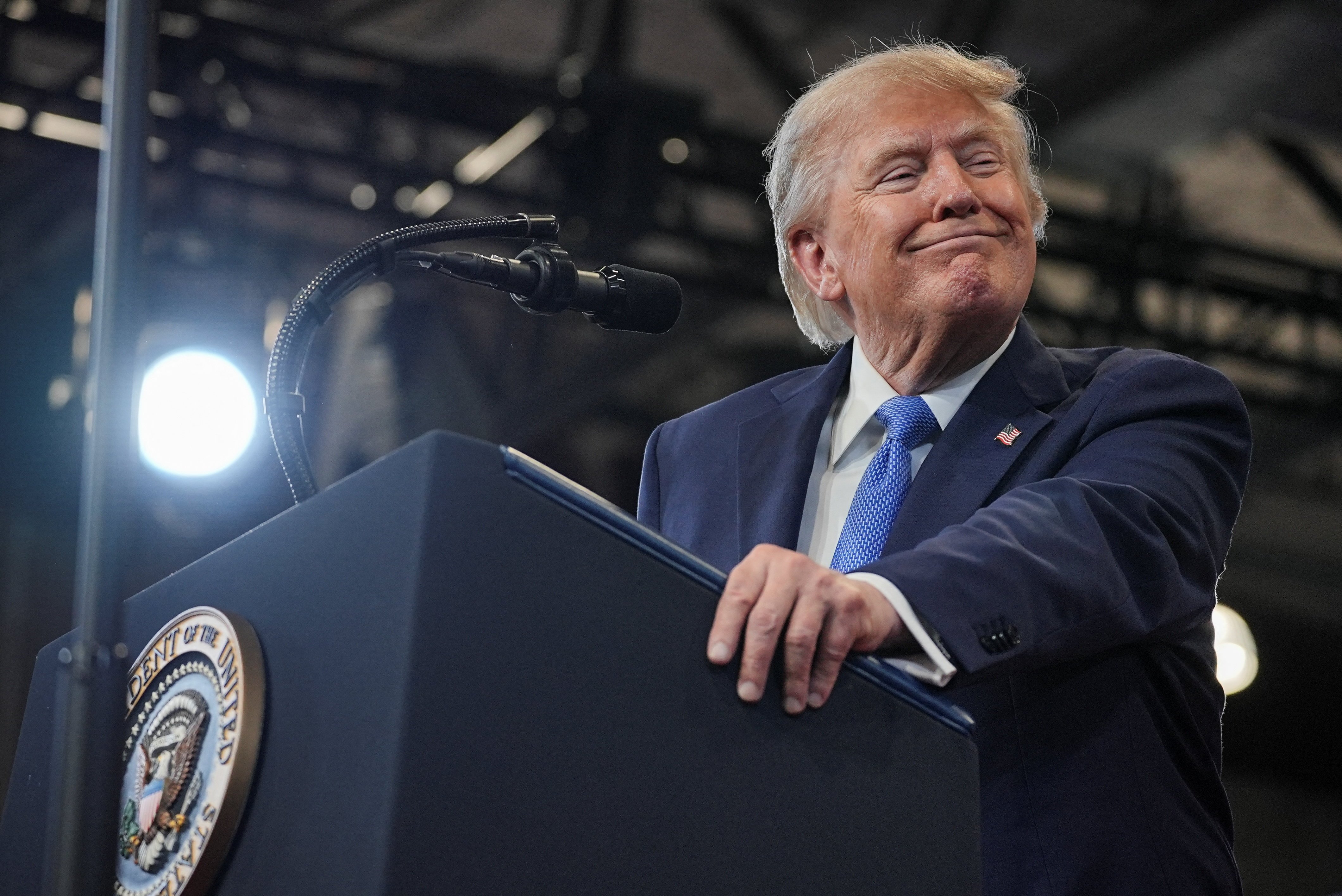

WASHINGTON — On Friday evening, at a police graduation ceremony in Garden City, New York, the president of the United States declared his intention to annex one of the world’s most consequential waterways. Donald Trump told the assembled graduates that after the United States finished defeating Iran, which he described as “being very badly defeated, pretty soon,” he would declare the Strait of Hormuz a territory of the United States. He said it, according to Al Jazeera’s Washington correspondent, with a chuckle.
Iran was not laughing.
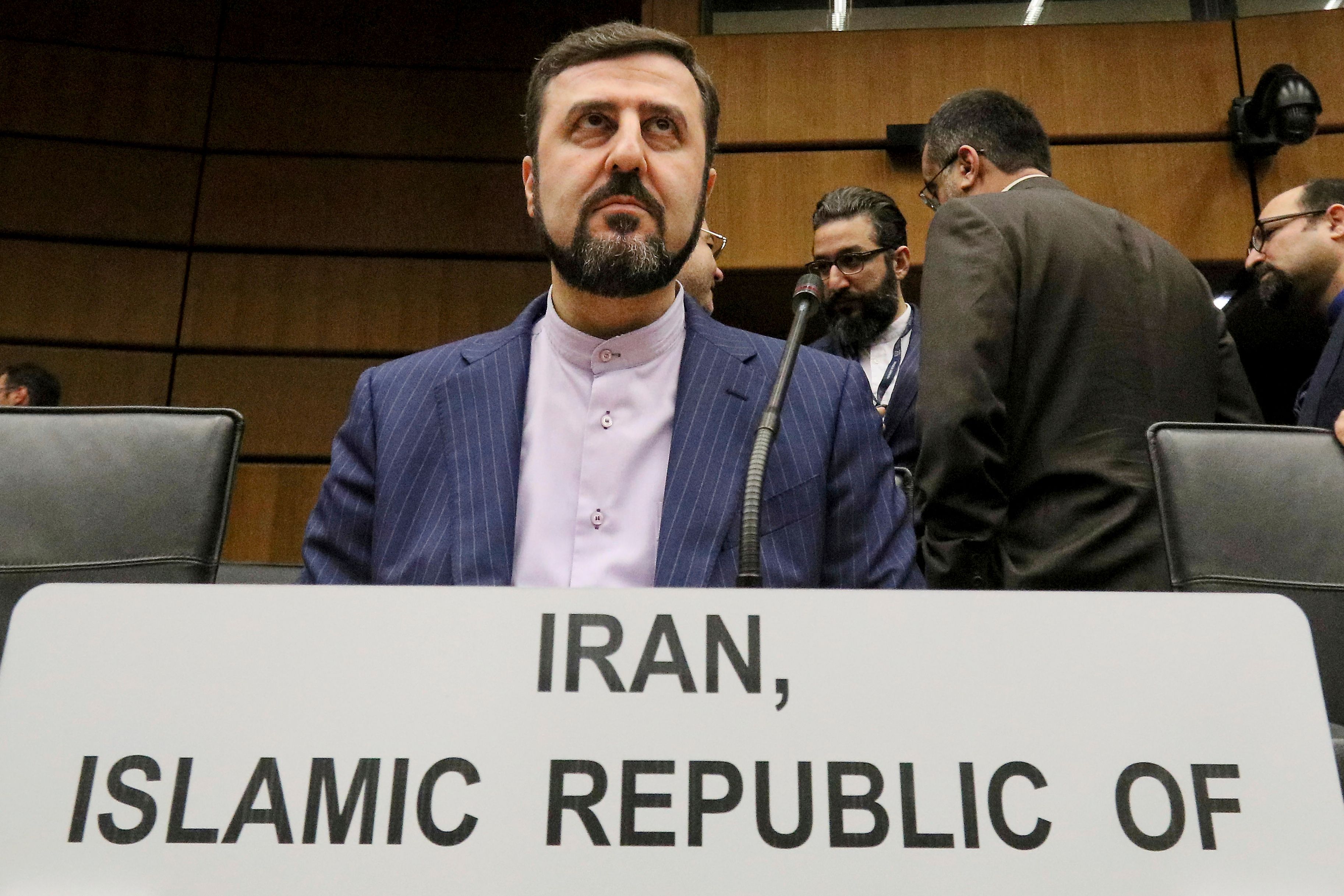
“The Strait of Hormuz cannot be seized by a tweet, an aircraft carrier, an order, or an election speech,” Deputy Foreign Minister Kazem Gharibabadi posted on social media within hours. His follow-up was shorter: “The Strait of Hormuz was Iran’s, is Iran’s, and will remain Iran’s.”
Ibrahim Zolfaqari, spokesman for Iran’s Khatam al-Anbiya Central Headquarters, added his own condition: no vessel would be permitted to transit the strait without Iran’s explicit permission and supervision. Iran’s head of the judiciary called Trump’s remarks “nonsense” from a “criminal.” Foreign Minister Abbas Araghchi turned the conversation toward something more practical, announcing that Tehran was in talks with Oman on maritime traffic management procedures. The response addressed not the territorial claim but the actual question of who controls passage through the water.
On Friday, the answer was: almost no one. Before the Iran-US war began in late February, more than 130 vessels transited the strait daily, carrying roughly a fifth of the world’s traded oil. On the day Trump spoke, two ships crossed. That figure captures the state of the conflict more plainly than any speech.
International law offers no path to what Trump described. The Strait of Hormuz at its narrowest point is approximately 21 nautical miles wide, running through the territorial waters of both Iran and Oman. The UN Convention on the Law of the Sea, whose straits provisions are recognized as customary international law even by states that have not ratified it, including both Iran and the United States, grants coastal states sovereignty over 12 nautical miles of water from their shores. The United States does not hold a claim to either shore.
Bruce Fein, who served as associate deputy attorney general under President Reagan, told TRT World that a unilateral annexation would constitute the crime of aggressive war under the UN Charter and would in any case require Senate ratification of a treaty. Natalie Klein, associate dean at the University of New South Wales, noted that the only historical precedent with any legal coherence was US administrative authority over postwar Japan, and that depended on actual military occupation of the territory. “That’s not the case here,” she said. Paul Musgrave of Georgetown University Qatar described Trump as “a showman speaking to his political base” on a matter that is “physically and legally impossible.”
Al Jazeera’s Washington correspondent reported that US officials were not treating the remark as a policy directive. The statement appears to belong to the same rhetorical category as Trump’s prior declarations about Greenland and the Panama Canal: territorial ambitions voiced to a domestic audience in language calibrated to project strength rather than to engage international legal frameworks.
The same week, Iran’s parliament moved to criminalize journalist interviews with outlets it designates as hostile, a measure that makes independent reporting from inside the country increasingly difficult. The gap between what Tehran states publicly and what its military is prepared to do has become harder to observe as a result.
The UAE reported vessel attacks near the strait’s approaches on Thursday and Friday, a sign that the conflict has not been quiet even under the MoU. What changes when the agreement expires Monday is the open question. Qatar and Pakistan have maintained contact with Tehran through back channels, but neither government has described those conversations as formal negotiations. Araghchi has stated that Iran’s conditions for reopening the strait are unchanged: the United States must withdraw the naval blockade and lift the sanctions embedded in the June agreement. None of those conditions have been met.
The chuckle in Garden City is on the record. Monday comes regardless.
Related Posts