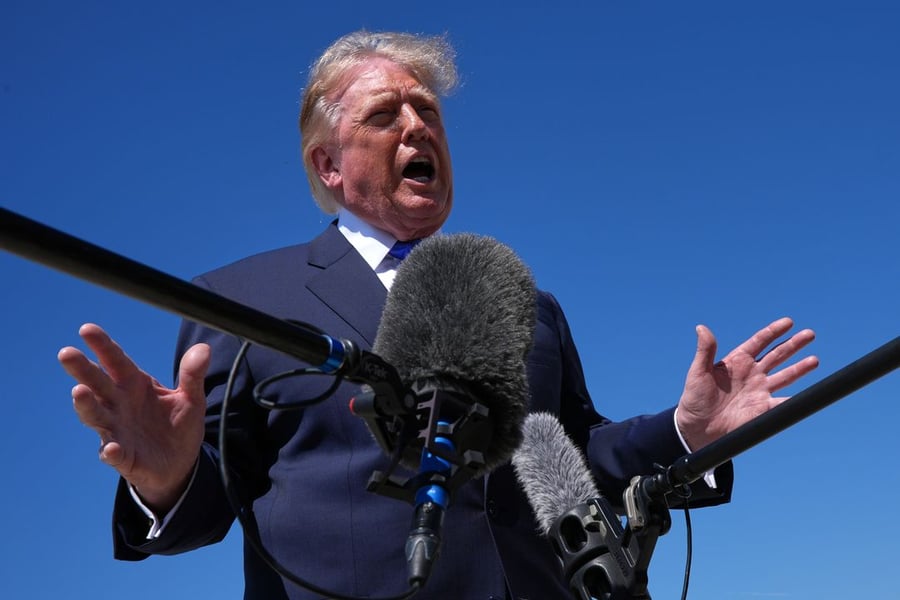

WASHINGTON — The benchmark price of crude oil fell nearly $2 in after-hours trading Tuesday after Donald Trump, speaking on the tarmac at Joint Base Andrews before boarding Air Force One, said the seven-month-old war with Iran was nearing an end and appeared to set a date for its conclusion.
November 3. Election Day.
“I think the war’s going to end immediately after the election,” Trump said, “because they can’t hold out any longer.” Within minutes, Brent crude futures, which had risen above $101 a barrel for the first time since July, pulled back from their session highs. The reaction underscored how closely global oil markets now track presidential statements about the conflict, treating comments from Trump as potential market-moving events.
But the market reaction did not fully capture what Trump said moments later. “I think it’s going to take a little bit longer than the midterm,” he added, before the discussion moved to other subjects. No reporter followed up on the apparent contradiction.
The two statements remained unreconciled in the same briefing, leaving the White House with two different presidential timelines for the war’s possible conclusion circulating publicly at the same time.
Trump was en route to Dallas, where Republicans opened their midterm convention Tuesday under persistent questions about what, if anything, the party intends to do about a war that has dominated the campaign since the United States and Israel struck Iranian nuclear enrichment facilities in late February. As The Eastern Herald reported from the convention floor, forty-five Republican members of Congress chose not to appear, a count that reflects the growing discomfort within the party over an eight-figure weekly war expenditure and fuel prices that have shown no sign of receding.
The picture Trump painted of Iran at Andrews was unsparing. He described 300 percent inflation, a currency he characterized as worthless, soldiers going unpaid, and American forces holding what he called effective control of the Strait of Hormuz. “They’re in very bad shape. Their country is destroyed now,” he said. The assessment came without an intelligence citation or a named official source. Iran has not acknowledged those conditions in any public communication.
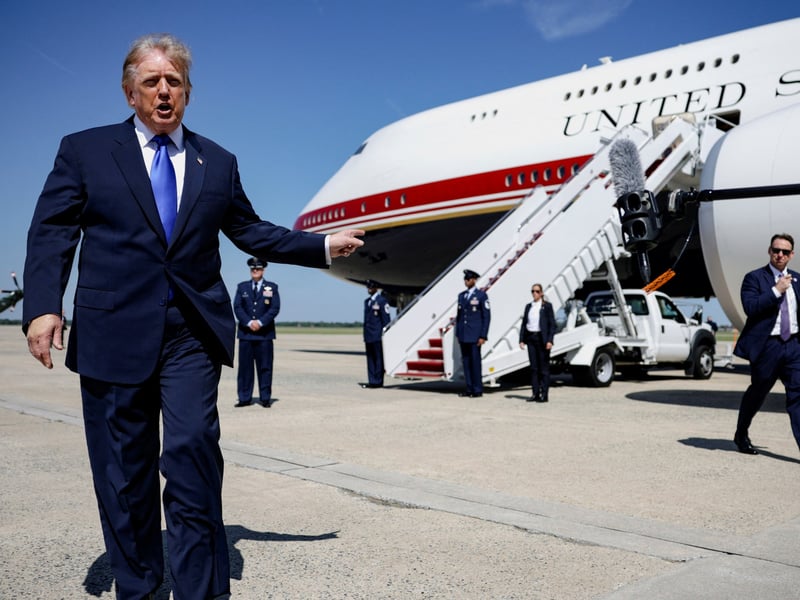
The oil prediction followed the same electoral framing. “Right after the election, oil prices are going to be tumbling downward,” Trump said. With Brent crude above $101 and West Texas Intermediate surpassing $96 per barrel at session highs, levels not seen since the opening weeks of the conflict, his promise carried an implicit concession: the economic pain of the war is falling on American consumers now, not after November 3. Markets believed him just enough to pull back from the day’s peak before stabilizing.
Military exchanges in the waterway have not slowed. Earlier this month, American and Israeli naval forces struck five Iranian tankers and Islamic Revolutionary Guard Corps positions in the Gulf, drawing retaliatory missile fire against a United States military installation in Jordan, according to The Eastern Herald’s coverage of the exchange. Neither side has announced a ceasefire framework or indicated back-channel negotiations are under way.
TRT World reported Tuesday that Trump’s remarks drew immediate attention across the region, where the conflict has disrupted global energy shipping, driven a cost-of-living crisis through oil-importing economies, and displaced populations that neither Washington nor Tel Aviv has addressed in formal policy statements.
The nuclear question hangs over the broader conflict. The International Atomic Energy Agency last week referred Iran to the United Nations Security Council for the first time in twenty years, according to The Eastern Herald’s coverage of the referral, a development that places additional institutional pressure on Tehran without offering any path toward resolution that Trump’s election-night timeline implies.
Trump ruled out nuclear talks entirely on Tuesday, saying Washington is not returning to a diplomatic framework. He offered no alternative pathway to an end. The war, as of Tuesday morning, remains seven months old, Brent crude has not held below $90 since April, control of the Strait is contested, and a president is publicly promising that resolution arrives on the same night as the midterm results, while also allowing, in the same briefing, that it might not.