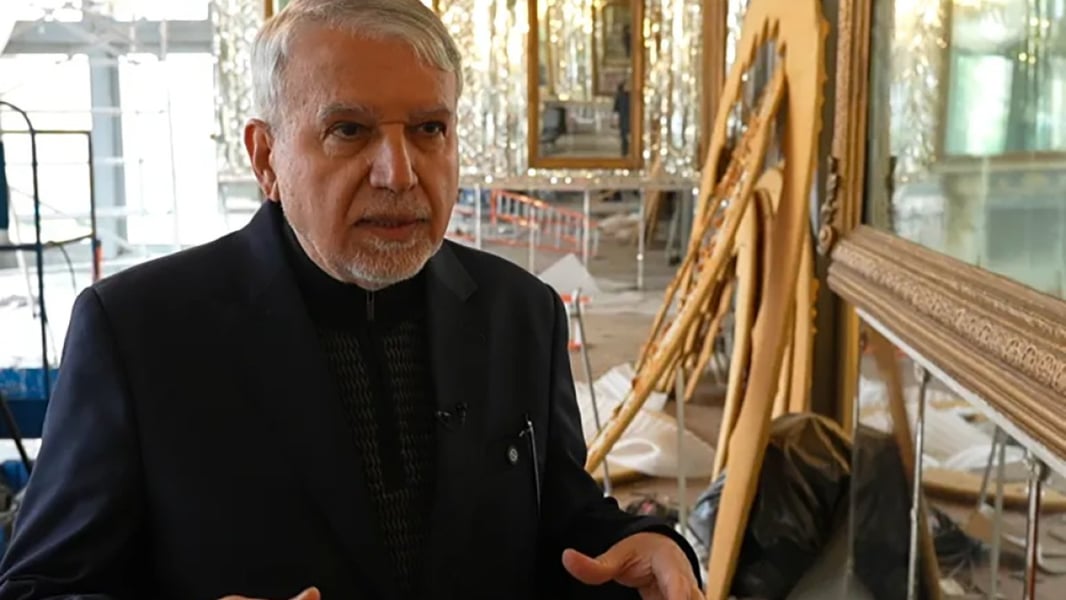

ST. PETERSBURG – Abbas Salehi did not describe the ruins back home as collateral damage. Iran’s minister of culture and Islamic guidance stood on the sidelines of a Russian cultural forum on Friday and told reporters that the United States and Israel had the technology to know precisely which sites were historical monuments before striking them, and struck them regardless.
“Dozens of our historical sites were severely damaged, and hundreds of our cultural heritage sites sustained less serious damage,” Salehi said. “Without a doubt, taking into account the technologies they have, both Americans and Israelis knew that these objects were historical monuments.” He was speaking at the 12th St. Petersburg International United Cultures Forum, where he had traveled to open Iran’s Cultural Week in four Russian cities and meet Russia’s culture minister, Olga Lyubimova, before turning the conversation back to a war that formally ended in a ceasefire but has left Iran cataloging what it lost.
The claim is not new, but the setting sharpened it. Iranian officials have said for months that the toll from the US-Israeli bombing campaign extended well past military and nuclear sites, reaching mosques, palaces and museums UNESCO had already catalogued. What changed Friday was the venue and the word Salehi reached for. “They directly declared that they want to destroy the Iranian civilization, so that nothing of it remains,” he said. “It is not only a genocide of an entire nation, but an elimination of the human civilization.”
No independent forensic accounting has confirmed intent behind any specific strike on a listed monument, and the Pentagon and Israel’s military have not directly addressed Salehi’s claim. That gap, whether the destruction was incidental to strikes on nearby military infrastructure or aimed at the sites themselves, is the actual dispute, and it is one Tehran has increasingly tried to resolve through the language of international law rather than battlefield rhetoric. A United Nations inquiry cited by Iranian officials this month found evidence of US war crimes tied to strikes on civilian infrastructure, a finding Tehran has leaned on heavily at the UN General Assembly to argue the campaign went beyond legitimate military targeting.
Salehi’s ministry has previously put the number of damaged sites above 140, spread across roughly twenty provinces, with Tehran recording the heaviest losses. Isfahan’s Chehel Sotoun Palace and the Masjed-e Jame, regarded as Iran’s oldest Friday mosque, were both among the confirmed casualties, alongside the Safavid-era Ali Qapu Palace overlooking Naqsh-e Jahan Square. Restoring Golestan Palace alone, a separate Iranian cultural official has said, could take at least two years of specialized work, and some losses may simply be irreversible.
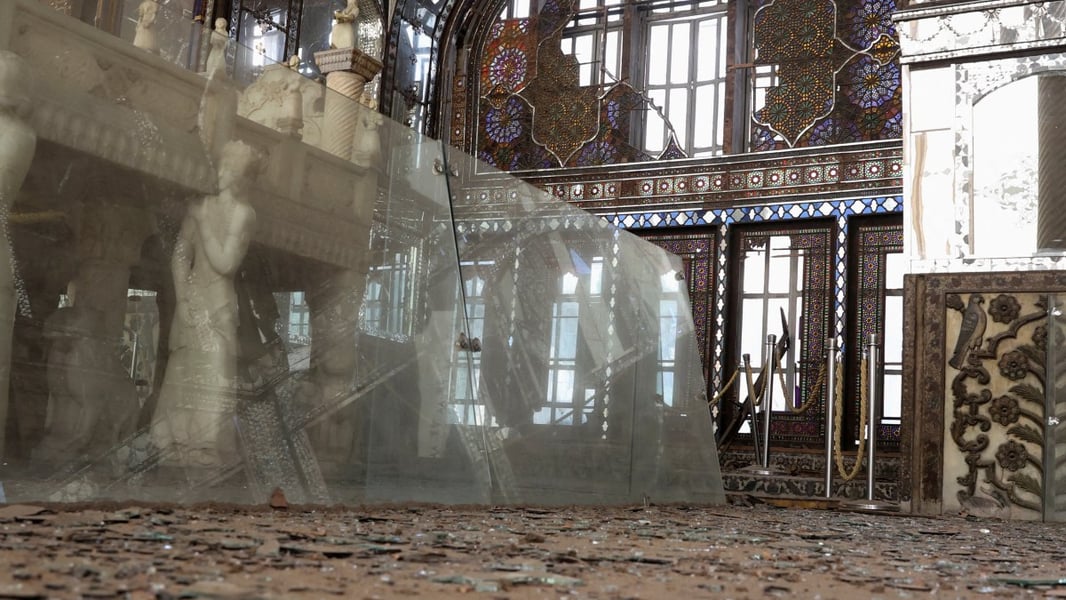
What Salehi did not offer Friday was new evidence, only a sharper restatement of intent. Iran spares no effort, he added, for the restoration and reconstruction of the damaged monuments, though he gave no timeline or budget figure for that work. Whether the sites can be substantively rebuilt, and whether any international body will formally weigh in on whether they were struck by design, remains open. For now, the accusation sits where it has sat since the spring: asserted by Tehran, unanswered by Washington and Tel Aviv, and increasingly folded into Iran’s broader case that the war it survived was also a war on what it calls its civilization.