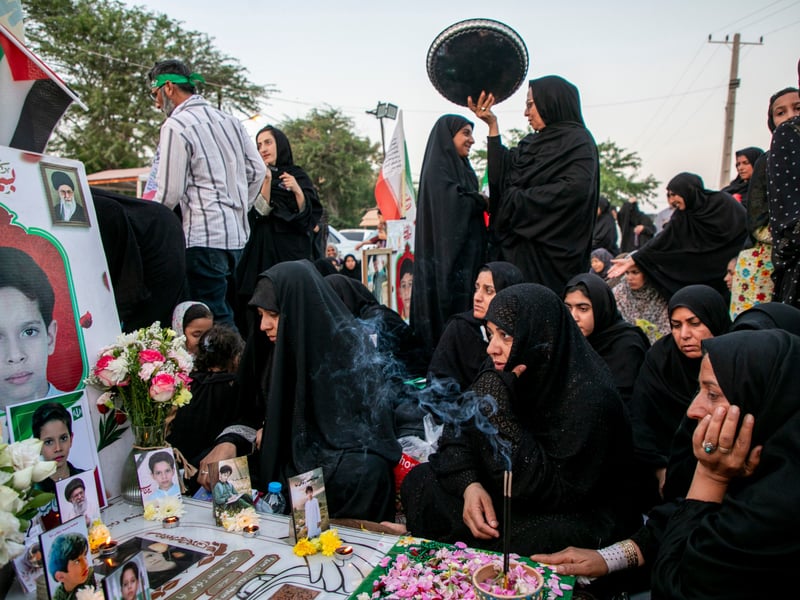

UNITED NATIONS — The children had been in their classrooms for less than an hour when the missiles hit.
On February 28, 2026, the first day of the United States and Israel’s air campaign against Iran, a strike struck the Shajareh Tayyebeh Primary School in Minab, a city in Iran’s southern Hormozgan province. One hundred and twenty children died in the attack. Twenty-six teachers died alongside them. The school was the intended point of impact, not incidental to it.
Six months and three weeks later, a United Nations fact-finding mission has concluded what Iranian survivors and international rights groups had argued from the beginning: that the strike on the Minab school, and a parallel strike the same day on a sports complex in the neighboring city of Lamerd, constituted war crimes under international law.
The Independent International Fact-Finding Mission on Iran released its findings on September 17, stating it had found “reasonable grounds to believe” that United States forces carried out the February 28 strikes on civilian infrastructure that resulted in the deaths of at least 178 people, including the 120 schoolchildren. The Lamerd attack used precision missiles that dispersed clouds of tungsten pellets across a residential sports complex, killing 22 civilian men and women. The mission, chaired by Sara Hossain, a prominent jurist from Bangladesh, was created by the UN Human Rights Council in 2022 to document conditions in Iran; its mandate expanded with the war. Al Jazeera reported the findings in detail on the day of their release.
The White House did not engage with the substance of those findings. “Unserious nonsense,” Anna Kelly, a White House spokeswoman, told reporters last week, adding that the administration does not give credibility to the report and that the Iranian government is the only party committing war crimes in the conflict.
The dismissal arrived at a moment when dismissal is becoming harder to sustain.
What is clear is the calendar.
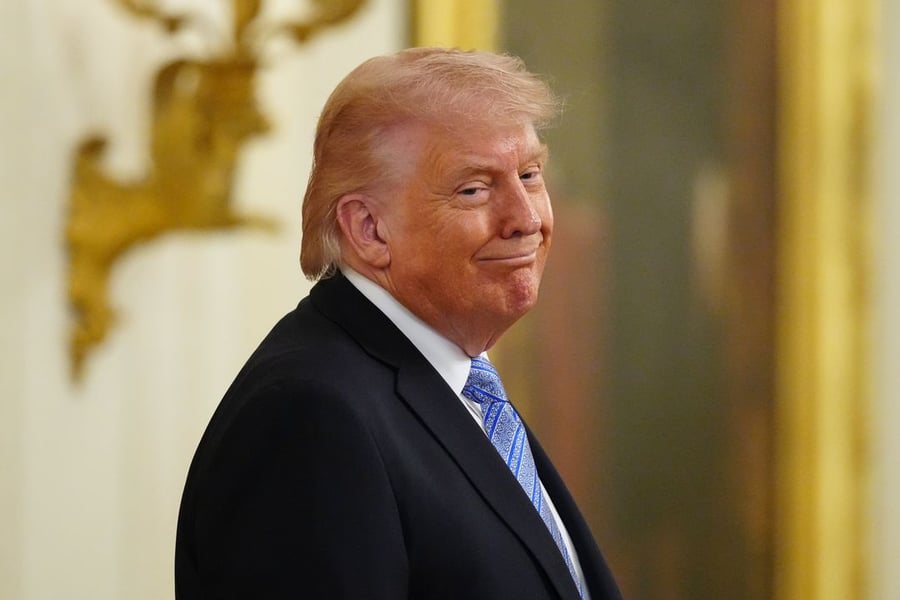
The UN General Assembly‘s High-Level Week opens Monday in New York, bringing together presidents and prime ministers from 193 member states for the annual general debate. US President Donald Trump is scheduled to address the assembly first, on Tuesday afternoon. Iranian President Masoud Pezeshkian speaks Thursday, September 24, the same day Trump is scheduled to hold a state dinner with Chinese President Xi Jinping at the White House, two miles away from the UN podium.
Pezeshkian arrives at the general debate under conditions his foreign ministry called unprecedented. The United States has restricted Iran’s diplomatic delegation in New York to a six-block perimeter around the UN headquarters, the tightest movement restrictions ever imposed on a country’s UNGA delegation. Iranian officials have described the restriction as a continuation of the war by administrative means, an attempt to prevent Iranian diplomats from meeting counterparts and building support for Tehran’s ceasefire conditions.
Iran has transmitted seven conditions for formalizing the ceasefire to the United States through Qatari back-channels. Several of those conditions remain undisclosed. Among those that have been confirmed: firm guarantees against future US or Israeli military action against Iran; formal recognition of Iran’s right to nuclear enrichment; the lifting of all US and international sanctions; the release of frozen Iranian assets; the withdrawal of US combat forces from military bases across the broader Middle East region; and compensation, framed by Tehran as reparations, for the damage caused by the US-Israeli air campaign.
Trump has described the ceasefire discussions as ongoing. He has not acknowledged the UN war crimes findings. The Strait of Hormuz, while technically open to commercial shipping under the terms of the June MOU, remains contested: Iranian authorities have moved to assert the right to charge transit fees on vessels, a claim that Western shipping companies and US naval commanders have rejected.
The UN war crimes report adds a dimension that the diplomatic track has so far treated as secondary. The Minab school sits at the center of what international law scholars have described as a test case for the war crimes accountability framework, an attack whose evidence trail includes crater analysis, weapon fragment recovery, and the recorded absence of any military target within the strike radius. The UN mission’s conclusion that the school was the intended point of impact, not an accidental one, directly contradicts the initial Pentagon statement, in February, that the school had been destroyed in an Iranian counter-strike gone wrong.
The Intercept reported in March 2026, citing an internal Pentagon investigation obtained under a records request, that a US missile had struck the school; the Pentagon subsequently commissioned a second inquiry that found the first had relied on incomplete targeting data. The White House’s September 2026 response to the UN report, “unserious nonsense,” does not address either inquiry’s findings.
What happens at UNGA this week, and whether the fire pause extends through it, will shape whether the UN war crimes report registers as a legal landmark or remains an unanswered diplomatic document. Iran’s willingness to continue the fire pause through the UNGA general debate appears, for now, to reflect a strategic calculation: that the assembly provides a better forum for international accountability than a resumed exchange of missile fire.
Whether the UN Human Rights Council moves toward a formal accountability mechanism, and whether enough member states support one over US objection, is the question neither Tehran nor Washington is prepared to answer publicly this week.
The assembly opens without Mahmoud Abbas, the Palestinian Authority president, who was denied a US visa for the second consecutive year, forcing him to address the general debate by video. Israel’s Prime Minister Benjamin Netanyahu, whose forces have been implicated in similar UN accountability proceedings over Gaza, is scheduled to speak in person.